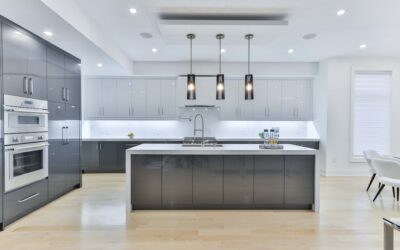
The microwave is the appliance that never seems to have a good home, hogging counter space or perching awkwardly on a cart. A kitchen cabinet with microwave shelf solves that by giving the appliance a dedicated, built-in spot that keeps your counters clear and your kitchen looking finished. Getting the placement, sizing, and ventilation right ensures the setup is as functional as it is tidy.
Part of our Kitchen Remodeling guide — explore the full guide →
Why Build the Microwave Into a Cabinet
Sitting a microwave on the counter eats up prime workspace, the very real estate you need for chopping, mixing, and staging meals. Moving it into a cabinet with a dedicated shelf reclaims that space and gives the kitchen a cleaner, more integrated look. It also lets you position the appliance at a comfortable height and away from the main work zone.
Built-in placement hides the microwave’s less attractive back and cords, and pairing it with a shelf or cubby above or below adds storage for related items like potholders and cookbooks.
Where to Put the Microwave
Placement drives both convenience and safety. The main options each have their strengths:
- Open shelf cubby in a tall cabinet: An eye-level niche in a pantry or utility cabinet, easy to reach and vent.
- Base cabinet shelf: A lower cubby near counter height, great for accessibility but less ideal for young children reaching hot food.
- Upper cabinet with a drop-down shelf: Tucks the appliance above the counter while keeping it accessible.
- Microwave drawer: A pull-out unit built into a base cabinet, the sleekest and most ergonomic option.
For most households, an open cubby at or just below eye level offers the best balance of reach, visibility, and easy venting. Avoid burying the microwave too high, where lifting a hot, heavy dish becomes a safety hazard.
Sizing the Shelf and Opening
Nothing derails this project faster than a cabinet opening that’s too small. Measure your microwave’s width, depth, and height, then add clearance on all sides: most models need at least 1 to 3 inches of open space around the top and sides for airflow. Check the manufacturer’s manual for the exact minimum clearances, since a tightly boxed-in microwave can overheat.
Also confirm the shelf’s depth accommodates the appliance plus its cord and plug behind it. A microwave that sticks out past the cabinet face looks unfinished and blocks nearby doors from opening fully.
Ventilation Is Not Optional
Microwaves vent heat from the sides and back, and trapping that heat shortens the appliance’s life and risks overheating. A countertop microwave placed in a cabinet needs an open-front cubby, never a fully enclosed box with a door shut over it. The open front lets heat escape naturally.
If you want a truly built-in look with a trim kit, you must buy a microwave rated for built-in installation, which is engineered to vent properly within a surround. Never seal a standard countertop model inside a closed cabinet, since it isn’t designed for that airflow restriction.
Power and Outlet Planning
Every built-in microwave needs a nearby outlet, and its location deserves thought before construction. Ideally, place a dedicated outlet inside the cabinet at the back of the microwave shelf so the cord stays hidden. Microwaves draw significant power, often 1,000 watts or more, so many electricians recommend a dedicated 20-amp circuit to avoid tripping breakers when other appliances run.
Plan the outlet during the cabinet layout, not after. Retrofitting an outlet into an installed cabinet is far more disruptive than roughing it in from the start.
Design Ideas That Work
Beyond function, the microwave cabinet can enhance the kitchen’s look. Consider these approaches:
- Frame the cubby with the same door style as surrounding cabinets for a seamless built-in appearance.
- Add a pull-out shelf below the microwave to serve as a landing spot for hot dishes.
- Pair the niche with adjacent open shelving for cookbooks or everyday dishware.
- Use a microwave drawer in an island to keep the appliance completely out of sight lines.
A microwave drawer in a kitchen island is especially popular in open-concept homes, since it hides the appliance entirely and keeps it accessible to anyone at the island without cluttering the perimeter counters.
Retrofitting an Existing Cabinet
You don’t always need custom cabinetry. Many homeowners convert an existing tall pantry or a section of upper cabinets by removing a shelf and adjusting the opening. Just verify the shelf can hold the microwave’s weight, often 30 to 50 pounds, and reinforce it if needed. Add the outlet, confirm the clearances, and you have a built-in look without a full remodel.
Measure the existing opening against your appliance carefully before committing, since cabinet interiors are frequently narrower than the exterior suggests once you account for the face frame.
When you buy a new microwave for an existing cubby, take the interior dimensions with you or buy from a retailer with easy returns. Microwave footprints vary more than you’d expect between models of similar capacity, and a unit that’s an inch too wide or too deep turns a simple upgrade into a return trip. Measuring twice at this stage saves the frustration of hauling a heavy appliance back to the store. It’s also smart to confirm the door of the new microwave has room to swing open fully within the cubby, since a door that hits the cabinet frame is both annoying and a sign the fit is too tight for safe venting.
Bringing It All Together
A kitchen cabinet with microwave shelf is one of the simplest ways to reclaim counter space and give your kitchen a polished, organized feel. Choose an accessible, well-ventilated location, size the opening with proper clearances, and plan a hidden outlet from the start. Respect the airflow requirements, and you’ll enjoy a microwave that’s exactly where you want it, without sacrificing the workspace that makes a kitchen function.