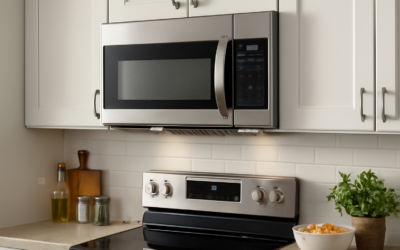
The microwave in almost every American kitchen sits idle about 90 percent of the day, used mostly for reheating coffee and popping bags of popcorn. It is one of the most underused appliances in the house. Thoughtful microwave uses go far beyond leftovers, and learning them can replace several other kitchen tools while cutting cooking time in half. This guide walks through practical, lesser-known functions that turn a 1,100-watt countertop microwave into a real workhorse.
How Microwave Cooking Actually Works
Microwaves emit electromagnetic radiation at 2,450 MHz that excites water, fat, and sugar molecules, causing them to vibrate and produce heat. That means moist foods heat fast, but browning requires direct heat, which standard microwaves do not produce. Understanding that fundamental limit shapes which tasks a microwave handles well and which ones need an oven or stovetop.
Quick Cooking Tasks That Work Great
Steaming Vegetables
Place chopped vegetables in a microwave-safe bowl with 2 tablespoons of water, cover with a vented lid or wax paper, and cook 3 to 5 minutes at full power. Broccoli, carrots, green beans, and spinach all come out tender-crisp. Use this method and you retain more vitamins than stovetop boiling, which leaches water-soluble nutrients.
Poaching Eggs
Fill a microwave-safe mug halfway with water, add a splash of vinegar, and crack an egg in. Cover with a saucer. Microwave 45 to 60 seconds. Drain carefully. Faster and cleaner than stovetop poaching.
Cooking Rice
Combine 1 cup white rice with 2 cups water in a large microwave-safe bowl. Cover loosely. Microwave on high 10 minutes, then 50 percent power for 10 more. Let rest 5 minutes. Result: fluffy rice without a rice cooker.
Melting Chocolate
Chop chocolate into small uniform pieces. Microwave at 50 percent power in 30-second bursts, stirring between each. Stops scorching that direct high-power melting causes.
Baking Mug Cakes
A single serving cake in 90 seconds. Mix 4 tablespoons flour, 3 tablespoons sugar, 1 tablespoon cocoa, 3 tablespoons milk, 2 tablespoons oil, and an egg in a mug. Microwave 90 seconds.
Surprising Preparation Tricks
Softening Butter
Drop a cold stick of butter on a plate, microwave 8 to 10 seconds at 30 percent power. Soft enough to spread or cream without melting. Way better than leaving butter out for an hour.
Juicing Citrus
Microwave a lemon or lime for 15 to 20 seconds before cutting. The warming breaks down internal membranes, yielding 30 to 40 percent more juice.
Peeling Garlic
Microwave whole garlic cloves for 10 seconds. Skins slide off with zero effort.
Proofing Bread Dough
Put a cup of boiling water in the microwave alongside your covered dough. Close the door. The warm, humid environment speeds proofing by 30 to 40 percent compared to a counter.
Toasting Nuts and Spices
Spread nuts in a single layer on a plate. Microwave 2 to 4 minutes, stirring every minute, until fragrant. Be careful: nuts can burn fast once they start browning.
Softening Brown Sugar
Hardened brown sugar softens in 20 to 30 seconds with a damp paper towel draped over the top. Break up with a fork while still warm.
Sterilizing and Safety Uses
Microwaves kill bacteria through heat, which makes them useful for sanitizing certain household items.
- Kitchen sponges: soak in water, microwave 90 seconds at high. Kills 99 percent of bacteria. Must be wet to avoid fire.
- Cutting boards: wooden or plastic boards can go in for 60 seconds after washing (small, no metal). Heat kills surface bacteria.
- Baby bottle nipples: steam-sterilize in a covered bowl of water for 2 minutes.
- Glass jars: cleaned jars can be sterilized for small-batch canning prep.
Cleaning Hacks Using the Microwave
Steam Cleaning the Microwave Itself
Fill a microwave-safe bowl with 1 cup water and 2 tablespoons lemon juice. Microwave 5 minutes. Let sit 2 minutes. Wipe the interior. Steam loosens dried food so it wipes off with a paper towel.
Softening Dried Stickers and Labels
Place a glass jar with a glued-on label inside. Microwave 30 to 45 seconds. The glue softens enough to peel the label off cleanly.
Refreshing Dried Herbs
Dry fresh herbs by laying them between two paper towels and microwaving 1 to 3 minutes. Produces usable dried herbs in minutes instead of weeks.
Microwave Uses That Save Time
- Quick tomato peeling: 30 seconds loosens tomato skins
- Fast bacon: 4 to 5 slices between paper towels, 3 to 4 minutes at full power
- Reheating pizza: place a mug of water beside the slice. Steam keeps crust from rubberizing
- Dehydrating citrus peels: 4 to 6 minutes at 50 percent power
- Roasting garlic fast: wrap cloves in parchment, 6 to 8 minutes at 50 percent
- Melting crystallized honey: 20 to 30 seconds at 50 percent
What Not to Put in the Microwave
Safety and appliance life require some absolutes.
- Metal containers, aluminum foil, or utensils with metal trim
- Grapes, which plasma-arc and can ignite
- Hot peppers, which release irritant vapors
- Sealed containers (pressure buildup can explode)
- Raw eggs in the shell
- Plastic containers not labeled microwave-safe
- Takeout containers with metallic finishes or staples
- Styrofoam unless specifically marked safe
Getting the Most Out of Your Microwave
Learn your specific microwave’s power levels. Not every appliance interprets “medium” the same way. A 1,000-watt model at 50 percent outputs about 500 watts averaged over time, not continuously. Keep the interior clean to prevent steam buildup from overriding your cook times. Replace the turntable if it stops rotating, since uneven heating is the number one cause of microwave complaints.
With a little experimentation, a modern microwave replaces a vegetable steamer, a double boiler, a small proofing box, and a sterilizer. The appliance was never meant to just reheat coffee.