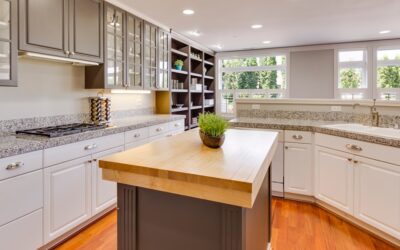
A well-chosen kitchen island centerpiece is the finishing touch that turns a functional work surface into a designed focal point. The island is often the largest and most visible surface in an open kitchen, and the right arrangement of greenery, bowls, trays, and objects gives the whole room warmth and intention without getting in the way of cooking. This guide covers everyday styling, seasonal looks, the scale rules that keep things balanced, and how to build a centerpiece that’s beautiful and practical.
Part of our Kitchen Remodeling guide — explore the full guide →
- Why a Centerpiece Matters
- Everyday Centerpiece Ideas
- The Rule of Three
- Getting the Scale Right
- Seasonal Centerpiece Looks
- Choosing Vessels and Materials
- Greenery and Florals
- Candles and Lighting Accents
- Keeping It Practical
- Matching the Centerpiece to Your Kitchen Style
- Common Styling Mistakes to Avoid
- Budget-Friendly Centerpiece Ideas
- Styling Your Island with Confidence
Why a Centerpiece Matters
Because kitchen islands are usually visible from adjoining living and dining areas, a bare island can make an otherwise finished kitchen feel unstyled, while a cluttered one feels chaotic. A thoughtful centerpiece anchors the space, adds color and texture, and signals that the kitchen is a lived-in, cared-for room. The trick is styling that reads as intentional but still leaves room to actually use the island for prep and gathering.
Everyday Centerpiece Ideas
For daily use, keep it simple, low-maintenance, and functional:
- A large fruit bowl in wood, ceramic, or woven material—decorative and useful.
- A wooden tray or board corralling oils, salt, and a small plant for a tidy vignette.
- A single statement vase with fresh or dried stems.
- A potted herb trio that looks good and flavors your cooking.
- A stack of cookbooks topped with a small object for height.
The Rule of Three
Designers lean on odd numbers because they feel more natural and dynamic than even ones. Group your centerpiece elements in threes: for example, a tall vase, a medium bowl, and a short stack of books. Vary the heights so the eye travels up and down, and cluster items rather than spreading them in a straight line. This simple principle instantly makes an arrangement look professionally styled rather than random.
Getting the Scale Right
Scale is where most centerpieces go wrong. A tiny bud vase looks lost on a 7-foot island, while a massive arrangement blocks sightlines and workspace. Follow these proportion guidelines:
- Keep the centerpiece to about one-third the island’s length so it doesn’t overwhelm the surface.
- Match the visual weight to the island size—big islands can carry larger, taller pieces.
- Stay under about 12–14 inches tall if the island is used for dining, so people can see across it.
- Leave the working end clear for prep and homework.
Seasonal Centerpiece Looks
Rotating your centerpiece with the seasons keeps the kitchen feeling fresh:
- Spring: tulips or branches in a clear vase, a bowl of lemons, pastel linens.
- Summer: sunflowers, a woven tray of stone fruit, a citronella candle.
- Fall: mini pumpkins, dried wheat, warm-toned gourds on a wooden board.
- Winter/holidays: evergreen sprigs, pinecones, candles, or a bowl of ornaments.
Swapping just the vase contents or a single decorative element does the job without buying an entirely new arrangement.
Choosing Vessels and Materials
The container matters as much as what’s in it. Mix materials for texture and interest:
- Natural wood boards and bowls add warmth and pair with almost any style.
- Ceramic and stoneware bring color and a handmade feel.
- Glass and clear vases keep arrangements light and airy.
- Woven baskets and rattan lend a relaxed, organic look.
- Metal accents in brass or matte black tie into modern hardware.
Greenery and Florals
Nothing enlivens an island like something growing. Your options range by effort level:
- Fresh cut flowers for maximum impact, changed weekly.
- Potted herbs like basil, rosemary, and thyme—decorative and edible.
- Faux stems that look convincing and need zero care.
- Dried arrangements like pampas grass or eucalyptus for long-lasting texture.
- A single trailing plant such as pothos in a handsome pot.
Candles and Lighting Accents
Candles add ambiance for evening gatherings. Group a cluster of pillar candles of varying heights on a tray, or use a hurricane lantern for a protected flame. Battery-operated LED candles are a safe, mess-free alternative near cooking areas. Keep any open flame away from the working end of the island and never leave it unattended. A trio of candles on a wooden board is one of the simplest and most inviting centerpieces you can make.
Keeping It Practical
The best kitchen island centerpiece survives real life. A few practical rules:
- Make it easy to move so you can clear the island for big cooking sessions.
- Avoid anything precious that can’t handle splashes and spills.
- Skip strong-scented items that clash with food aromas.
- Choose low-maintenance greenery if you won’t fuss over fresh flowers.
- Anchor everything to a tray so cleanup is a single lift-and-wipe.
Matching the Centerpiece to Your Kitchen Style
Your centerpiece should feel like it belongs with your kitchen’s overall design. Coordinating the materials and colors ties the whole room together:
- Farmhouse kitchens: Woven baskets, galvanized containers, mason jars, and fresh wildflowers or eucalyptus.
- Modern kitchens: A single sculptural bowl, monochrome ceramics, or one bold architectural stem in a clean vase.
- Traditional kitchens: Silver or brass trays, footed compotes, and classic floral arrangements.
- Coastal kitchens: Light woods, glass floats, and airy greenery in soft blues and whites.
- Industrial kitchens: Concrete or metal vessels, dark tones, and structural dried grasses.
Pull one accent color from your backsplash, hardware, or bar stools into the centerpiece so it reads as an intentional part of the room rather than a random addition.
Common Styling Mistakes to Avoid
A few missteps can undercut even a beautiful arrangement. Watch out for these:
- Going too tall on an island used for dining, blocking conversation and sightlines.
- Overcrowding the surface so there’s no room left to prep or set down groceries.
- Using too many tiny objects that read as clutter instead of a curated vignette.
- Ignoring scale—a small piece disappears on a large island while an oversized one overwhelms a small one.
- Forgetting maintenance and leaving wilted flowers or dusty décor that makes the whole kitchen look neglected.
The fix for most of these is restraint: fewer, better-chosen pieces on a tray, refreshed regularly, almost always look more polished than a crowded display.
Budget-Friendly Centerpiece Ideas
A beautiful island centerpiece doesn’t require a big budget. Some of the most charming arrangements use things you already own or can gather for next to nothing. Try these low-cost ideas:
- A bowl of fresh produce—lemons, apples, or artichokes—that doubles as decoration and a healthy snack.
- Clippings from your yard, such as branches, herbs, or seasonal blooms, in a simple glass jar.
- Repurposed vessels like a vintage pitcher, wooden bowl, or thrifted tray you already have.
- A stack of your own cookbooks topped with a small plant or candle.
- Seasonal finds—pinecones, gourds, or smooth stones gathered on a walk.
The secret to making inexpensive items look intentional is grouping them thoughtfully on a tray and keeping the arrangement simple. A $3 bunch of grocery-store flowers in a jar you already own can look just as polished as an expensive florist arrangement, proving that good styling is about composition and restraint far more than money spent.
Styling Your Island with Confidence
A kitchen island centerpiece is the small design decision that pulls your whole kitchen together. Keep the arrangement to about a third of the island’s length, group elements in odd numbers at varied heights, and choose vessels and greenery that suit your style and daily routine. Rotate a single element with the seasons to keep things lively, and always leave workspace free for the island’s real job. With a tray, a bowl of fruit or fresh stems, and a touch of natural texture, you can create a focal point that’s as functional as it is beautiful—the true heart of a well-loved kitchen.