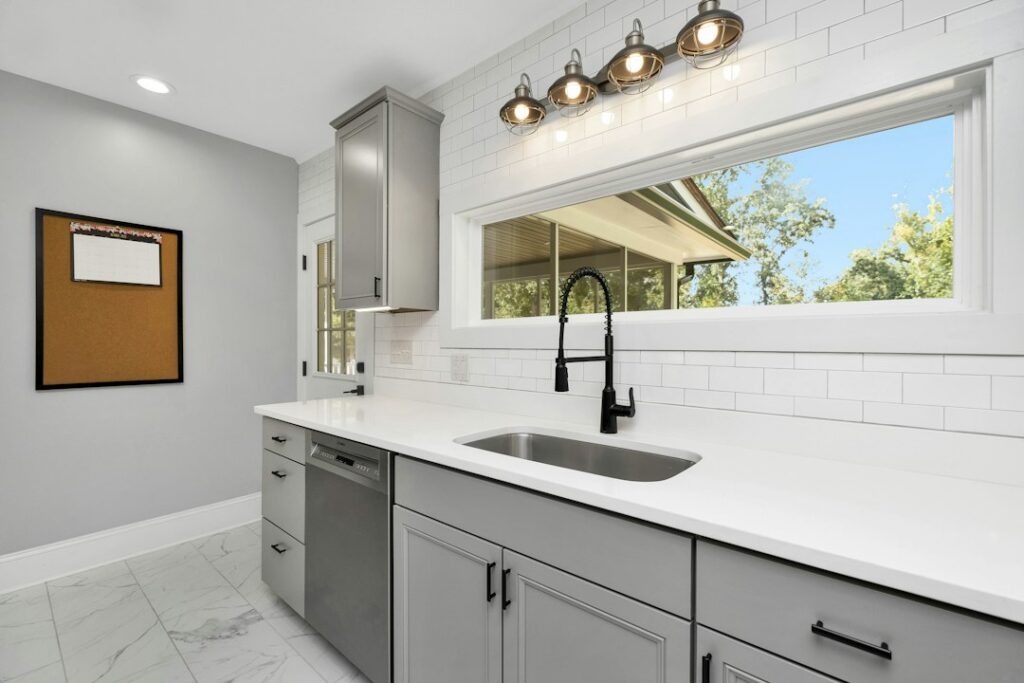
The most common sink mistake is buying the biggest bowl that seems to fit and discovering, too late, that it will not clear the cabinet frame. Selecting the right kitchen sink for 36 inch cabinet comes down to one number most people overlook: the cabinet’s interior width, not its face width. A 36-inch base cabinet gives you generous room, but the sink still has to fit inside the box with clearance on both sides. Get the math right and installation is a Saturday project; get it wrong and you are returning a heavy cast-iron sink you already cut a countertop for.
Part of our Kitchen Remodeling guide — explore the full guide →
- The One Measurement That Matters Most
- Single Bowl vs Double Bowl
- Mounting Styles and How They Affect Fit
- Depth and Ergonomics
- Material Choices Worth Considering
- Faucet and Accessory Clearance
- Step-by-Step Fit Check Before You Buy
- Fitting a 33 Inch Undermount Sink in a 36-Inch Base Cabinet
- What a 36in Sink Base Holds, and Where a 36 Inch Stainless Steel Sink Fits
- Final Recommendation
The One Measurement That Matters Most
A 36-inch cabinet refers to the outside width of the base. Subtract the cabinet walls and the face frame and your true interior opening is usually around 33 to 34 inches. Your sink’s overall footprint, including the rim, must fit within that interior with at least a small margin on each side for the mounting clips and the countertop lip.
The practical result: a 36-inch cabinet comfortably accepts a sink with an overall width up to about 33 inches. That is why 30-inch and 33-inch sinks are the sweet spot for this cabinet size. Anything larger risks colliding with the cabinet sides or leaving no room for the countertop overhang.
Single Bowl vs Double Bowl
With 36 inches to work with, you genuinely get to choose based on how you cook rather than being forced by space. Both configurations fit well, so the decision is about function.
Single Bowl
A single large bowl, typically 30 to 33 inches wide, is ideal if you wash big cookie sheets, roasting pans, and stockpots. There is no center divider to fight, so oversized items lie flat. Single bowls have surged in popularity for exactly this reason, and a 36-inch cabinet is the perfect home for a roomy 30-inch single.
Double Bowl
A double bowl lets you separate tasks, soaking on one side and rinsing on the other, or stacking dirty dishes while keeping a clean prep area. In a 36-inch cabinet you can fit a true 50/50 split or a 60/40 with a larger main basin. If you hand-wash frequently or lack a dishwasher, the two-bowl layout earns its keep.
Mounting Styles and How They Affect Fit
How the sink attaches to the counter changes both the look and the usable bowl space. Three styles dominate:
- Top-mount (drop-in): The rim sits on top of the counter. Easiest to install and most forgiving of a slightly off cutout, but the rim collects crumbs.
- Undermount: Mounted beneath the counter for a seamless wipe-down surface. Requires a solid surface counter like quartz or granite and precise support brackets.
- Farmhouse (apron front): The front face is exposed and the sink sits forward. This style needs a cabinet specifically built or modified for an apron, so confirm your 36-inch cabinet is farmhouse-ready before buying.
For a standard 36-inch base without modification, a drop-in or undermount sink is the straightforward choice.
Depth and Ergonomics
Bowl depth affects both comfort and capacity. Standard bowls run 8 to 10 inches deep. A deeper 10-inch bowl hides more dishes and reduces splashing, but if you are tall you may find yourself hunching. If back comfort matters, a 9-inch bowl often hits the sweet spot. Also check that a deep bowl leaves room below for your garbage disposal and P-trap, since a 36-inch cabinet has plenty of width but the same limited vertical space as any base cabinet.
Material Choices Worth Considering
The cabinet size does not limit your material, so choose for durability and maintenance:
- Stainless steel: Lightweight, affordable, and forgiving. Choose 16 or 18 gauge; lower numbers are thicker and quieter. $150 to $500.
- Fireclay or cast iron: Classic look and extremely durable, but heavy enough to demand extra cabinet support. $300 to $800.
- Granite or quartz composite: Scratch and stain resistant with a matte finish that hides water spots. $250 to $600.
If you go heavy with cast iron or fireclay, add a support cradle or cleats inside the cabinet so the weight does not rest entirely on the countertop cutout over time.
Faucet and Accessory Clearance
Do not forget what happens behind the bowl. A tall pull-down faucet needs clearance from the window or backsplash, and the faucet holes on the sink must match your chosen faucet’s configuration, whether single-hole or a three-hole spread. Many modern sinks in a 36-inch cabinet also come with roll-up racks, cutting boards, and colanders sized to the bowl, which turn the sink into a full prep station.
Step-by-Step Fit Check Before You Buy
- Open the cabinet and measure the true interior width at the top, front to back and side to side
- Confirm the sink’s overall width is at least 1.5 inches less than that interior opening
- Verify the countertop cutout template that ships with the sink fits within your counter’s front-to-back depth
- Check that the drain location clears your existing plumbing rough-in
Fitting a 33 Inch Undermount Sink in a 36-Inch Base Cabinet
A 33 inch undermount sink is one of the most popular choices for a 36-inch base, but undermount models need a different fit check than drop-in sinks. The bowl hangs from the underside of the stone, so the outer flange, the mounting hardware and the countertop fabricator’s cutout all have to work together inside the cabinet box.
Check the Flange, Not Just the Bowl
Undermount sinks are often listed by their outside dimension, but some list the bowl size and add a flange of half an inch or more on each side. Look at the spec sheet for the overall width including the flange. In a 36-inch cabinet with an interior of roughly 33 to 34 inches, a sink with a true overall width close to 33 inches leaves very little room. Many installers trim the inside face of the cabinet sides or the top of the face frame slightly to make room for the flange and clips, which is normal but should be planned before the counter arrives.
Choosing a Reveal
The reveal is how the countertop edge meets the sink rim, and the fabricator needs to know your choice before cutting:
- Positive reveal: a thin strip of the sink rim shows around the cutout. Easy to clean along the edge and forgiving of small alignment errors.
- Zero reveal: the stone edge lines up flush with the sink wall for a clean look, but it demands precise placement.
- Negative reveal: the stone overhangs the bowl slightly, hiding the rim but creating a ledge where grime can collect.
A positive or zero reveal is the practical pick for most busy kitchens.
Support and Mounting Hardware
Because an undermount sink hangs below the counter, its weight plus water and dishes pulls on the mounting system every day. Most fabricators bond clips or anchors to the underside of the stone with a two-part adhesive and seal the rim with a bead of silicone. For heavy materials such as fireclay, cast iron or thick composite, add a support frame, rails or wood cleats screwed into the cabinet sides so the sink rests on something solid rather than relying only on clips. Stainless sinks are lighter, but a full bowl of water still adds real weight, so support rails are cheap insurance.
Setback, Faucet Deck and Drain Position
Ask the fabricator to leave enough stone behind a 33 inch undermount sink for the faucet, soap dispenser or air gap, typically a few inches between the back edge of the cutout and the backsplash. A front setback of a couple of inches from the counter edge keeps the bowl comfortable to reach and keeps the stone strong at its thinnest point. Rear drain or offset drain bowls free up space under the sink for a disposal and pull-out trash. Shut off the water and relieve pressure before reconnecting supply lines, and call a licensed plumber if the drain rough-in has to move.
What a 36in Sink Base Holds, and Where a 36 Inch Stainless Steel Sink Fits
A standard 36in sink base is 36 inches wide, 34.5 inches tall without the countertop, and 24 inches deep. It holds a sink up to about 33 inches wide. A full 36 inch stainless steel sink is too wide for it and normally goes in a 39 or 42 inch base instead.
The names are easy to mix up. A 36-inch sink base is sized by the outside of the cabinet box. A 36-inch sink is sized by its overall rim or flange. Matching the two numbers is one of the most common ordering mistakes in kitchen remodels.
How a sink base differs from a regular base cabinet
- No drawers: the top rail has a false drawer front, often tilt-out, so the bowl can drop into the box.
- Open or cut-out back: the back is open or easy to cut for the drain, supply lines, and disposal cord.
- Few or no shelves: most have an open floor, sometimes with a removable half shelf, to leave room for the P-trap.
- Floor protection: many newer sink bases have a moisture-resistant floor or a drip tray. They cost a little more but they hold up much better against slow leaks.
Matching sink width to cabinet width
| Sink base width | Typical maximum sink width | Common sink choices |
|---|---|---|
| 30 inches | About 27 inches | 24 to 27 inch single bowl |
| 33 inches | About 30 inches | 27 to 30 inch single or small double |
| 36 inches | About 33 inches | 30 inch single, 33 inch double or undermount |
| 39 to 42 inches | About 36 inches | 36 inch stainless steel workstation or large double |
If you have your heart set on a 36 inch stainless steel sink, plan the cabinet layout around it from the start. Widening an existing 36-inch base to 39 or 42 inches means removing a neighboring cabinet or filler. That also changes the countertop, so it is easiest to do during a full remodel.
The exception is an apron-front sink. A 36-inch farmhouse sink is made for a 36-inch apron-front base, because the exposed front of the sink replaces the cabinet’s top rail. Standard sink bases cannot take one without cutting and reinforcing, so order the matching apron base.
Checking an existing sink base
Open the doors and measure between the inside faces of the side walls at the top of the box, plus the height from the cabinet floor to the underside of the counter. You need room under the bowl for the disposal, the trap, and any filter or water heater. If the cabinet floor is soft or stained from old leaks, replace the base before the new sink goes in rather than after.
Final Recommendation
For most homeowners, a 30-inch single bowl or a 33-inch double bowl is the ideal kitchen sink for 36 inch cabinet, leaving clean clearance for the countertop and mounting hardware. Measure the interior opening first, pick single or double based on how you actually cook, and confirm the material weight matches your cabinet’s support. Nail those three points and you will end up with a sink that fits perfectly and serves your kitchen for the next 20 years.