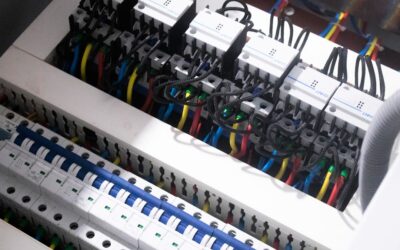
Most kitchen wiring failures and code violations come from the same root cause: someone tried to add a microwave or instant pot to a 1990s-era circuit that was never designed for the load. A proper kitchen wiring diagram for a modern kitchen follows the 2023 National Electrical Code requirements for dedicated circuits, GFCI protection, AFCI protection, and outlet spacing — and skipping any one of those rules either fails inspection or quietly creates a fire risk. Whether you are remodeling or just trying to understand what is behind your drywall, the rules are surprisingly specific.
Part of our Kitchen Remodeling guide — explore the full guide →
Required Circuits Under the 2023 NEC
A code-compliant modern kitchen needs at least seven distinct circuits in most cases, and many have eight or more:
- Two 20-amp small appliance branch circuits (NEC 210.11(C)(1)) — feed all countertop receptacles. Cannot serve anything outside the kitchen except the dining room.
- One 20-amp circuit for the refrigerator — technically allowed on a small appliance circuit but recommended dedicated to prevent food loss when a breaker trips.
- One 20-amp dedicated circuit for the dishwasher — required by code in most jurisdictions.
- One 20-amp dedicated circuit for the garbage disposal — separate from the dishwasher.
- One 20-amp dedicated circuit for the microwave — required for any built-in or over-range microwave.
- One 50-amp 240V circuit for an electric range — usually 6/3 NM-B cable with ground.
- One 15-amp lighting circuit — separate from receptacles to keep lights on during a tripped outlet circuit.
For kitchens with induction cooktops and wall ovens, plan for separate 240V circuits for each unit. An induction cooktop typically needs 40 to 50 amps, and a wall oven 30 to 40 amps.
GFCI Protection Requirements
NEC 210.8 requires GFCI protection on all 125-volt and 250-volt receptacles serving the kitchen. This includes countertop outlets, the dishwasher receptacle, the garbage disposal receptacle, and the refrigerator outlet. Even hardwired appliances connecting to a junction box within 6 feet of a sink need GFCI protection under the 2023 update.
The cheapest way to meet GFCI requirements is a single GFCI receptacle at the start of the circuit with downstream outlets wired to its load terminals. A Leviton SmartlockPro 20A GFCI runs $18 to $25 at Home Depot and protects every receptacle downstream of it.
AFCI Protection Requirements
NEC 210.12 requires AFCI protection on all 120-volt branch circuits serving kitchen dwelling units. Combination AFCI/GFCI breakers like the Square D QO and Siemens Q120AFCGFI cost $50 to $80 each but cover both requirements at the panel rather than requiring GFCI receptacles at every outlet. For a kitchen remodel with seven new circuits, expect $350 to $550 just in protective breaker costs.
Countertop Outlet Spacing
NEC 210.52(C) sets countertop outlet rules so no point along the counter is more than 24 inches from a receptacle. In practical terms, this means:
- Every counter section 12 inches or longer gets at least one receptacle
- Outlets cannot be more than 48 inches apart along a continuous countertop
- Each island and peninsula counter requires at least one receptacle, accessible without reaching across the appliance
- Outlets must be mounted within 20 inches above the countertop
Pop-up outlets, like the Hubbell PT15 or Lew Electric PUR-15, install in the countertop surface and disappear when not in use. They satisfy code for island installations where wall-mounted outlets are not an option.
Wire Sizing and Cable Selection
For 20-amp circuits, run 12/2 NM-B cable with ground. The 14-gauge wire used for 15-amp lighting circuits is not allowed on 20-amp small appliance circuits. For the 50-amp range circuit, use 6/3 NM-B cable with ground if the run is less than 50 feet, or step up to 4/3 for longer runs to manage voltage drop.
Always pull cable through holes drilled at least 1.25 inches from the stud face, or protect the cable with metal nail plates per NEC 300.4. Stapling cable to studs without strain relief is a common code violation that comes up at inspection.
Panel and Subpanel Considerations
A typical kitchen pull adds 100 to 140 amps of new load to the panel. Most older homes with 100-amp main service cannot accommodate this without a service upgrade. Modern remodels often add a 100-amp kitchen subpanel fed from the main, which makes future expansion easier and shortens the wire runs from breaker to outlet.
Service upgrades from 100 to 200 amps run $2,500 to $5,500 depending on whether the utility needs to replace the service drop. Permit and inspection costs add another $200 to $500. Always pull the permit; unpermitted electrical work voids most homeowner insurance claims related to electrical fires.
Lighting Circuit Layout
The 15-amp lighting circuit typically powers ceiling fixtures, recessed cans, under-cabinet lights, and any decorative wall sconces. Plan four to six recessed lights spaced 4 to 5 feet apart in a 12 by 12 foot kitchen. Add under-cabinet LED strips like the Hyperikon UCH or WAC LEDme for task lighting at the counter.
Under-cabinet lights tie into the 15-amp lighting circuit through a switch or dedicated controller. Hardwire them rather than relying on plug-in versions; the cleaner look matters in any kitchen remodel above $30,000.
Common Wiring Mistakes
The mistakes that consistently fail inspection: sharing a small appliance circuit with bathroom outlets, mounting a junction box behind cabinets where it cannot be accessed without removing the cabinet, missing GFCI protection on the refrigerator outlet, using stab-in (back-wired) connections on 20-amp outlets, and feeding the disposal off the dishwasher circuit. Each of these is a quick failure on a rough-in inspection.
Use spec-grade receptacles for 20-amp circuits, not residential grade. Leviton 5362 and Hubbell BR20 cost $4 to $8 each versus $1.50 for residential, but they handle the actual amp load and reduce contact arcing over time.
What an Electrician Charges
Hiring a licensed electrician for a kitchen remodel typically costs $2,500 to $8,000 depending on circuit count, drywall access, and panel work. Hourly rates run $90 to $150 nationally, higher in major metros. Flat-rate per-circuit pricing often comes in at $250 to $500 per new circuit including the breaker and one outlet. Service upgrades, subpanel installation, and complete rewires of older homes climb to $8,000 to $20,000 or more.
Pulling Permits the Right Way
Most jurisdictions require an electrical permit for any new circuit. Permit fees run $75 to $300 depending on the county. The permit typically includes one rough-in inspection (before drywall) and one final inspection (after fixtures and devices are installed). Skipping the permit usually costs more in the long run if the work is discovered at home sale, because lenders increasingly require disclosure of unpermitted electrical work.