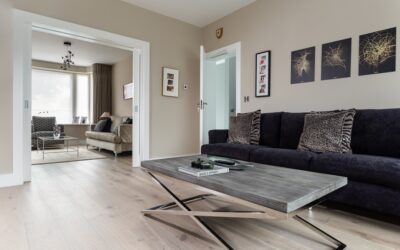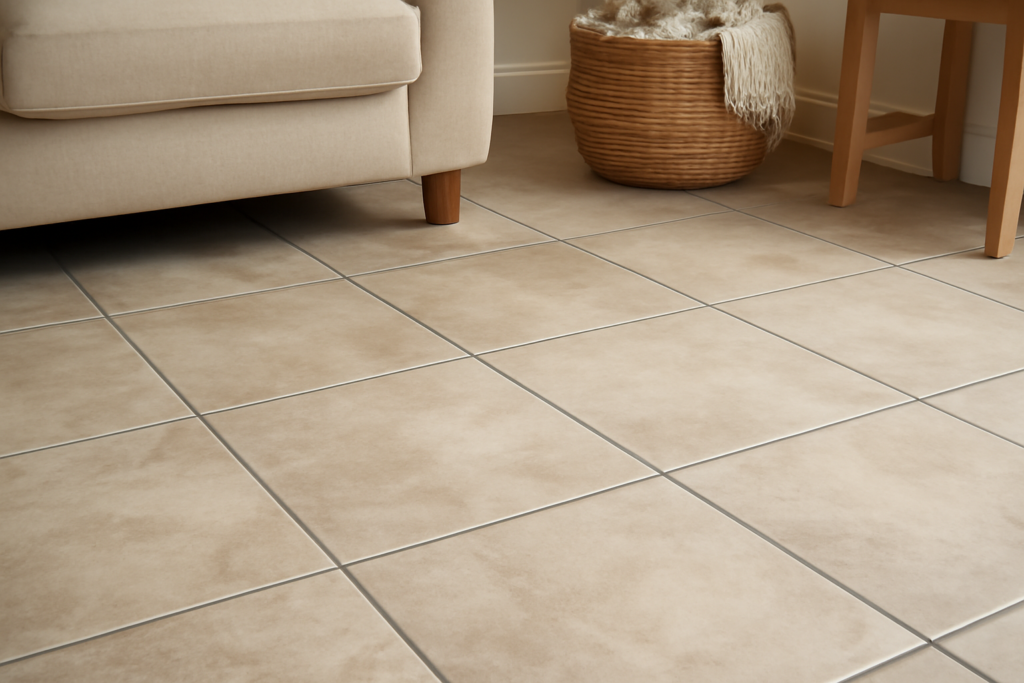
Walk into a well-appointed kitchen with what looks like large-format porcelain tile, tap it, and you might be standing on wood. Laminate flooring that looks like ceramic tile has closed the visual gap so far that homeowners routinely mistake it for the real thing, right down to the grout lines and the subtle variation across pieces. Modern printing and embossing put a convincing stone or ceramic image under a durable wear layer, and the result costs a fraction of a genuine tile job.
Part of our Tile & Grout guide — explore the full guide →
The appeal is obvious once you consider what tile actually demands: a mortar bed, grout, days of curing, and a cold, hard surface underfoot. Tile-look laminate delivers the aesthetic while dodging those downsides. Here is how it works, where it shines, and where real tile still wins.
How Laminate Mimics Ceramic Tile So Well
The realism comes from a stack of engineered layers. A high-resolution photographic image of stone, marble, or ceramic sits over a dense fiberboard core, protected by a clear aluminum-oxide wear layer. The best products add embossed-in-register texture, meaning the surface bumps and grooves line up exactly with the printed image, so a “grout” line you see is also a line you feel. That registration is the difference between a floor that fools people and one that looks flat and fake.
Tile-look laminate comes in larger square and rectangular formats to echo real tile proportions, often 12-by-24 inches or larger squares, with beveled edges that read as grout joints. Some lines let you install a matching grout compound between pieces for an even more authentic finish, though most homeowners skip it to keep installation simple.
Why Choose It Over Real Ceramic
The practical wins pile up fast, starting with your feet. Real ceramic and porcelain are cold and unyielding, while laminate is warmer to the touch and more forgiving to stand on. That matters in a kitchen where you spend hours cooking or a bathroom you step into barefoot each morning.
- Cost: Tile-look laminate runs $1.50 to $4 per square foot versus $5 to $15 installed for real porcelain, a dramatic saving.
- Installation speed: Click-lock laminate floats over an underlay in a day; tile requires mortar, spacers, grout, and days of curing.
- Comfort: Warmer and softer underfoot than stone or ceramic, and easier on dropped dishes.
- DIY-friendly: No wet mortar or grout skill required, so a confident homeowner can do it.
- No grout maintenance: Real grout stains and needs sealing; laminate skips that chore entirely.
The Limitations to Understand
Laminate is not tile, and the biggest difference is water. Standard laminate has a fiberboard core that swells and delaminates when water sits on it or seeps into the seams. Real ceramic laughs off standing water; ordinary tile-look laminate does not. For bathrooms and heavy-splash areas, you need a water-resistant or waterproof laminate specifically rated for wet zones, and even then you should wipe up spills promptly.
Feel is the other giveaway to a discerning eye. Even the best tile-look laminate does not have the exact cool, solid density of real porcelain, and a knowledgeable buyer or appraiser can tell. Laminate also cannot be refinished; once the wear layer is scratched through, the plank must be replaced. And while individual click planks swap out, matching an exact discontinued pattern years later can be difficult.
Choosing the Right Product
A few specs separate a floor that convinces from one that disappoints. Prioritize these when you shop.
- AC rating: Look for AC3 for residential and AC4 or AC5 for busy households and light commercial use. This measures abrasion resistance.
- Embossed-in-register texture: Insist on it. This surface-to-image alignment is what makes the tile look believable up close.
- Water resistance: For kitchens and baths, choose a product labeled water-resistant or waterproof with a swelling rating under spec.
- Thickness: 8mm to 12mm feels more solid and quiet than thin 6mm products.
- Format: Larger tiles and fewer seams look more like real high-end porcelain.
Popular Looks and Styles
The range of available looks now rivals a tile showroom. Marble-look laminate captures the veining of Carrara and Calacatta for a luxury kitchen at a budget price. Travertine and limestone patterns bring a warm, natural stone feel to entryways and sunrooms. Concrete and cement-tile looks suit modern and industrial interiors. Slate-look laminate delivers rich, dark texture for a dramatic floor without the weight and cost of real slate.
Neutral grays, warm beiges, and soft whites dominate current demand because they read as contemporary and pair with almost any cabinetry. Larger formats and lighter tones make small rooms feel bigger, while darker slate and concrete looks anchor open-plan spaces.
Installation Basics
Tile-look laminate installs like any floating laminate, which is much of its charm. Lay an appropriate underlay first, or use a product with pad already attached, and always add a vapor barrier over concrete. Leave a 1/4-inch to 3/8-inch expansion gap around the perimeter so the floor can move with humidity, and cover that gap with baseboard or quarter round. Acclimate the planks in the room for 48 hours before you start.
For a truly tile-like result in a water-prone room, choose a waterproof product and apply a compatible seam sealant or the manufacturer’s grout compound between planks. Stagger the end joints, cut around cabinets and thresholds cleanly, and roll or tap each row tight so the seams stay closed. Done carefully, the finished floor passes for real tile at a glance and beats it on comfort, cost, and installation time.
Is It Right for Your Home
Tile-look laminate is the smart choice when you want the porcelain or stone aesthetic without the price, the cold, or the long installation. It excels in kitchens, dining rooms, entryways, and living areas, and with a waterproof product it works in bathrooms and laundry rooms too. Families with kids and pets appreciate that it is warmer, softer, and cheaper to replace than real tile.
If you need a floor for a shower surround, a floor that lasts 50 years without replacement, or one that adds the specific resale value of genuine stone, real ceramic still wins. For nearly every other room, laminate flooring that looks like ceramic tile gives you the look you want at half the cost and a fraction of the labor.
Prefer to explore on your own?
See how new flooring looks in your actual room in seconds — free, no signup.
Try the free Floor Studio →