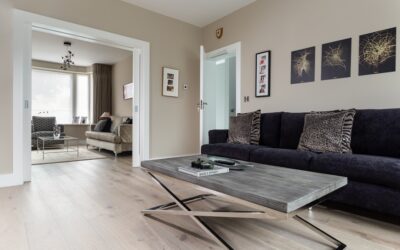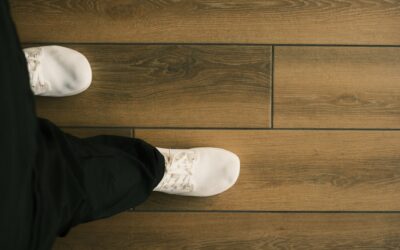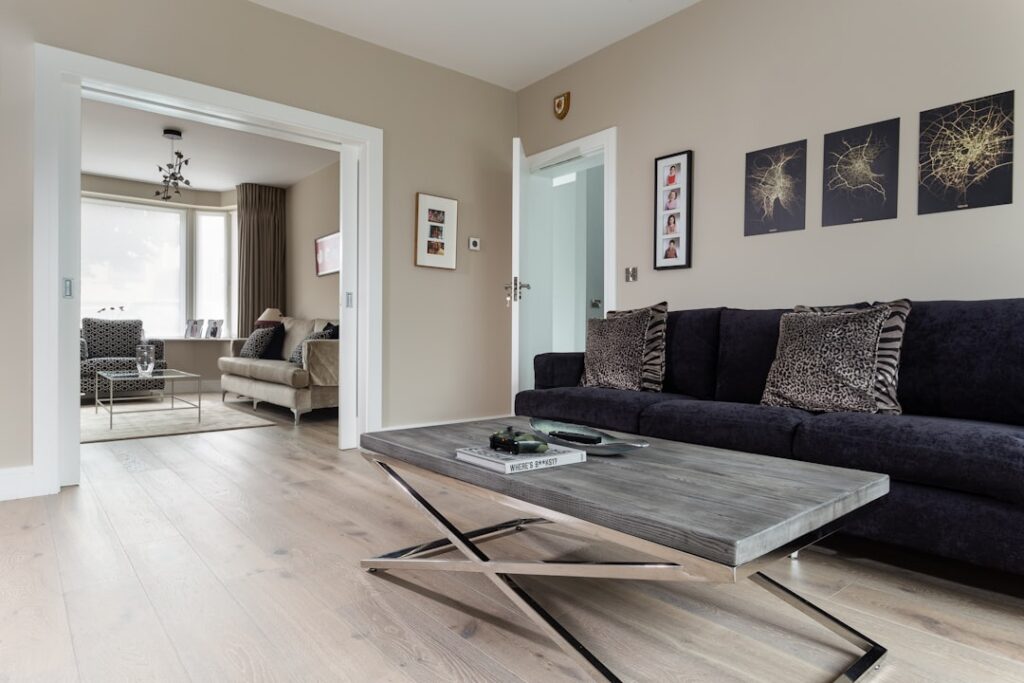
The term laminate timber covers a category that has changed dramatically in the past decade, and many homeowners still picture the warped, hollow-sounding planks of the early 2000s. Today’s products use deeper embossing, denser HDF cores, and water-resistant edge seals that compete directly with engineered hardwood at half the price. After installing it in four homes across different climate zones, here is what actually matters when you are buying.
What Laminate Timber Actually Is
Laminate timber is a multi-layer floating floor built around a high-density fiberboard (HDF) core. A photographic image of real timber sits under a clear melamine wear layer, and a balancing layer underneath prevents warping. Modern products are typically 8 to 12 mm thick, with the best ones using 10 to 12 mm boards for a more substantial underfoot feel.
The image layer has improved enormously. Premium planks now use synchronized embossing where the surface texture aligns with the printed grain, making it genuinely hard to distinguish from real oak at standing distance. Less expensive products still betray themselves with repeating patterns visible every six to eight planks.
Understanding AC Ratings
The Abrasion Class (AC) rating is the single most important spec, and it directly predicts how long the floor will hold up. The scale runs from AC1 to AC5.
- AC3: Light residential, bedrooms only, $1.49 to $2.49 per square foot
- AC4: Heavy residential and light commercial, the sweet spot for most homes, $2.29 to $3.99 per square foot
- AC5: Commercial duty, near-indestructible for residential use, $3.49 to $5.99 per square foot
For a typical family home with kids and a dog, AC4 is the right target. AC3 will show wear in hallways within five years, and AC5 is overkill unless you run a daycare.
Water Resistance: Read the Fine Print
“Water-resistant” and “waterproof” mean different things, and laminate marketing often blurs the line. True waterproof laminate uses a stone-polymer or wood-polymer composite core that does not swell when wet. Standard laminate, even “water-resistant” variants, will swell at the joints if water sits for more than 30 minutes.
For kitchens, bathrooms, and laundry rooms, only buy laminate explicitly rated waterproof with a written 24-hour or 72-hour spill warranty. Pergo Extreme, Mohawk RevWood Plus, and Quick-Step Impressive Ultra all meet that bar. Standard AquaSeal laminate is fine for living areas but should not see direct water exposure.
Real Installed Pricing
Total cost for laminate timber installed in 2026 sits in these ranges, including underlay, beading, and labor:
- Budget AC3 with foam underlay: $3.50 to $5 per square foot installed
- Mid-range AC4 with quality underlay: $5.50 to $7.50 per square foot installed
- Premium waterproof AC4 with attached underlay: $7.50 to $10 per square foot installed
- Commercial-grade AC5 with acoustic underlay: $9.50 to $13 per square foot installed
For a 1,200 square foot main floor in mid-range product, expect $6,600 to $9,000 total. That sits roughly $4,000 below engineered hardwood at comparable visual quality.
Best Brands in 2026
Several brands consistently deliver strong value and longevity. Quick-Step makes some of the tightest-fitting click systems in the industry, with their Impressive line standing up to dishwasher leaks for 24 hours without joint failure. Pergo Outlast Plus and Pergo Extreme have excellent surface durability and competitive pricing through Lowes. Mohawk RevWood Plus uses an attached cork backing that meaningfully improves underfoot feel and sound damping.
European brands like Egger, Krono Original, and Faus offer thicker boards (12 mm) at competitive pricing if you can find a stocking dealer. The thicker core makes the floor feel solid rather than hollow.
Installation Considerations
Laminate is one of the most DIY-friendly flooring categories. A handy homeowner can install a 200 square foot room in a long weekend with basic tools: a tapping block, pull bar, spacers, and a miter saw. Skip the cheap rental table saw and rent a proper laminate flooring cutter at $35 to $45 per day for cleaner cuts and no sawdust.
Critical installation rules that catch DIYers off-guard include leaving 5/16 inch expansion gaps at every wall, never gluing the planks together, and acclimating the boxes flat in the room for 48 hours before laying. Skipping acclimation causes peaking and gapping within months as humidity shifts.
Where Laminate Beats Hardwood
Laminate timber wins outright in rental properties, basements, high-traffic family rooms, and homes with large dogs. Surface scratches that would devastate a hardwood floor barely register on AC4 laminate. The lack of refinishing potential is not a real drawback when the planks cost a third of solid oak to replace outright after 20 years.
Underlay Selection Drives Real Performance
The underlay beneath laminate timber affects sound, comfort, and moisture protection more than most buyers expect. Cheap 2 mm foam underlay at $0.25 per square foot transmits footstep noise readily and provides minimal cushion. Quality 3 mm closed-cell foam with integrated vapor barrier runs $0.55 to $0.85 per square foot and meaningfully improves the floor’s underfoot feel. Premium cork underlay at $1.10 to $1.50 per square foot delivers the best sound absorption (important in two-story homes and condos) and slight thermal insulation that pays back through reduced floor heat loss. For basement installations or any concrete subfloor, the integrated vapor barrier is not optional. Standalone polyethylene film over the slab plus a cushion underlay above doubles the install steps but eliminates moisture issues entirely.
Where Laminate Falls Short
Standing water, deep gouges, and resale appeal in premium markets are the three weak spots. Laminate cannot be sanded and refinished, so any deep damage requires full plank replacement, which is feasible but visible if the dye lots differ. In luxury home markets above $1.5 million, buyers and appraisers still expect real wood, and laminate timber can soften the sale price.
For everything else, the modern category delivers durable, attractive flooring at pricing that leaves room in the budget for the rest of the renovation. Pick AC4 or better, match water resistance to the room, and you will get 18 to 25 years of solid performance.
Prefer to explore on your own?
See how new flooring looks in your actual room in seconds — free, no signup.
Try the free Floor Studio →