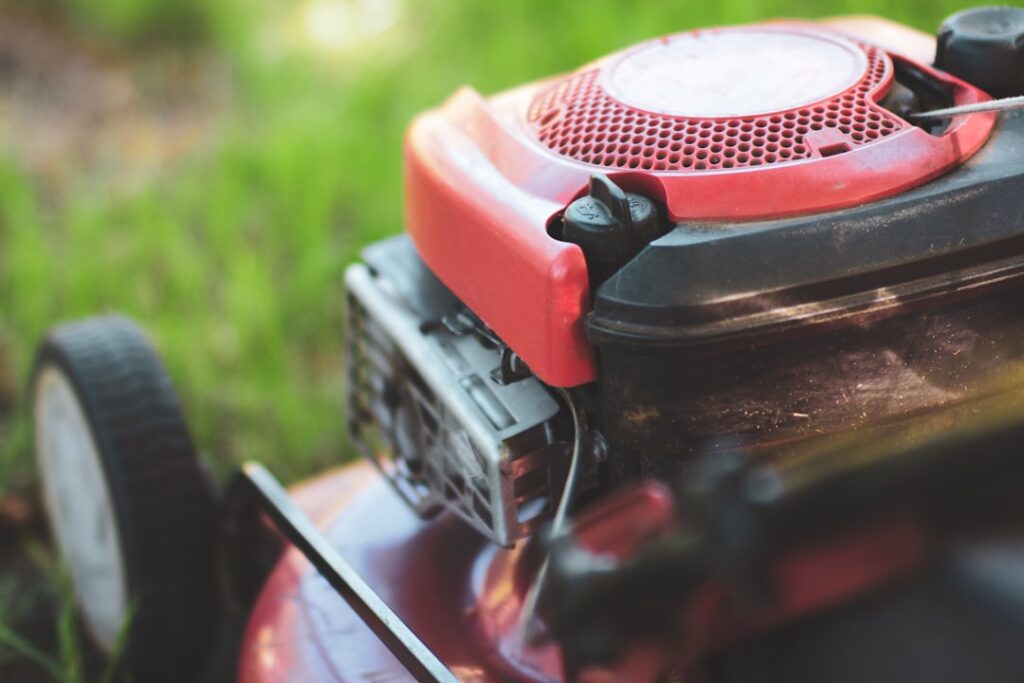
When your mower revs erratically, will not choke properly for cold starts, or gets stuck at one speed, the culprit is often a small, cheap part most people never think about. The lawn mower throttle cable is the thin steel wire that links the control lever on the handle to the carburetor and governor, translating your speed and choke commands into actual engine response. When it stretches, kinks, or seizes, the whole engine behaves badly even though nothing is wrong internally.
The good news is that this is one of the most DIY-friendly repairs on a mower, usually costing $10 to $25 for the part. Here is how the cable works and how to fix it yourself.
- What the Throttle Cable Actually Does
- Signs Your Throttle Cable Is Failing
- Diagnosing the Problem
- Adjusting a Loose or Stretched Cable
- Replacing the Throttle Cable
- Throttle Cable vs. Governor and Carburetor Issues
- Choosing the Right Replacement Cable
- Maintaining the Cable for Long Life
- Tools and Parts You Will Need
- When to Call a Professional
- The Bottom Line
What the Throttle Cable Actually Does
On most walk-behind and riding mowers, a single control lever handles both throttle and choke through the same cable. Pushing the lever toward the choke or fast position pulls the inner wire, which rotates the throttle plate and, at the far end, engages the choke for cold starting. Sliding it back toward slow lets the governor and spring return the throttle. The cable has two parts: a flexible outer housing that stays fixed and an inner steel wire that slides inside it. When either part fails, the connection between your hand and the engine breaks down.
Signs Your Throttle Cable Is Failing
A bad cable shows up in several recognizable ways:
- The engine will not reach full RPM even with the lever pushed all the way to fast.
- The choke does not fully engage, making cold starts difficult or impossible.
- The control lever feels loose, sloppy, or moves with no effect on the engine.
- The engine speed changes on its own or sticks at one RPM.
- You see a frayed, kinked, or rusted section of cable.
Because these symptoms overlap with carburetor and governor problems, always inspect the cable first, since it is the cheapest and easiest thing to rule out.
Diagnosing the Problem
Before buying a part, confirm the cable is the issue. With the engine off, move the control lever through its full range and watch the carburetor end. The throttle arm on the carburetor should move smoothly and fully as you slide the lever. If the lever moves but the carburetor arm does not, or moves only partway, the inner wire is either broken, stretched, or seized inside the housing. If the arm moves fully and freely, your problem lies elsewhere, likely in the carburetor or governor. Also check that the cable clamp holding the housing has not loosened, since a loose clamp mimics a stretched cable.
Adjusting a Loose or Stretched Cable
Sometimes the cable is fine but has stretched slightly or slipped in its clamp, and a simple adjustment restores full function. Here is the process:
- Move the control lever to the fast or full-throttle position.
- Locate the cable clamp or Z-fitting where the housing is secured near the carburetor.
- Loosen the clamp screw slightly so the housing can slide.
- Gently pull the housing to take up the slack until the throttle plate is fully open with the lever at fast.
- Retighten the clamp and test the full range of motion, confirming the choke engages at one end and the throttle opens fully at the other.
This five-minute adjustment fixes many throttle complaints without replacing anything.
Replacing the Throttle Cable
If the cable is frayed, kinked, or the inner wire is broken, replacement is straightforward. Buy the exact cable for your mower’s make, model, and engine, since length and end fittings vary. Then:
- Note or photograph exactly how the old cable routes and connects at both ends.
- At the engine end, unhook the Z-bend of the inner wire from the throttle arm and unscrew the housing clamp.
- At the control lever, remove the screw or clip holding the cable and free the inner wire from the lever.
- Release the cable from any routing clips along the handle and remove it.
- Route the new cable the same way, connect the lever end first, then the engine end.
- Set the lever to fast and adjust the housing at the clamp so the throttle opens fully, exactly as in the adjustment steps above.
- Test through the full range and verify smooth choke and throttle action before mowing.
The whole job takes 20 to 40 minutes with basic hand tools.
Throttle Cable vs. Governor and Carburetor Issues
Because a bad cable mimics deeper engine problems, it helps to know how to tell them apart. If the carburetor throttle arm moves fully and freely when you work the lever but the engine still runs poorly, the cable is fine and the trouble lies elsewhere. A surging engine that hunts up and down in RPM usually points to a governor adjustment or a partially clogged carburetor, not the cable. An engine that will not rev up despite the throttle plate opening fully often has a dirty carburetor or a fuel-delivery issue. The cable is only the culprit when the connection between your lever and the carburetor arm is broken, sloppy, or incomplete. Ruling the cable in or out first, since it is the cheapest part, saves you from needlessly tearing into the carburetor.
Choosing the Right Replacement Cable
Not all throttle cables are interchangeable, and buying the wrong one wastes a trip and an afternoon. Match these details to your machine:
- Make and model number of both the mower and the engine, since the same mower may have shipped with different engines.
- Overall cable length, which must match so the routing and reach are correct.
- End fittings, since the Z-bend, barrel, or clip that connects to the lever and carburetor varies by design.
- Single vs. dual function, confirming whether your mower uses one combined throttle-choke cable or separate cables.
The cheapest and most reliable route is to order the OEM cable by your mower’s model number, or bring the old cable to a small-engine shop to match it exactly. A universal cable can work but often needs trimming and refitting.
Maintaining the Cable for Long Life
A throttle cable lasts for years with a little care. Keep it working by:
- Applying a few drops of light penetrating oil or dry lubricant into the housing once a season so the inner wire slides freely.
- Keeping the cable free of kinks, since a sharp bend weakens the wire and increases friction.
- Making sure routing clips hold the cable away from the hot muffler and moving parts.
- Cleaning grass and debris out of the control lever mechanism.
Lubrication is the single best habit, since most cable failures start with a dry, sticky wire that eventually seizes or frays.
Tools and Parts You Will Need
This is a low-cost repair that needs only basic equipment. Gather these before you start:
- A set of nut drivers or small wrenches and a screwdriver for the clamp and lever screws.
- Needle-nose pliers for handling the Z-bend and small clips.
- The correct replacement cable matched to your mower and engine, if you are replacing rather than adjusting.
- Light penetrating oil or a dry lubricant for freeing and protecting the cable.
- A phone to photograph the routing before you disconnect anything.
Total parts cost is usually $10 to $25 for the cable, and the whole job runs well under $30, compared to the $60 to $100 a shop might charge for the same fix.
When to Call a Professional
Most homeowners can handle a throttle cable adjustment or replacement, but a few situations warrant a small-engine shop. If you have adjusted and replaced the cable and the engine still will not throttle or choke properly, the problem likely lies in the carburetor or governor, which are more involved to service. If the control lever assembly itself is broken or the mounting bracket is damaged, matching parts can be tricky. And on some riding mowers and zero-turns, the cable routing is buried under panels that take significant disassembly to reach. In those cases, the shop’s labor may be worth it. For a standard walk-behind mower, though, the cable is one of the easiest and most satisfying repairs to do yourself.
The Bottom Line
A malfunctioning lawn mower throttle cable produces symptoms that look like serious engine trouble but is one of the cheapest and easiest fixes you can do. Always diagnose it first by watching whether the carburetor arm moves fully with the lever, try a simple clamp adjustment before replacing, and match any new cable exactly to your model. Keep it lubricated and kink-free, and this small part will give you crisp throttle and reliable cold starts for many seasons.