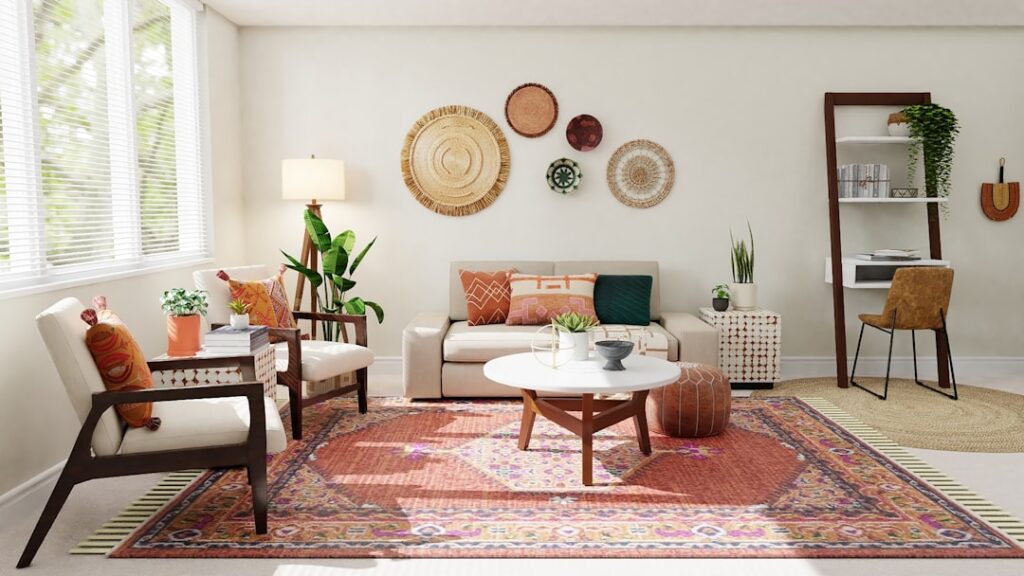
Scroll through any design feed and you will see it everywhere: a big natural-fiber rug on the bottom, a smaller patterned or plush rug on top, and a room that suddenly feels collected, cozy, and expensive. The layered rug look is one of the easiest, most forgiving decorating tricks there is, and it solves real problems, an area rug that is too small, a floor that feels cold and flat, or a room that needs texture without a full furniture overhaul. Done right, it looks intentional and designer; done carelessly, it looks like you just forgot to pick one. This guide covers the rules that keep it on the right side of that line.
Why Layer Rugs at All
Layering rugs is not just a style choice; it is practical. It lets you use a rug that is technically too small by grounding it on a larger base, so you get the pattern you love without paying for an oversized version. It adds warmth and softness underfoot, especially over hard floors. It introduces texture and depth that a single flat rug cannot, making a room feel richer and more lived-in. And it lets you refresh a space seasonally by swapping just the top rug. For renters and anyone decorating on a budget, layering stretches what you already own into a more polished result.
The Foundation: Choosing a Base Rug
The base rug is the anchor, and the classic choice is a large, neutral, flat-woven natural fiber, jute, sisal, or seagrass. These work because their organic texture reads as a warm backdrop without competing with the top rug, and their tight, low weave lets the top rug lie flat. Size the base rug generously; it should be large enough that all or most of your furniture legs can sit on it, defining the whole seating zone. A jute base in a 8×10 or 9×12 is the workhorse of the layered rug look. If you prefer, a large low-pile solid rug in a neutral tone also works as a base.
The Star: Choosing a Top Rug
The top rug is where personality comes in. This is your chance to bring in pattern, color, or plush texture. Popular choices include a vintage or faded Persian rug for a collected, boho feel, a bold geometric or Moroccan pattern for modern rooms, a cowhide for an organic accent, or a soft wool rug in a color that ties to your decor. The top rug should be smaller than the base, centered or intentionally offset, so a border of the base texture frames it. Contrast is what sells the look: a patterned top over a plain base, or a soft plush top over a coarse jute base, creates the depth that makes layering read as designed.
The Rules That Make It Work
- Vary texture: pair a flat, coarse base with a softer or more detailed top so the two layers are clearly different.
- Keep one layer calm: if the top rug is bold and patterned, keep the base neutral, and vice versa. Two busy patterns fight.
- Mind the size gap: leave roughly 6 to 18 inches of base rug showing around the top rug so the layering is obvious and framed.
- Anchor with furniture: place furniture legs on the base rug to ground the arrangement; the top rug sits within the seating area.
- Watch the height: a very thick top rug on a thin base can create a trip edge; a rug pad or low-pile top keeps it safe and flat.
- Use a rug pad or grip: to stop the top rug from sliding on the base, which ruins the look and creates a hazard.
Color and Pattern Pairing
The safest formula is a neutral base with a colored or patterned top, because the neutral grounds whatever you put on it. If you want to layer two patterns, keep them in the same color family and vary the scale, a large-scale geometric under a small-scale print, for instance, so they read as coordinated rather than clashing. Pull one color from the top rug and repeat it elsewhere in the room, in a pillow or throw, so the whole scheme feels connected. For a cohesive boho look, warm tones like rust, terracotta, and cream layer beautifully over jute. For a modern room, a black-and-cream patterned top over a natural base keeps things crisp.
Best Rooms for the Layered Rug Look
Living rooms are the natural home for layering, where a large base defines the seating area and a patterned top adds character. Bedrooms benefit enormously: a big base rug under the bed with a smaller plush rug layered at the foot or sides adds softness where your feet land. Reading nooks, home offices, and entryways all take well to a smaller layered arrangement. Even a dining room can layer a flatweave over a jute base, though keep the top rug low-pile so chairs slide easily. The look adapts to nearly any space that could use more warmth and dimension.
Common Mistakes to Avoid
The layered rug look goes wrong in a few predictable ways. Using two rugs that are too close in size makes it look like a mistake rather than a choice; the base needs to clearly frame the top. Layering two loud patterns creates visual chaos. Skipping the rug pad leaves the top rug sliding around and bunching. Choosing a base that is too small defeats the purpose, since the whole point is a generous foundation. And forgetting to tie the colors to the rest of the room leaves the rugs feeling like an isolated island. Avoid these, and layering looks effortless.
Bringing It All Together
The layered rug look is one of the most approachable ways to make a room feel warm, textured, and thoughtfully designed, and it works on almost any budget. Start with a large neutral natural-fiber base, add a smaller patterned or plush top rug with clear contrast in texture and pattern, leave a visible border of the base showing, and anchor the arrangement with your furniture. Keep one layer calm, use a rug pad, and echo the top rug’s color elsewhere in the room. Follow those simple rules and you will get the collected, cozy, magazine-worthy result that makes layering such a beloved decorating trick.