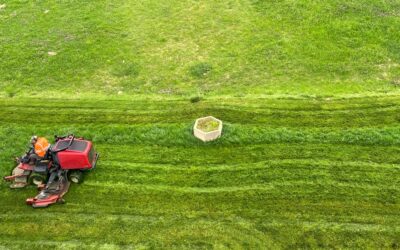
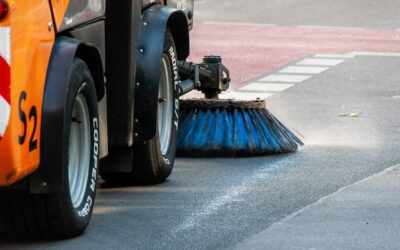
Raking leaves by hand across a half-acre lawn burns calories but also burns hours you would rather spend doing anything else. A leaf sweeper collects leaves, grass clippings, pine needles, and small debris in a fraction of the time by using rotating brushes that flick material into a collection hopper as you walk or drive. Push models start under $100 and handle suburban lots efficiently, while tow-behind units attached to a riding mower clear large properties in one pass.
How Leaf Sweepers Work
Both push and tow-behind leaf sweepers operate on the same basic mechanism. As the wheels turn, a set of internal brushes (typically 4-6 rows) spin and sweep debris upward into a fabric or mesh hopper bag mounted above the brush assembly. The faster you push or tow the sweeper, the faster the brushes rotate and the more aggressively they pick up material.
Most units have adjustable brush height to accommodate different lawn conditions, from freshly mowed turf to thick leaf cover. The hopper capacity determines how often you stop to empty the bag, ranging from 7 cubic feet on push models to 25+ cubic feet on tow-behind units.
Best Push Leaf Sweepers
Best Overall: Agri-Fab 26-Inch Push Lawn Sweeper (Model 45-0218)
This 26-inch sweeper handles residential lots up to a quarter acre efficiently. Six brush rows provide thorough pickup on the first pass, and the 7 cu ft hopper holds enough leaves for several laps before needing to be emptied. A height adjustment lever lets you customize brush contact from the handle without bending over. At around $95-$110, it delivers the best combination of performance and price in the push category.
Best for Small Yards: Gardena 3565 Push Sweeper
Gardena’s compact 25-inch push sweeper is lighter and more maneuverable than larger models, making it ideal for smaller lawns, walkways, and driveways. The collection container holds about 4.5 cu ft of debris and detaches easily for dumping. Precise height adjustment handles everything from flat pavement to rough lawn. Priced around $120-$140, it is a quality European-made option that lasts longer than budget alternatives.
Best Tow-Behind Leaf Sweepers
Best Overall: Agri-Fab 44-Inch Tow-Behind Lawn Sweeper (Model 45-0492)
The standard for tow-behind sweepers. A 44-inch sweeping width covers ground quickly behind a riding mower or lawn tractor, and the 25 cu ft hopper holds a massive volume of leaves before needing to be emptied. A universal hitch pin fits virtually all riding mowers. The hopper dumps from the seat via a pull rope, so you do not need to dismount. At $250-$300, it is the most popular tow-behind model for properties over a half acre.
Best Heavy-Duty: Ohio Steel 50-Inch Tow-Behind Sweeper
For properties exceeding an acre with heavy leaf fall, the Ohio Steel 50-inch model offers a wider sweep path and 26 cu ft hopper. A spiral brush design handles both wet and dry leaves more effectively than straight-brush designs. The heavy-gauge steel frame withstands years of use without the bending and warping that lighter frames develop. Priced around $350-$400.
Best Budget Tow-Behind: Brinly STS-427LXH
Brinly’s 42-inch sweeper at $200-$240 covers the basics well. A 20 cu ft mesh hopper with a hamper-style dump empties quickly. Six brush rows and adjustable height work effectively on most leaf and grass clipping loads. It lacks some of the finishing refinements of the Agri-Fab (no pull-rope dump, lighter frame), but for occasional fall cleanup on medium properties, it gets the job done at a lower price.
Push vs. Tow-Behind: Which Do You Need
Property size is the deciding factor. Push sweepers work well on lawns up to about a quarter acre (roughly 10,000 sq ft). They are simpler, cheaper, and easier to store. Beyond a quarter acre, the physical effort of pushing a sweeper across a large lawn negates its time-saving advantage over raking.
Tow-behind models make sense for properties over a quarter acre, especially those with heavy tree cover that drops leaves over weeks or months. Hitching a sweeper to your riding mower and clearing the entire property in 30-45 minutes beats 3-4 hours of raking or multiple passes with a push model.
Leaf Sweeper vs. Leaf Blower
Leaf blowers move leaves into piles that you still need to bag or tarp away. Leaf sweepers collect as they go, eliminating the separate bagging step. On flat, open lawns, a sweeper is faster for the complete job. Blowers win in tight spaces, flower beds, around fences, and along foundations where a wheeled sweeper cannot reach.
Many homeowners use both. A backpack blower clears leaves from beds, walkways, and hard-to-reach areas onto the lawn, then the sweeper makes one clean pass across the open grass to collect everything. This combination handles a heavily wooded property in about half the time of either tool used alone.
Tips for Better Sweeper Performance
- Sweep dry leaves. Wet, matted leaves jam brushes and stick to the hopper. Wait 24 hours after rain for the best results
- Adjust brush height properly. Brushes should lightly contact the grass tips. Too high misses leaves; too low tears grass and strains the brushes
- Overlap passes by 2-3 inches. Leaving unswept strips between passes creates visible lines of missed debris
- Empty the hopper before it overflows. An overfull hopper blocks the brush intake and scatters leaves out the sides. Empty at about 75% capacity for consistent pickup
- Mow before sweeping. Shorter grass lets brushes contact the leaf layer more directly. A quick mow on a high setting before sweeping dramatically improves collection rates
Maintenance and Storage
After each use, empty the hopper completely and shake out any debris caught in the mesh or fabric. Remove wrapped grass and string from the brush assembly. Check the brush height adjustment mechanism for smooth operation. Lubricate wheel axles and brush bearings with light machine oil once per season.
Store the sweeper in a garage or shed with the hopper raised. UV exposure degrades fabric hoppers over time, causing tears and reduced capacity. Most push sweeper hoppers can be folded flat for compact storage against a wall. Tow-behind models take more space but many have removable handles or fold-flat hoppers to reduce their footprint.
Replace brush rows when bristles wear down to less than half their original length. Replacement brush kits cost $20-$40 for push models and $30-$60 for tow-behind units. Most brush sets last 3-5 seasons with typical residential use.