Compacted soil quietly starves grass. Water runs off instead of soaking in, roots stay shallow, and fertilizer never reaches where it is needed. The best lawn plug aerator for your yard is the one that pulls clean, deep cores through your specific soil at a pace that matches your lawn size, and that choice comes down to three main types: manual push units, gas walk-behind machines and tow-behind models.
For a small city lot under about 2,000 square feet, a manual core plug aerator is affordable and gets the job done with some sweat. For typical suburban lawns up to half an acre, a gas powered aerator, usually rented, is the practical pick. On an acre or more, a tow-behind unit pulled by a riding mower or garden tractor saves hours. This guide explains each category, what separates a good machine from a frustrating one, and how to run them safely.
- What Makes the Best Lawn Plug Aerator
- Manual Push Plug Aerators
- Gas Walk-Behind Core Aerators
- Tow-Behind Plug Aerators
- Quick Comparison by Lawn Size and Soil
- How to Aerate With a Plug Aerator
- Gas Engine, Fuel and Battery Safety
- Troubleshooting Plug Aerator Problems
- When to Hire a Lawn Care Pro
- Frequently Asked Questions
What Makes the Best Lawn Plug Aerator
A plug aerator uses hollow tines that punch into the ground and pull out cylinders of soil, usually one-half to three-quarters of an inch wide and 2 to 3 inches long. Those plugs are removed from the soil profile and left on the surface to break down. The holes they leave let air, water and nutrients move into the root zone and give roots space to expand.
That is fundamentally different from a spike aerator, which pushes a solid tine into the ground. Spikes make a hole by pushing soil sideways and downward, which can actually increase compaction around the hole in heavy clay. Removing a core relieves compaction; pressing a spike mostly relocates it. That is why lawn care professionals rely on core machines for compacted soil.
When you compare any yard plug aerator, look at these factors:
- Tine depth: 2.5 to 3 inches is the target. Shallow tines that only pull 1-inch plugs do little for real compaction.
- Tine spacing and hole density: More holes per square foot means better results per pass. Most homeowners need two passes regardless.
- Weight: Heavier machines, or tow-behind units that accept added weight, penetrate hard soil much better.
- Tine design: Replaceable hollow tines are a sign of a serious machine. Coring spoons on some drum units work but pull shorter plugs.
- Maneuverability: Consider turning radius, handle comfort and whether the tines lift for transport.
Manual Push Plug Aerators
Manual models come in two styles. The simplest is a step-on core aerator: a T-handle frame with two to four hollow tines that you drive into the ground with your foot. Each step pulls a set of cores, and the next step pushes the previous plugs out the top of the tubes.
Rolling manual core units are the second style. They use a drum or wheel fitted with hollow tines or coring spoons, and you push them like a lawn roller. They cover ground faster than a step-on tool but need soft, moist soil and extra weight to penetrate.
- Best for: small lawns, spot aeration of high-traffic paths, areas around trees and garden beds
- Pros: inexpensive, quiet, no fuel or maintenance, easy to store
- Cons: slow and physically demanding; struggles in dry clay
- Typical cost: generally in the tens of dollars up to around one hundred for better-built models
Gas Walk-Behind Core Aerators
A gas walk-behind machine is what most rental centers stock and what most lawn crews use on residential properties. A small engine drives a reciprocating tine assembly or rotating tine drum, and the heavy frame keeps tines in the ground. Coverage is fast, often 15,000 to 30,000 square feet per hour depending on the model and your walking speed.
Professional lawn aerator models generally fall into two designs. Reciprocating units drive tines straight down and up, pulling deep, clean cores even in tough soil. Drum-style rolling units spin tine-covered drums and are faster and easier to steer but pull slightly shallower plugs in hard ground. Homeowners who rent will usually find a drum-style unit because it is easier to handle.
- Best for: lawns from roughly 3,000 square feet up to about half an acre, and heavy clay
- Pros: deep cores, fast coverage, excellent results on compacted soil
- Cons: heavy (often 150 to 300 pounds), needs a truck or trailer and two people to load, can be hard to control on slopes
- Typical cost: rental commonly runs roughly $60 to $120 for a half or full day; buying a machine costs several thousand dollars and rarely makes sense for one lawn
A mechanical lawn aerator of this type can pull you along or buck on hard ground, so start on flat turf to get a feel for it before moving to slopes. Turn by lifting the tines where the machine allows, rather than pivoting with tines engaged.
Tow-Behind Plug Aerators
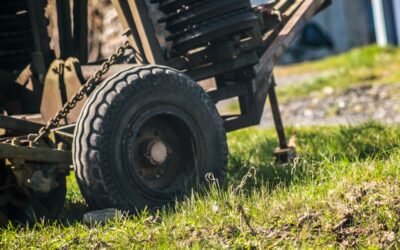
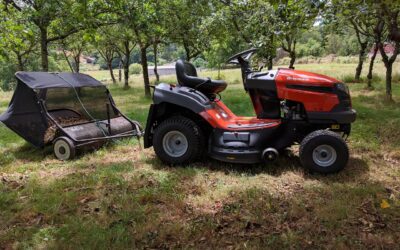
Tow-behind units attach to a riding mower, lawn tractor or ATV hitch. Most have a set of tine wheels or spoon plugs on a frame with a weight tray, and you stack concrete blocks or sandbags on top to drive the tines down. Some pro-grade models use hydraulic or powered tine systems.
- Best for: lawns over half an acre, rural properties and large open areas
- Pros: covers acres quickly, no heavy machine to walk behind, low effort
- Cons: depth depends heavily on added weight and soil moisture; spoon-type plugs are shorter; wide turning arcs leave gaps near beds
- Typical cost: generally a few hundred dollars for a homeowner model
If you choose a tow-behind option, look for true hollow tines or plug spoons rather than solid spikes, a weight tray large enough to add at least 100 pounds, and a transport lever that raises the tines.
Quick Comparison by Lawn Size and Soil
| Lawn situation | Recommended type | Why |
|---|---|---|
| Under 2,000 sq ft | Manual step-on or rolling core | Low cost, manageable effort |
| 2,000 sq ft to 0.5 acre | Gas walk-behind (rent) | Deep plugs, fast coverage |
| Over 0.5 acre | Tow-behind with weights | Saves time and effort |
| Heavy clay, compacted | Reciprocating gas unit | Deepest penetration |
How to Aerate With a Plug Aerator
- Call 811 and mark hazards. Contact 811 a few days ahead so buried utility lines get marked, and flag every sprinkler head, valve box, shallow irrigation line, invisible pet fence wire and septic component. Tines can crack sprinkler heads and cut shallow lines.
- Water first. Aerate when soil is moist but not muddy, usually a day after about 1 inch of rain or irrigation. Dry clay stops tines; soggy soil clogs them.
- Mow shorter. Cut the grass slightly lower than normal so tines reach the soil.
- Make two passes. Run the machine across the lawn in straight lines, then go over it again at a right angle. Aim for 20 to 40 holes per square foot.
- Leave the plugs. Let the cores dry and crumble back into the lawn over a week or two. Mowing over dry plugs helps break them up.
- Follow up. Aeration is the ideal time to overseed and fertilize, since seed drops into the holes.
For cool-season lawns, early fall is the best time to aerate, with spring as a second choice. Warm-season lawns should be aerated in late spring or early summer while the grass is actively growing.
Gas Engine, Fuel and Battery Safety
Powered aerators are heavy machines with running engines, so treat them with respect.
- Carbon monoxide: Never start or run a gas aerator inside a garage, shed or any enclosed space, even with the door open. Engine exhaust contains carbon monoxide, which is colorless and odorless. Run the machine outdoors only, and keep CO alarms working in your home, especially on levels near an attached garage.
- Refueling: Add gasoline outdoors, on a cool engine, away from pilot lights, grills and other ignition sources. Let a hot engine cool for several minutes before opening the fuel cap. Wipe up spills and never smoke nearby.
- Fuel storage: Store gasoline only in an approved container, sealed, away from water heaters and furnaces. Use fuel stabilizer if the machine will sit.
- Battery tools: If you use a battery-powered tow vehicle or yard tool, charge lithium packs with the maker’s charger on a hard, nonflammable surface, keep them out of direct sun and heat, and retire any pack that is swollen or damaged.
- Personal gear: Wear sturdy boots, hearing protection, eye protection and gloves. Keep children and pets well away while the machine is running.
- Slopes and loading: Operate across gentle slopes rather than up and down, avoid steep grades altogether, and use two people plus ramps rated for the weight when loading a rental.
Troubleshooting Plug Aerator Problems
Tines are not penetrating
The soil is too dry or the machine lacks weight. Water deeply the day before, add weight to tow-behind trays, and slow down on gas units.
Plugs are clogging the tines
Soil is too wet or heavy with clay. Wait a day for the surface to dry slightly. Clean tines with a stick or screwdriver with the engine off and the spark plug wire disconnected.
Machine bounces or drags
On rolling drum units, bouncing means hard soil. Make slower passes and keep firm pressure on the handle. If a unit drags you forward, reduce throttle speed per the operator manual.
When to Hire a Lawn Care Pro
Hiring a professional makes sense when your lawn is large, hilly or full of irrigation heads, or when you lack a vehicle to haul a rental. Many lawn services charge a flat rate per visit for average lots, often in a similar range to a rental once you add fuel and your time. Pros also typically bring heavier reciprocating machines that pull deeper cores. If your soil has drainage or grading problems beyond compaction, a landscaping contractor can address those in the same visit.
Whichever route you take, the best lawn plug aerator is the one that pulls real cores 2 to 3 inches deep across the whole lawn. Match the machine to your yard size, aerate when soil is moist, and pair it with fall overseeding for the biggest payoff.
Frequently Asked Questions
Is a plug aerator better than a spike aerator?
For compacted soil, yes. A core plug aerator removes soil and relieves compaction, while a spike aerator pushes soil aside and can compact the area around each hole. Spikes are fine for light, loose soils.
How often should I aerate my lawn?
Once a year is enough for most lawns with clay soil or heavy foot traffic. Sandy or lightly used lawns may only need it every two to three years.
Should I rent or buy a gas powered aerator?
Most homeowners should rent. A gas unit is used once or twice a year, and buying one costs far more than years of rental fees. Buying makes sense only if you maintain several properties.
How deep should plugs be?
Aim for 2 to 3 inches. Plugs shorter than about 1.5 inches suggest the soil is too dry or the machine is too light for your conditions.
Can I aerate right after installing new sod?
Wait at least one full growing season. Aerating too soon can disturb roots before they knit into the soil below.