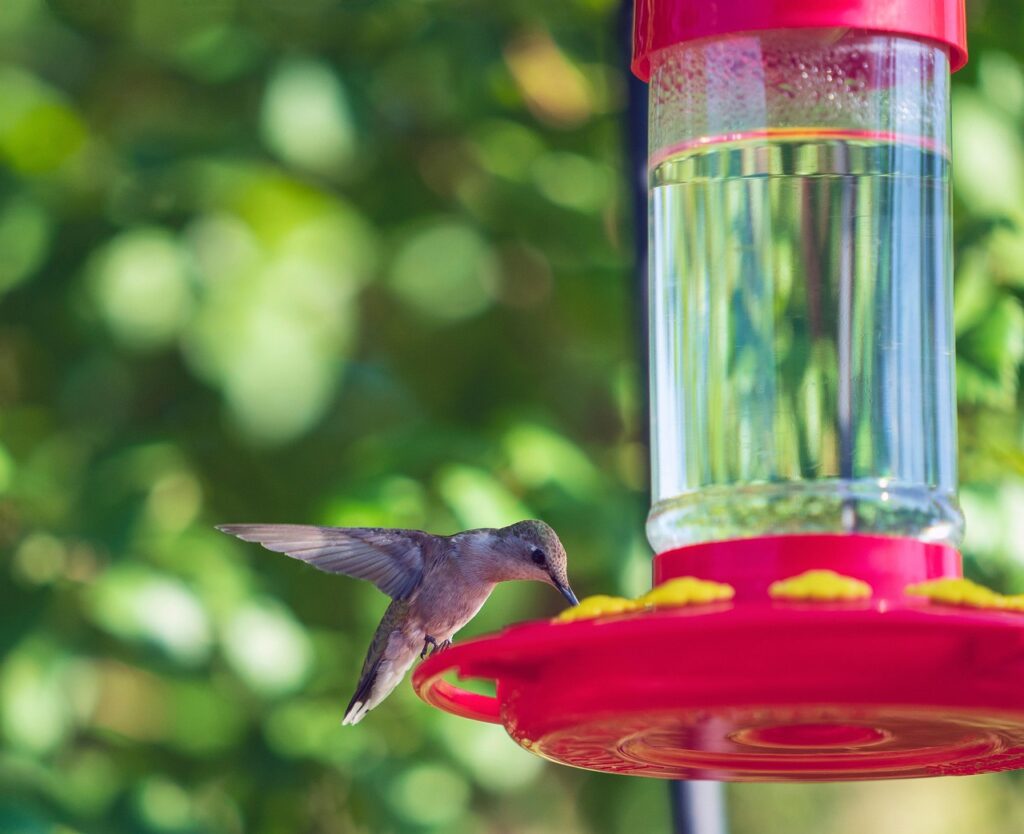
Nothing kills the joy of backyard birding faster than a sticky, ant-covered porch from a dripping feeder. A truly leak proof hummingbird feeder exists, but you have to ignore most of the cheap glass bottles cluttering Amazon and Walmart shelves. Saucer-style feeders with proper gaskets beat inverted-bottle designs every single time, regardless of how pretty the bottle looks hanging from your shepherd’s hook.
Part of our Roofing guide — explore the full guide →
- Why Inverted Bottles Leak and Saucer Feeders Do Not
- Best Overall: Aspects HummZinger HighView
- Best Budget Pick: Perky-Pet 203CPBN Pinch-Waist
- Best Capacity: Aspects HummBlossom 16 oz
- The Right Nectar Recipe
- Hanging Setup to Minimize Leaks
- Cleaning Schedule for Hot Weather
- Common Mistakes That Cause Leaks
- Discouraging Bees and Wasps
Why Inverted Bottles Leak and Saucer Feeders Do Not
The physics matter. Bottle-style feeders rely on vacuum pressure to hold nectar inside the inverted bottle while feeding ports drain only when birds drink. As outdoor temperatures climb past 80°F, the air pocket inside the bottle expands and pushes nectar out the ports. By 3 p.m. on a hot Texas afternoon, half the bottle has dripped onto your deck.
Saucer feeders sit upright and hold nectar in a sealed bowl. Ports on the lid sit above the nectar surface, so birds dip their tongues down to feed but gravity keeps fluid inside. Temperature swings, wind sway, and tilting from a heavy bird all become non-issues. Once you switch, you’ll never buy a bottle feeder again.
Best Overall: Aspects HummZinger HighView
The Aspects HummZinger HighView in Excel red is the gold standard at $34.99 on Amazon or directly from Aspects Inc. The polycarbonate dish is unbreakable, the central ant moat holds water to block crawling pests, and the perch encircles the entire feeder so birds can rest while feeding. Four ports allow simultaneous use by multiple hummers.
The lid screws on with a positive seal that doesn’t loosen in wind. I’ve had one running for six years on my Tennessee back porch without a single leak. Replacement parts including the bee-guard ports are available directly from Aspects, so the feeder is essentially permanent.
Best Budget Pick: Perky-Pet 203CPBN Pinch-Waist
If $35 feels steep, the Perky-Pet 203CPBN Pinch-Waist at $13.97 at Walmart and Tractor Supply is the budget compromise. It’s a bottle-style design rather than a saucer, but the wide mouth and quality gasket make it the least leaky bottle on the market. A built-in ant moat in the hanger ring keeps crawlers out.
Expect a few drips on hot days regardless. For occasional summer use or a second feeder, it works. As your primary feeder in 95°F-plus weather, upgrade to a saucer.
Best Capacity: Aspects HummBlossom 16 oz
Larger feeders need refilling less often, which sounds like a win but is actually a problem. Nectar ferments within 48 to 72 hours in temperatures above 80°F, and a half-full 32-ounce feeder wastes nectar every other day. The 16-ounce Aspects HummBlossom at $24.99 hits the sweet spot for two to four daily visitors.
For high-traffic yards in the Pacific Northwest or Southwestern desert, the larger 24-ounce HummZinger Ultra at $39.99 holds enough nectar for a dozen Anna’s hummingbirds without daily refills. Match the size to your real traffic, not your aspirations.
The Right Nectar Recipe
Skip the red commercial nectars. Every reputable wildlife biologist and Audubon Society guide recommends a 1-to-4 ratio of plain white table sugar dissolved in water. Mix one cup sugar to four cups water in a saucepan, bring to a simmer just long enough to dissolve the sugar, then cool to room temperature before filling the feeder.
Never use honey, brown sugar, agave, or organic raw sugar. Honey grows bacteria that kill hummingbirds. Brown sugar contains iron that builds up in their tiny livers. Refined white sugar is closest chemically to natural flower nectar’s sucrose content. Refrigerate unused syrup in a sealed Mason jar for up to two weeks.
Hanging Setup to Minimize Leaks
Even a perfect feeder leaks if hung wrong. Use these placement rules:
- Hang in part shade, not full sun — afternoon shade is critical above 85°F
- Mount on a stable hook like the Stokes Select Pole or Squirrel Stopper Sequoia system
- Keep the feeder level — a tilted saucer will leak from the ports on the low side
- Hang 4 to 6 feet off the ground, well away from cats and squirrels
- Position 10 to 15 feet from windows to prevent strikes
- Allow 15 to 20 feet of clear flight path to nearby trees or shrubs
Add a separate Wild Bird Unlimited ant moat above the feeder if it doesn’t include one. Fill with plain water — never oil or pesticide — and refill weekly. Ants can’t cross a quarter-inch water moat.
Cleaning Schedule for Hot Weather
Nectar spoils fast. The cleaning schedule depends on temperature:
- Above 90°F: change nectar every 1 to 2 days, deep clean weekly
- 70°F to 90°F: change nectar every 3 to 4 days, deep clean weekly
- Under 70°F: change nectar every 5 to 7 days, deep clean every two weeks
To deep clean, disassemble the feeder fully and scrub all parts with a bottle brush and hot water. Use a Dr. Bronner’s drop or plain white vinegar — never dish soap, which leaves residue. The Pelican Bottle Brush set at $9.97 has the small port brushes needed to get into the feeding holes. Rinse thoroughly until no vinegar smell remains, dry, and refill.
Common Mistakes That Cause Leaks
Three errors account for most leak complaints. First, overtightening the bottle on a bottle-style feeder cracks the gasket and breaks the vacuum seal. Hand-tight is enough. Second, hanging in direct afternoon sun causes thermal expansion that overwhelms even good designs. Move the feeder before the dripping starts.
Third, mixing too-strong nectar — going 1-to-2 or 1-to-3 instead of 1-to-4 — increases viscosity and makes the syrup harder to keep contained inside ports. Stick with the standard ratio. The hummingbirds prefer it, and your feeder stays sealed. If you’ve tried all of this and still see drips, the gasket has dried out. Replacement gaskets from Aspects or First Nature run about $3 and last another five years.
Discouraging Bees and Wasps
Bees and yellow jackets compete with hummingbirds at every feeder, sometimes aggressively enough to drive hummers away entirely. The single best defense is choosing a saucer-style feeder with bee-guard ports — small plastic inserts that allow only the long hummingbird tongue to reach the nectar surface. Aspects HummZinger and Perky-Pet both include bee guards in current models.
Avoid yellow accents on the feeder body. Yellow wavelengths attract bees specifically, which is why many older feeders with yellow plastic flowers turn into wasp magnets. Red and clear bodies attract hummers without drawing bees. If wasps persist, move the feeder 15 to 20 feet to break their flight path memory. The hummingbirds will find the new location within a day or two while most of the wasps move on.