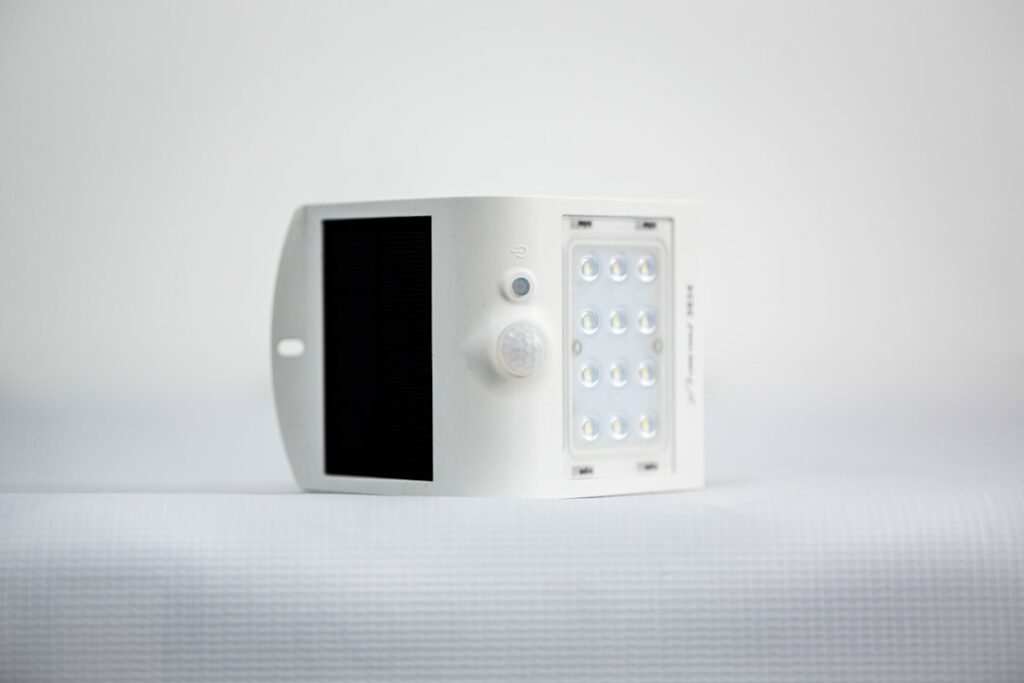
The LED motion sensor light is where two of the smartest lighting upgrades meet: the efficiency and longevity of LED technology and the hands-free convenience of automatic motion detection. Together they solve real problems around the house. You get instant light exactly when you need it, no wasted electricity when a room sits empty, and a bulb that lasts 15,000 to 50,000 hours so you are not climbing ladders to change it. From dark closets to driveway floodlights, this combination has quietly become the default choice for practical, low-maintenance lighting.
- Why LED and Motion Sensing Belong Together
- Indoor vs. Outdoor Motion Lights
- Types You Can Buy
- Key Features to Compare
- Installation: What to Expect
- Dialing In the Settings
- Common Problems and Fixes
- Security Benefits Worth Noting
- Choosing the Right Light for the Job
- Solar vs. Hardwired Outdoor Lights
- Understanding Color Temperature for Each Space
- Placing a Motion Activated LED Light Indoors: Placement, Range, and Sensitivity
Why LED and Motion Sensing Belong Together
LED bulbs use roughly 75 to 85 percent less energy than incandescent bulbs and, crucially, tolerate frequent on-off cycling without any loss of lifespan. That last point matters enormously for motion lighting, because a motion light switches on and off constantly all day. Older CFL bulbs actually wore out faster under that rapid cycling, but LEDs shrug it off. The efficiency win compounds too: an automatic light that never gets left on, powered by a bulb that already sips electricity, is about as economical as household lighting gets.
Indoor vs. Outdoor Motion Lights
The category splits cleanly into two use cases, each with different priorities:
- Indoor: closets, pantries, hallways, stairs, laundry rooms, and garages. Priorities are a short detection range, a gentle brightness, and reliable auto-off. Options include screw-in sensor sockets, integrated fixtures, motion switches, and battery-powered stick-on bars.
- Outdoor: driveways, entryways, patios, and dark side yards. Priorities are weatherproofing (look for an IP65 rating or higher), long range, high brightness, and often adjustable dual heads. Options include hardwired floodlights, solar-powered fixtures, and dusk-to-dawn security lights.
Types You Can Buy
- Hardwired LED floodlights: the workhorse of outdoor security lighting, delivering 1,500 to 4,000+ lumens with adjustable heads. Roughly $25 to $80.
- Solar motion lights: no wiring needed, self-charging by day, ideal for sheds and fences where running power is hard. About $20 to $60 for a pack.
- Screw-in sensor bulbs and sockets: the cheapest indoor option at $8 to $20, perfect for closets and utility fixtures.
- Battery-powered LED bars: rechargeable stick-on lights for cabinets, closets, and stairs, $15 to $40 per multi-pack.
- Smart LED motion fixtures: Wi-Fi or Zigbee models with app control, dimming, and scheduling, $30 to $100.
Key Features to Compare
When shopping, the numbers on the box tell you how well the light will actually perform:
- Lumens (brightness): 200 to 800 for indoor accent and closet use, 1,500 to 4,000+ for outdoor security. Higher is not always better indoors, where glare is unwelcome.
- Color temperature (Kelvin): 2700K to 3000K is warm and cozy for living spaces; 4000K to 5000K is crisp daylight-white for garages, security, and task areas.
- Detection range and angle: 15 to 30 feet with a 120- to 270-degree spread. Outdoor floods should reach across a driveway.
- Time delay: adjustable hold time from about 10 seconds to 30 minutes after the last motion.
- Dusk-to-dawn (lux) sensor: keeps the light from triggering in daylight.
- Weather rating: IP65 minimum for anything exposed to rain.
Installation: What to Expect
Difficulty ranges from zero to moderate depending on the type. Screw-in bulbs, battery bars, and solar lights require no wiring at all, just a socket, adhesive, or a few screws. Hardwired fixtures and motion switches are a manageable job for anyone comfortable at the breaker panel.
- Cut the power at the breaker and verify with a non-contact voltage tester.
- Mount the fixture at the right height: about 6 to 10 feet for outdoor floods so the sensor sees the whole approach.
- Connect the wires by color, black to black, white to white, and ground to ground, using proper connectors.
- Aim the sensor across the path of travel, not straight down, and away from heat sources.
- Restore power and calibrate the sensitivity, time delay, and lux settings.
For outdoor solar lights, mount the panel where it gets maximum direct sun and keep the sensor angled toward walkways.
Dialing In the Settings
An out-of-the-box motion light is rarely tuned right for your space. Spend ten minutes adjusting it. Set a short time delay (30 to 60 seconds) for a driveway light that just needs to greet you, and a longer one for a patio where you linger. Lower the sensitivity if passing cars, blowing branches, or your dog keep tripping it. Set the lux threshold so the light ignores daylight. On dual-head floods, aim one head at the door and one at the walkway for full coverage.
Common Problems and Fixes
- False triggers: heat from vents, sunlight, moving branches, or reflective surfaces. Lower sensitivity and reposition the sensor.
- Won’t turn on: the lux setting thinks it is still daylight, or you are approaching head-on rather than across the beam.
- Stays on too long: shorten the time-delay setting.
- Solar light dims early: the panel is dirty or shaded; clean it and relocate for full sun.
- Short outdoor range in summer: PIR sensors detect less contrast when the air is warm; a higher-mounted or dual-tech unit helps.
Security Benefits Worth Noting
Beyond convenience, a bright outdoor LED motion light is a proven, low-cost deterrent. A dark yard suddenly flooded with light startles intruders and eliminates hiding spots near doors and windows. Pairing motion lights with a smart system that sends a phone alert when motion is detected turns basic lighting into a passive security layer. Position lights to cover entry points, garage doors, and the darkest corners of the property for the biggest impact.
Choosing the Right Light for the Job
Match the fixture to the task. For a closet, a cheap screw-in sensor bulb or a battery bar is all you need. For a hallway or stairwell, a warm-white integrated fixture with a low lux setting provides safe nighttime guidance. For a garage, a daylight-white motion switch controlling the overhead lights is ideal. And for the driveway and entries, a bright, weatherproof hardwired floodlight with dual heads and a long range does the heavy lifting. When running power is impractical, solar fills the gap.
Solar vs. Hardwired Outdoor Lights
Outdoors, the biggest decision is often solar versus hardwired, and each suits different situations. Solar motion lights need no wiring at all, which makes them perfect for sheds, fences, far corners of the yard, and any spot where running power would be expensive or disruptive. Their downside is dependence on sunlight: a shaded or north-facing panel charges poorly, and output can dim by the end of a long winter night. Hardwired lights deliver constant, reliable power and higher sustained brightness, making them the better choice for primary security locations like the garage, front entry, and driveway. Many homeowners use a hybrid strategy, wiring the main entry points for dependable brightness and filling in the perimeter with inexpensive solar units where wiring is impractical.
Understanding Color Temperature for Each Space
Color temperature, measured in Kelvin, affects both comfort and function more than most people realize. Warm white in the 2700K to 3000K range casts a soft, yellowish glow that feels cozy and welcoming, which is why it suits hallways, bedrooms, porches, and living areas. Neutral to cool white from 4000K to 5000K produces a crisp, energizing daylight tone that improves visibility for tasks and security, making it the right pick for garages, workshops, basements, and outdoor floodlights where you want to see clearly. Mixing temperatures thoughtfully keeps a home from feeling either clinical or dim: reserve the bright, cool light for utility and safety zones and keep living spaces warm. Checking the Kelvin rating on the box before buying prevents the common regret of a harsh, hospital-white glow in a space meant to feel relaxing.
An LED motion sensor light is the rare upgrade that saves money, adds convenience, and improves safety all at once. Choose the right brightness and color temperature for the space, weatherproof anything exposed to the elements, mount it where the sensor can see the traffic path, and take a few minutes to tune the settings. Do that, and you will have lighting that shows up exactly when you need it and disappears the moment you do, for years on end.
Placing a Motion Activated LED Light Indoors: Placement, Range, and Sensitivity
A motion activated LED light indoors has a different job than a driveway flood. Rooms are small, people move toward the sensor rather than across it, and a light that snaps on at full brightness at 2 a.m. can be as annoying as no light at all. Getting placement, range, and sensitivity right for each room is what makes indoor motion lighting feel natural instead of glitchy.
| Location | Best sensor placement | Range and sensitivity |
|---|---|---|
| Stairway | Sensors or fixtures at both the top and bottom landings | Short range so each one triggers only as you reach the stairs |
| Hallway | At one end, looking down the length of the hall | Medium range; a low-brightness night setting if the model offers one |
| Closet or pantry | Inside, above the door, facing the shelves | Short range and a brief time delay |
| Bathroom (night path) | Low on the wall or under the vanity | Low sensitivity with a gentle glow rather than overhead glare |
| Laundry or utility room | Ceiling or high wall covering the whole work area | Longer delay so the light stays on while you fold |
Because most indoor sensors are passive infrared, a person walking straight at the sensor is detected later than one crossing its view. In a narrow closet or hallway, mount the sensor where your first step moves sideways through its field. Sensors that add microwave detection can see through thin doors and walls, so they may switch on from movement in the next room; turn down sensitivity or choose a PIR-only model for tight spaces.
Many wall-switch sensors can run in occupancy mode, turning on and off automatically, or vacancy mode, which requires a manual press to turn on but shuts off by itself. Vacancy mode suits bedrooms and offices where you do not want the light popping on every time someone rolls over or reaches for a phone.
Before replacing a switch or ceiling fixture with a hardwired motion unit, turn off the breaker and confirm the power is off with a non-contact voltage tester at every wire; never test or adjust wiring while it is live. Many sensor switches also need a neutral wire in the box, so check before buying. Use a stable stepladder on level ground for ceiling work, and hire a licensed electrician if the location needs a new circuit or a new box.