If you have run across the term while shopping for new floors, you are probably wondering exactly what it means. Lifelock flooring is a name used in the flooring world for floors built around a tight click-lock joint system paired with a durable protective wear layer, the combination that lets a floating floor “lock” together and resist daily wear over its life. Because brand and product naming varies between manufacturers and retailers, it is smart to treat the term as a description of features rather than a single fixed product, and to confirm the exact specifications with the seller before you buy. This guide explains what to look for, the pros and cons, and how to shop confidently.
What the Term Generally Describes
Most products marketed with a “lock” name share a few traits. They use a mechanical tongue-and-groove or fold-and-click edge that snaps planks together without glue or nails, creating a floating floor that sits over an underlayment. The “life” part of the name typically points to the wear layer and warranty, the protective top coat that determines how long the surface resists scratches, dents, and fading. You will see this construction most often in luxury vinyl plank (LVP), laminate, and engineered wood. Always verify which material a specific “lock” product actually is, since the care and performance differ significantly.
How the Locking System Works
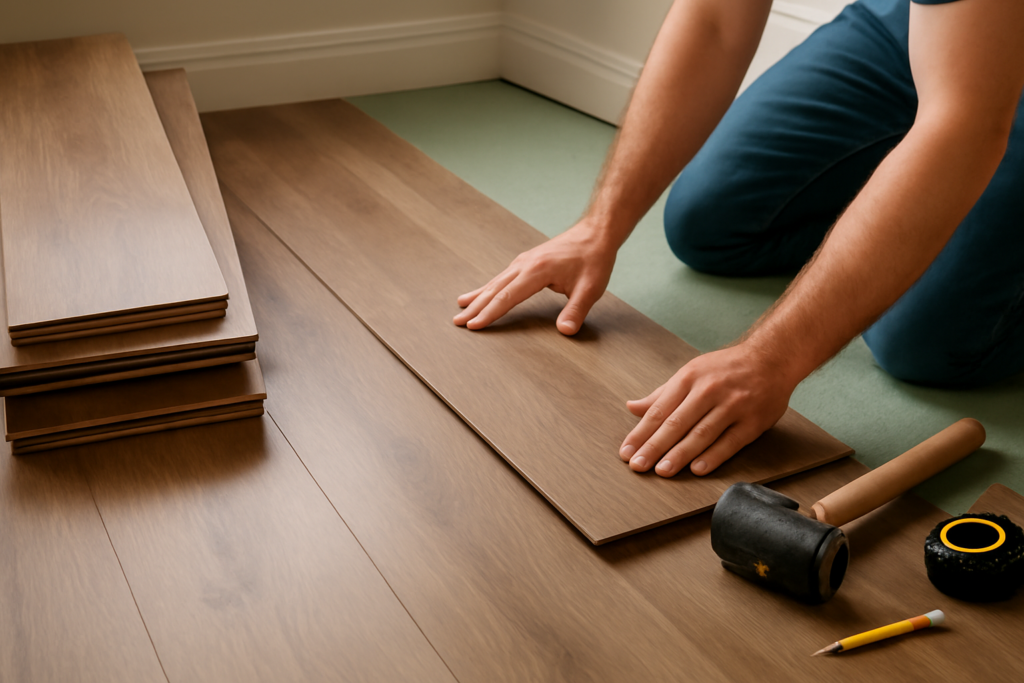
The appeal of a click-lock floor is the installation. Each plank has milled edges that interlock with the next, either by angling and tapping or by dropping and clicking into place. Because nothing glues to the subfloor, the whole assembly floats, expanding and contracting as a unit with temperature and humidity. That makes installation fast enough for a confident DIYer and allows individual planks to be lifted and replaced if one gets damaged. The quality of that milled joint is what separates a floor that stays tight for years from one that develops gaps and peaking.
Understanding the Wear Layer
For vinyl products, the wear layer is measured in mils, and it is the most important durability number to check.
- 6 to 8 mil: Light residential use, such as bedrooms and low-traffic rooms.
- 12 mil: A solid choice for most family homes and busy households.
- 20 mil and up: Heavy residential or light commercial traffic, the most scratch-resistant tier.
For laminate, look at the AC rating instead, where AC3 suits general residential use and AC4 to AC5 handle heavier traffic. A long warranty only means something if it is backed by a genuinely thick wear layer, so read both together.
The Pros
- Easy installation: The click-lock system is among the most DIY-friendly floors available, saving on labor.
- Durability: A good wear layer resists scratches, scuffs, and dents from everyday life.
- Water resistance: Many locking vinyl products are waterproof, making them viable for kitchens, baths, and basements.
- Repairability: Floating floors let you replace a damaged plank rather than the whole floor.
- Comfort and quiet: Paired with the right underlayment, these floors feel warmer and quieter underfoot than glued tile.
The Cons
- Subfloor sensitivity: Floating floors need a flat subfloor; dips and humps telegraph through and can stress the joints.
- Hollow sound: Without quality underlayment, some click floors sound hollow underfoot.
- Quality varies widely: A thin wear layer or poorly milled joint undercuts the whole value proposition.
- Not all are waterproof: Laminate versions tolerate spills far less than vinyl, so confirm before installing in wet areas.
How to Vet a Specific Product
Because “Lifelock” style names attach to many different floors, do your homework before buying.
- Ask the retailer exactly what material the product is: vinyl, laminate, or engineered wood.
- Get the wear-layer thickness in mils or the AC rating in writing.
- Read the full warranty, paying attention to whether it is residential or commercial and what voids it.
- Order samples and check the click joint by snapping two planks together by hand.
- Confirm whether the product is waterproof or only water-resistant.
- Look up the official manufacturer page or spec sheet for the authoritative details rather than relying on third-party summaries.
Installation Considerations
Even an easy-to-install floor punishes a bad subfloor. Most manufacturers require the subfloor to be flat within 3/16 inch over 10 feet, so plan to grind high spots or fill low ones first. Acclimate the planks in the room for 48 hours, leave a 1/4 to 3/8 inch expansion gap around the perimeter, and use the underlayment the manufacturer specifies. Skipping these steps is the most common reason a click-lock floor develops gaps or buckles later.
Maintenance and Care
One reason locking floors stay popular is how little upkeep they demand. Sweep or dry-mop regularly to keep grit from scratching the wear layer, since fine sand acts like sandpaper underfoot. Damp-mop with a manufacturer-approved cleaner; avoid steam mops and harsh abrasives, which can damage the finish or seams. Place felt pads under furniture legs and use a hard-floor caster or chair mat for rolling chairs. Walk-off mats at entries trap the grit and moisture that do the most damage. With these simple habits, a quality click-lock vinyl floor can look new for a decade or more, while a neglected one can dull and scratch in a couple of years regardless of how thick its wear layer started out.
How It Compares to Glue-Down and Nail-Down Floors
Locking floating floors are not the only option, and knowing the alternatives sharpens your decision. Glue-down vinyl bonds directly to the subfloor, which gives a more solid feel and works better in very large open rooms or commercial settings, but it is harder to install and remove. Nail-down solid hardwood offers unmatched longevity and refinishing potential, yet it demands a wood subfloor and professional skill. The floating click-lock approach splits the difference: easier than both, water-resistant in vinyl form, and repairable, at the cost of a slightly less anchored feel and dependence on a flat subfloor.
Is It Right for You?
A locking floor with a strong wear layer is an excellent choice for homeowners who want durability, water resistance, and a manageable DIY installation. The key is to look past the marketing name and confirm the underlying specs, since “Lifelock flooring” can describe products of very different quality. Compare wear-layer thickness, warranty terms, and material type across a few options, order samples, and check the official source for any specific product before you commit. Do that, and you will end up with a floor that genuinely locks tight and lasts.
Prefer to explore on your own?
See how new flooring looks in your actual room in seconds — free, no signup.
Try the free Floor Studio →