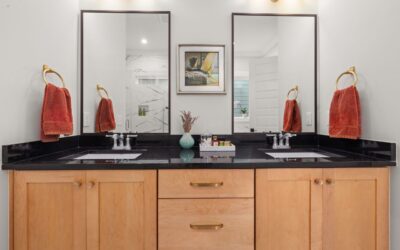
Bright, airy, and effortlessly modern, a light wood bathroom vanity has become one of the most requested features in contemporary bathroom design. The pale tones of white oak, ash, maple, and blond-stained wood open up a space, add natural warmth, and pair with almost any color scheme, making them a favorite for spa-inspired and Scandinavian-style bathrooms alike.
Part of our Bathroom Remodeling & Flooring guide — explore the full guide →
This guide covers the wood species and finishes behind the look, how to choose a size and configuration, the countertops and fixtures that complement light wood, and how to protect the vanity from bathroom moisture so it stays beautiful for years.
- Why Light Wood Works in the Bathroom
- Popular Light Wood Species and Looks
- Solid Wood vs. Veneer Construction
- Choosing the Right Size and Style
- Countertops and Fixtures That Complement Light Wood
- Protecting the Vanity from Moisture
- Cost of a Light Wood Vanity
- Floating vs. Floor-Standing Designs
- Lighting and Mirrors to Complete the Look
- Keeping Light Wood Looking Fresh
- Is a Light Wood Vanity Right for You?
Why Light Wood Works in the Bathroom
Light wood strikes a rare balance between warmth and brightness. Unlike dark cabinetry, which can make a small bathroom feel closed in, pale wood reflects light and keeps the room feeling open and fresh. At the same time, it adds the organic, tactile warmth that all-white bathrooms often lack, softening hard surfaces like tile, glass, and porcelain. This versatility is a big part of the appeal: a light wood vanity reads as calm and natural, complements both cool and warm palettes, and fits modern, coastal, mid-century, and minimalist styles equally well.
Popular Light Wood Species and Looks
The exact wood or finish shapes the final feel of the vanity. Common choices include:
- White oak — the current favorite, with a subtle straight grain and a cool, natural tone that resists moisture well.
- Ash — bold, open grain and a pale, creamy color for a more textured look.
- Maple — smooth, fine grain and a clean, uniform light tone that suits minimalist rooms.
- Birch — affordable and pale, often used in ready-to-assemble vanities.
- Blond or whitewashed finishes — stains applied over oak or other species to lighten and cool the wood.
Rift-cut and quarter-sawn white oak, prized for its straight, consistent grain, is especially popular in higher-end designs.
Solid Wood vs. Veneer Construction
As with any cabinetry, construction affects durability and price. A light wood look can come from solid wood, a real-wood veneer over a stable core, or a wood-look laminate. Solid wood is the most repairable and substantial but can move with humidity, while a quality veneer over plywood offers excellent stability in a damp bathroom and still shows genuine grain. Laminate delivers the appearance at a lower cost but lacks the depth and longevity of real wood. For a bathroom, a well-built veneer over marine-grade or moisture-resistant plywood is often the smartest balance of looks, stability, and value.
Choosing the Right Size and Style
Match the vanity to your floor plan and storage needs. Standard widths and setups include:
- 24 to 30 inches — single-sink units for powder rooms and compact baths.
- 36 to 48 inches — roomy single-sink vanities with ample drawers and counter space.
- 60 to 72 inches — double-sink models for shared primary bathrooms.
Beyond size, decide between a floor-standing cabinet and a wall-mounted floating vanity. Floating designs show more floor, feel light and modern, and make cleaning underneath easy, which enhances the airy quality that draws people to light wood in the first place. Consider whether you want drawers, which organize small items, or doors with shelves for bulkier storage.
Countertops and Fixtures That Complement Light Wood
Light wood is a flexible partner, but the right pairings elevate the look:
- White or pale quartz — keeps the palette bright and clean; the most popular pairing.
- Honed marble or a marble-look surface — adds soft veining and understated luxury.
- Terrazzo — brings playful texture that suits modern and retro rooms.
- Matte black or brushed brass fixtures — provide crisp contrast against the pale wood.
For sinks, an undermount or a vessel bowl both work; a white ceramic sink keeps the scheme fresh, while a stone or concrete basin leans earthy. Choose hardware in a finish that ties into your other metals for a cohesive result.
Protecting the Vanity from Moisture
Moisture is the main enemy of any wood vanity, so proper sealing and habits are essential to keep a light wood piece looking its best. Manufacturers typically apply a durable clear topcoat, but you should still take care to protect it. Key steps include:
- Ensure all surfaces, including the back and underside near the sink, are sealed with a water-resistant finish.
- Wipe up splashes and standing water promptly rather than letting them sit.
- Run an exhaust fan during and after showers to control humidity.
- Seal the seam where the countertop meets the wall and around the sink to keep water out.
- Refresh the protective topcoat on high-use edges every few years if it begins to dull.
Light finishes can show water stains more readily than dark ones, so prompt cleanup is especially worthwhile.
Cost of a Light Wood Vanity
Prices vary with construction, size, and whether a countertop and sink are included. Budget veneer or laminate units start around $300 to $600, while quality white oak or solid-wood vanities with stone tops commonly run $900 to $2,800. Large double-sink or custom pieces can exceed $3,500. Rift-cut white oak and custom cabinetry sit at the higher end. Professional installation, if needed, typically adds $200 to $600, more if plumbing must be relocated. Factor in the faucet and, if not included, a countertop and sink when comparing options.
Floating vs. Floor-Standing Designs
One of the biggest style decisions is whether to mount the vanity on the wall or set it on the floor, and each has real advantages. A floating, wall-mounted vanity shows more of the floor beneath it, which makes the bathroom feel larger and lighter, reinforcing exactly the airy quality that draws people to light wood. It also makes cleaning the floor easy and gives a modern, architectural look. However, floating units must be anchored securely into wall framing and offer no floor-level storage. A floor-standing vanity provides more storage volume, hides plumbing easily, and installs more simply, but it visually occupies more space. In small bathrooms, a floating light wood vanity often delivers the biggest sense of openness.
Lighting and Mirrors to Complete the Look
The right lighting and mirror bring a light wood vanity to life. Because pale wood reflects light well, the area around it stays bright, but good task lighting at the mirror is still essential for grooming. Consider these pairings:
- Sconces flanking the mirror — provide even, shadow-free light on the face, better than a single overhead fixture.
- Warm-toned bulbs — around 2700K to 3000K flatter both skin and the natural wood tone.
- A frameless or thin-framed mirror — keeps the look clean and lets the wood be the star.
- A round or arched mirror — softens the straight lines of a slab-front vanity for a modern, organic feel.
Coordinating the sconce and mirror finishes with your faucet and hardware ties the whole vanity area together.
Keeping Light Wood Looking Fresh
Day-to-day care keeps a pale wood vanity bright and clean. Wipe the surfaces with a soft, slightly damp cloth and a mild, non-abrasive cleaner, drying afterward so water does not sit on the finish. Avoid harsh chemicals, bleach, and scouring pads, which can dull or discolor the topcoat. Because light finishes can show water rings and toothpaste splatter more readily than dark wood, a quick daily wipe of the counter and cabinet face keeps it looking pristine. Address any chips or scratches promptly with a matching touch-up so moisture cannot reach the bare wood beneath, and periodically check that the sealant around the sink and backsplash remains intact.
Is a Light Wood Vanity Right for You?
A light wood bathroom vanity delivers a bright, warm, and timeless look that makes bathrooms of any size feel more open and inviting. It pairs effortlessly with modern fixtures and neutral palettes, adds natural texture to hard-surfaced rooms, and, when properly sealed and maintained, holds up beautifully to daily use. Choose a moisture-resistant construction, pair it with a clean countertop and complementary hardware, and keep up with simple moisture care for a serene, spa-like vanity that stays gorgeous for years to come.