Ask flooring contractors who install high-end European wood finishes what they mop with, and the German brand Loba comes up again and again. Loba hardwood floor cleaner is not a grocery-store product; it is a professional-grade line built to pair with Loba’s own lacquers and oil finishes, and it commands a premium price to match. The question most homeowners have is simple: is it actually better than the Bona or Rejuvenate bottle sitting on the shelf for half the money? Having used the Loba system on both sealed and oiled floors, here is an honest breakdown of what you get and how to use it correctly.
- Who Loba Is and Why It Matters
- The Two Products You Need to Know
- Sealed vs. Oiled: This Is the Critical Distinction
- How to Use Loba Cleaner, Step by Step
- Applying the Care or Oil Refresher
- Price and Value
- How It Stacks Up Against Bona and Others
- Common Mistakes With the Loba System
- Who Should Buy Loba
- The Bottom Line
Who Loba Is and Why It Matters
Loba (short for Loba-Wakol, part of the Wakol group) is a German finish manufacturer whose products are common on premium engineered and site-finished floors in the US. Because the company makes both the finishes and the cleaners, its maintenance products are engineered to protect specific finish chemistries rather than being a one-size-fits-all formula. That is the core appeal: a cleaner designed to work with your finish instead of slowly degrading it.
The Two Products You Need to Know
The Loba lineup that confuses most buyers is the split between a cleaner and a care product. They are not interchangeable, and understanding the difference is the whole game.
Loba CleanFix (or Cleaner)
This is the everyday cleaning concentrate. You dilute a capful into a bucket or spray bottle of water, mop, and you are done. It is pH-neutral, streak-free, and formulated to lift dirt without stripping the finish or leaving film buildup. This is your weekly workhorse and it is safe on sealed lacquer, UV-cured, and oil-finished floors alike.
Loba Care Products (ParkettCare, Oil Refresher)
These are periodic maintenance products that add a thin protective layer and restore luster. For sealed floors, Loba’s care emulsion leaves a matte-to-satin protective film. For oiled floors, the oil refresher replenishes the oil that traffic gradually wears away. You use these monthly or quarterly, not every time you clean. Applying a care product every day would cause buildup; using only cleaner and never caring for the floor lets it wear prematurely.
Sealed vs. Oiled: This Is the Critical Distinction
Loba’s real strength shows up on oil-finished floors, which are far more common in Europe and increasingly popular here. Oiled wood is not sealed under a plastic film; the oil penetrates the wood and must be periodically replenished. Most mass-market cleaners are formulated for sealed floors and can actually dry out or dull an oiled surface over time.
If you have an oil-finished floor, the Loba system is genuinely worth the premium: use the neutral cleaner for routine mopping and the matching oil refresher to feed the wood every few months. If you have a standard polyurethane or aluminum-oxide sealed floor, the Loba cleaner is excellent but you are paying for capability you may not fully need. Know which finish you have before you spend.
How to Use Loba Cleaner, Step by Step
- Dry-clean first. Vacuum or dust-mop to remove grit. Dragging sand around under a wet mop is what actually scratches finishes.
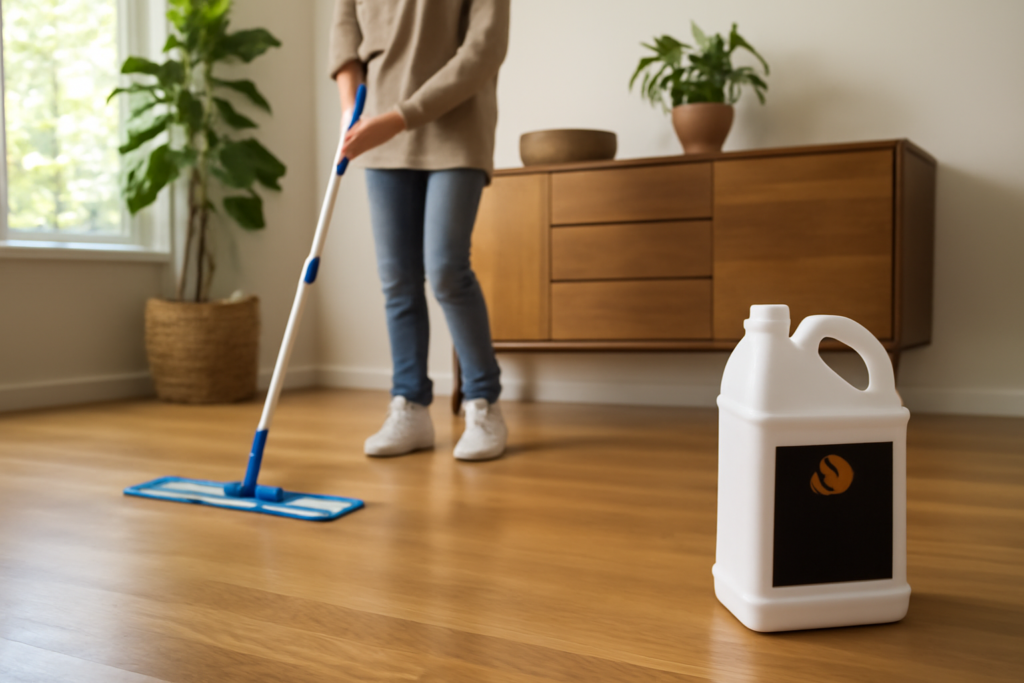
- Dilute correctly. Add the recommended capful of concentrate to a bucket of clean water, typically one part cleaner to a full mop bucket. Do not over-dose; more concentrate does not clean better and can leave residue.
- Wring nearly dry. Use a well-wrung microfiber flat mop. Wood hates standing water, so the mop should be damp, never dripping.
- Mop with the grain. Work in the direction of the boards in manageable sections, rinsing the mop head as it picks up soil.
- Let it air dry. No rinse step is needed. The floor dries streak-free in minutes with good airflow.
Applying the Care or Oil Refresher
When traffic lanes start looking dull despite regular cleaning, it is time for a care coat. Clean the floor first and let it dry completely. For sealed floors, apply the care emulsion in thin, even strokes with a flat pad and let it cure, usually one to two hours before light traffic. For oiled floors, spread the oil refresher thinly, let it penetrate, then buff off any excess with a clean cloth or pad so nothing stays tacky. Two thin applications always beat one heavy one.
Price and Value
Loba is a premium buy. Expect roughly $25 to $40 for a one-liter bottle of cleaner concentrate, though because you dilute it heavily, one bottle lasts a long time and the per-mop cost is reasonable. The care and oil-refresher products run higher, often $35 to $60 depending on size. Compared with a $6 grocery-store cleaner, the upfront number stings, but on a floor that cost $8 to $15 per square foot installed, protecting it with the manufacturer-matched system is cheap insurance.
How It Stacks Up Against Bona and Others
For a run-of-the-mill sealed polyurethane floor, Bona’s cleaner does a comparable job for less money and is far easier to find at any hardware store. Where Loba pulls decisively ahead is oiled and premium European finishes, and any situation where you want a cleaner engineered to match your specific finish system. If a flooring pro installed a Loba, Rubio, or similar oil finish and told you to use a compatible cleaner, follow that advice; using the wrong maintenance product can void a finish warranty and shorten the floor’s life.
Common Mistakes With the Loba System
The most frequent error is treating the care product like a daily cleaner. These emulsions and oil refreshers are meant to be used periodically, not every mopping. Apply them too often and you build a hazy film on a sealed floor or leave an oiled floor tacky and dirt-grabbing. Match the cadence to traffic: monthly to quarterly for most homes, more often only in heavy-use areas.
A second mistake is over-dosing the concentrate. Because the cleaner is potent, people assume more equals cleaner, but excess concentrate leaves streaks and residue that dull the finish. Measure the capful and trust the dilution. Third, homeowners forget that even the gentlest cleaner cannot save a floor that gets flooded; keep the mop damp, not wet, and never let water pool on the seams of an engineered or oiled floor.
Who Should Buy Loba
Loba is the right call in a few clear situations. Buy it if you have an oil-finished floor, a premium European engineered floor, or a floor your installer finished with a Loba, Pallmann, or similar oil system and told you to maintain with a compatible product. In those cases the matched cleaner and refresher protect a finish that generic products can slowly degrade, and the premium price is cheap next to the cost of a failed finish.
If you have a standard polyurethane-sealed floor and clean it once a week, you do not strictly need Loba; a mainstream cleaner does the job for less. But if you want a professional-grade system and do not mind paying for it, Loba will not disappoint. Just commit to using both products as designed rather than buying only the cleaner and skipping the care step.
The Bottom Line
Loba hardwood floor cleaner is a professional-grade system that rewards you for using it the way it is designed: neutral cleaner for routine mopping, matched care or oil refresher for periodic protection. On oiled and high-end finishes it is worth every dollar, because generic cleaners simply are not built to feed and protect that kind of surface. On a basic sealed floor it is a fine, if pricey, choice. Identify your finish, buy the matching pair, dilute correctly, and keep the mop damp rather than wet, and your floors will look their best for years.
Prefer to explore on your own?
See how new flooring looks in your actual room in seconds — free, no signup.
Try the free Floor Studio →