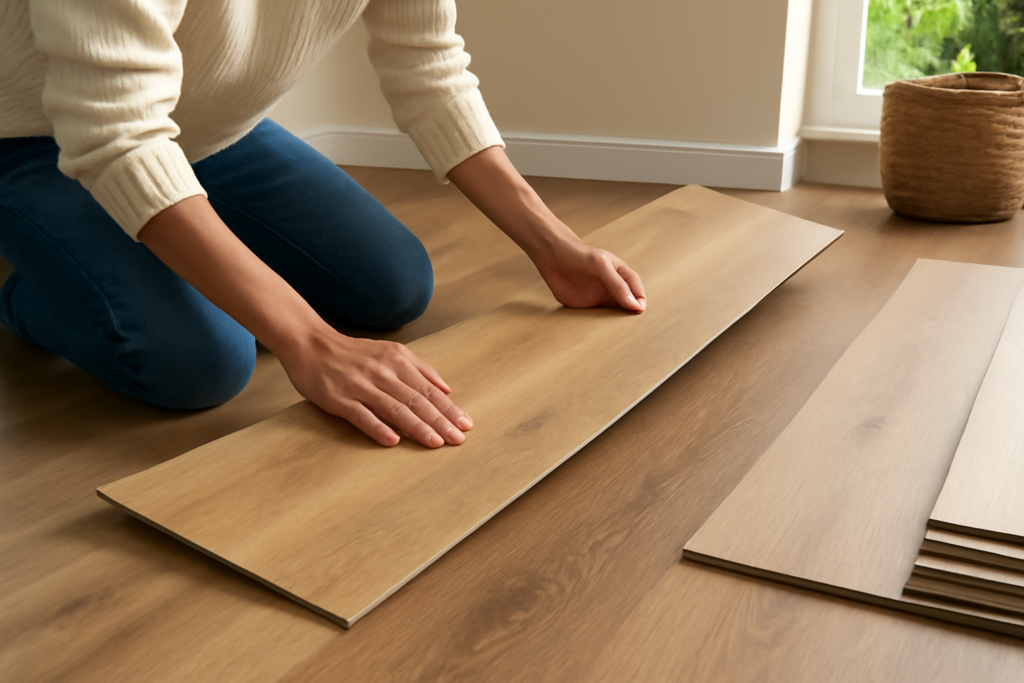
That “new floor” smell that lingers for weeks after installation isn’t harmless, it’s volatile organic compounds off-gassing into the air you breathe. Low VOC vinyl flooring is engineered to release far fewer of those chemicals, and certified products emit levels low enough to meet strict indoor air standards used in schools and hospitals. If you have kids, asthma, chemical sensitivities, or you just don’t want your bedroom smelling like a factory, this is the category to shop.
The tricky part is that “low VOC” gets slapped on a lot of marketing without meaning much. Here’s how to tell the real thing from the greenwashing, and what to buy.
- What VOCs Are and Why They Matter
- Certifications That Actually Mean Something
- The Pros
- The Cons
- Reduce Emissions During Installation
- Popular Low-VOC Products
- Is Vinyl the Right Choice at All?
- Bottom Line
- How Long Does Off-Gassing Last?
- Who Benefits Most From Low-VOC Flooring
- Questions to Ask Before You Buy
What VOCs Are and Why They Matter
Volatile organic compounds are carbon-based chemicals that evaporate at room temperature. In flooring, they come from the vinyl itself, the adhesives, plasticizers, and finishes. Once installed, the floor slowly releases them into your indoor air, a process called off-gassing. Short-term, VOCs cause headaches, dizziness, and eye or throat irritation. Certain compounds raise longer-term health concerns. Because homes are increasingly airtight for energy efficiency, those emissions build up indoors instead of dissipating.
Certifications That Actually Mean Something
Ignore vague “eco-friendly” claims and look for third-party certifications on the box:
- FloorScore: The industry standard for flooring specifically. Tests against California’s strict CDPH emission criteria.
- GREENGUARD Gold: The stricter GREENGUARD tier, used for schools and healthcare, with tighter limits for sensitive people.
- CDPH Section 01350: The California emissions protocol many other certifications reference.
- Phthalate-free labeling: Confirms the product skips certain plasticizers of concern.
If a product carries FloorScore or GREENGUARD Gold, it has been lab-tested, not just marketed. That’s the difference that matters.
The Pros
- Better indoor air quality. Meaningfully lower emissions, especially important in bedrooms, nurseries, and closed-up winter homes.
- Less odor. Certified products air out fast, often within days instead of weeks.
- Same performance. Low-VOC vinyl is still waterproof, durable, and easy to clean.
- Good for sensitive households. Families with allergies, asthma, or chemical sensitivities notice the difference.
- Widely available. Major brands now offer certified lines at mainstream prices.
The Cons
- Still a PVC product. Low VOC doesn’t make vinyl a natural material; it’s plastic, with the environmental footprint that comes with it.
- Certification confusion. Marketing language muddies the water, so you have to check for real logos.
- Adhesives matter too. A certified floor glued down with a high-VOC adhesive undoes some of the benefit.
- Modest price premium. Certified lines sometimes cost a little more than bargain-bin vinyl.
Reduce Emissions During Installation
The floor is only half the equation; how you install it affects your air. Choose a low-VOC or zero-VOC adhesive if you’re gluing down, or pick a click-lock floating floor that needs no glue at all. Ventilate aggressively during and after install by opening windows and running fans for several days. Let the product acclimate in the space with good airflow. And if you’re extra cautious, unbox the planks in a garage or covered porch for a day or two before installing so the initial off-gassing happens outside.
Popular Low-VOC Products
- COREtec: FloorScore certified rigid-core planks, roughly $4 to $6 per sq ft.
- Shaw Floorté: FloorScore certified LVP lines, around $3 to $5 per sq ft.
- Karndean: FloorScore certified luxury vinyl, $5 to $8 per sq ft.
- Mohawk SolidTech: GREENGUARD Gold certified, near $3 to $5 per sq ft.
- LifeProof (Home Depot): FloorScore certified budget option around $3 per sq ft.
Is Vinyl the Right Choice at All?
If ultra-low emissions and natural materials are your top priority, consider alternatives too. Solid hardwood with a natural oil finish, natural linoleum (Marmoleum), cork, or certain tile products off-gas very little by nature. That said, none of those match vinyl’s waterproofing and price. For a bathroom, basement, or busy kitchen where you need waterproof durability, a FloorScore-certified low-VOC vinyl is a reasonable, health-conscious compromise.
Bottom Line
Low VOC vinyl flooring gives you the practical benefits of luxury vinyl, waterproof, durable, affordable, while cutting the chemical off-gassing that plain vinyl is known for. The key is buying certified: look for FloorScore or GREENGUARD Gold on the box, pair it with a low-VOC adhesive or a glueless floating install, and ventilate well for the first few days. Do that, and you get a floor that’s easy on your budget, your maintenance routine, and the air your family breathes.
How Long Does Off-Gassing Last?
Even certified low-VOC vinyl releases the most emissions in the first few days after installation, then tapers off quickly. Standard vinyl can off-gas noticeably for weeks, while a FloorScore-certified product typically clears its detectable odor within a few days of good ventilation. You can speed the process dramatically by unboxing the planks in a garage or covered porch for a day or two before installing, so the initial burst happens outside your living space. Running fans, opening windows, and keeping the HVAC running for the first week all help flush residual compounds out of the home faster.
Who Benefits Most From Low-VOC Flooring
Certain households should prioritize certified low-emission products above almost anything else. Families with young children and infants, who breathe faster and spend more time near the floor, benefit the most. People with asthma, allergies, or chemical sensitivities often notice a real difference in air quality and comfort. Anyone in a tightly sealed, energy-efficient home, where fresh-air exchange is limited, should also lean toward certified low-VOC flooring, since emissions build up indoors instead of dissipating. For these households, the modest price premium of a certified product is money well spent on daily air quality.
Questions to Ask Before You Buy
Marketing muddies the water, so go into the store with a short checklist and get straight answers:
- Is it FloorScore or GREENGUARD Gold certified? Ask to see the logo on the box or the spec sheet, not just a vague “eco” claim.
- Is the product phthalate-free? This confirms it skips certain plasticizers of concern.
- What adhesive do you recommend, and is it low-VOC? A certified floor glued with a high-VOC adhesive undoes part of the benefit.
- Can I install it as a floating floor? Glueless click-lock avoids adhesive emissions entirely.
- What are the care requirements? Some certifications require specific cleaners to keep the warranty valid.
A reputable retailer answers all five without hesitation. If the salesperson dodges the certification question, that’s your signal to shop elsewhere for a genuinely low-emission product rather than a greenwashed one.
Prefer to explore on your own?
See how new flooring looks in your actual room in seconds — free, no signup.
Try the free Floor Studio →