
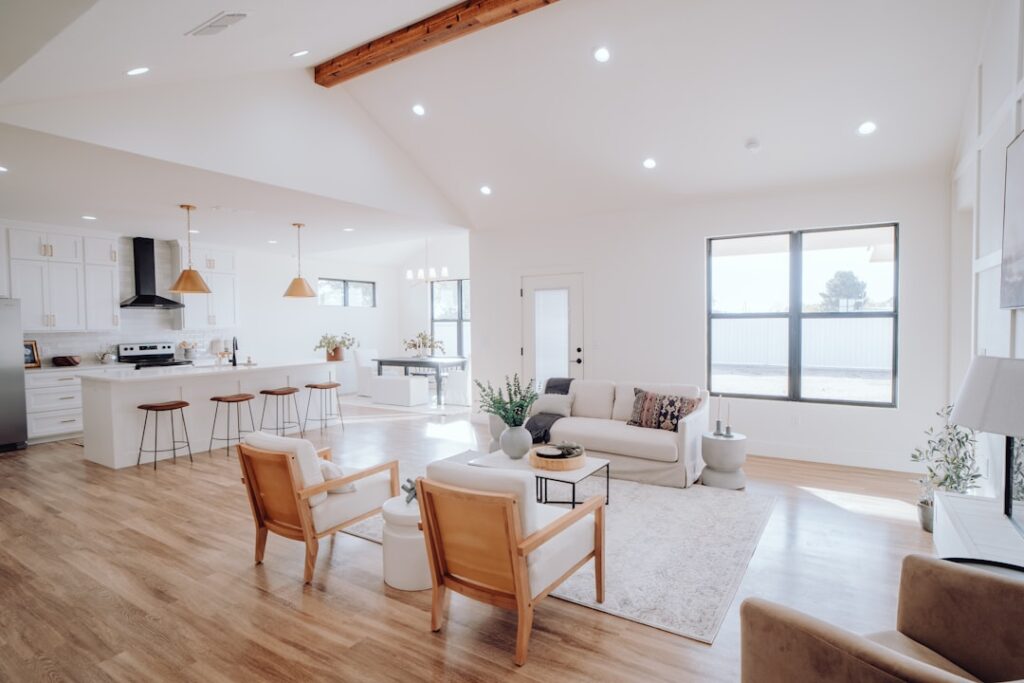
Walk into a well-appointed home and the floor that catches your eye is often not solid hardwood at all. Luxury engineered wood flooring gives you a genuine sawn-timber surface over a dimensionally stable core, and in most rooms it outperforms the solid boards it imitates. The category has grown fast because it solves the two biggest problems with traditional hardwood: seasonal movement and moisture sensitivity. If you have been quoted for both and wondered why the engineered product costs nearly as much, this guide explains exactly what you are paying for.
- What Makes It “Luxury” Rather Than Standard
- Wood Species and Grades to Consider
- What Luxury Engineered Wood Flooring Costs
- Installation Methods
- Where It Works and Where It Does Not
- Caring for the Finish
- Engineered vs Solid Hardwood: The Honest Comparison
- Common Buying Mistakes to Avoid
- Frequently Asked Questions
What Makes It “Luxury” Rather Than Standard
Every engineered board is built the same basic way: a top layer of real wood bonded to plywood or high-density fiberboard beneath. The difference between a builder-grade plank and a luxury one comes down to three measurable things. First, the wear layer, or veneer thickness. Budget boards carry a 0.6 mm to 2 mm veneer; luxury lines run 3 mm to 6 mm, thick enough to sand and refinish once or twice over a 30- to 50-year life.
Second is the core. Premium products use a multi-ply Baltic birch core with 9 to 11 cross-laminated plies, which resists cupping far better than a cheap 3-ply or fiberboard core. Third is the surface treatment. Luxury planks are typically wire-brushed, hand-scraped, or given a matte UV-cured oil finish that hides scratches and reads as authentic rather than plasticky. Wide widths of 7 to 10 inches and long lengths up to 86 inches also signal the high end, since they demand higher-grade timber with fewer defects.
Wood Species and Grades to Consider
The veneer species drives both look and durability. White oak dominates the luxury market for good reason: it takes stain evenly, ranks around 1,360 on the Janka hardness scale, and suits everything from pale Scandinavian looks to deep smoked tones. European oak, slightly softer at roughly 1,120 Janka, offers longer plank lengths and a finer grain prized in wide-plank designs.
- American walnut — rich chocolate tones, softer at 1,010 Janka, best in low-traffic rooms
- Hickory — very hard at 1,820 Janka with dramatic grain variation
- Maple — clean and contemporary, though it stains unevenly
- Ash — pale and open-grained, a lighter alternative to oak
Grade matters too. Select-and-better grades minimize knots and color streaks; character or rustic grades embrace them. Neither is better quality structurally, but character grades often cost less and hide wear better in busy households.
What Luxury Engineered Wood Flooring Costs
Expect to pay $6 to $14 per square foot for the material alone on genuinely premium lines, with imported wide-plank European oak reaching $16 or more. Mid-tier engineered runs $4 to $7. Professional installation adds $3 to $8 per square foot depending on method and subfloor prep. For a 400-square-foot living room, a realistic all-in budget lands between $4,000 and $8,000.
Brands worth researching include Kährs and Bjelin from Sweden, DuChateau and Hallmark in the design-forward tier, and Mirage and Lauzon from Canada for consistent domestic quality. Shaw’s Repel and Mohawk’s TecWood offer more affordable engineered lines if the luxury look matters more than a thick refinishable veneer.
Installation Methods
One reason engineered flooring earns its keep is installation flexibility. You have three routes. Floating installation clicks or glues board edges together over a foam underlayment, leaving the assembly unattached to the subfloor; it is the fastest and works over concrete. Glue-down bonds each plank to the slab with a moisture-barrier adhesive, giving the most solid underfoot feel. Nail- or staple-down suits plywood subfloors and mimics traditional hardwood installation.
Whichever method you choose, let the boxes acclimate in the room for 48 to 72 hours, keep the space between 60 and 80 degrees Fahrenheit at 30 to 50 percent relative humidity, and leave a 3/8-inch expansion gap at every wall. Engineered wood moves less than solid hardwood, but it is still wood and it still breathes.
Where It Works and Where It Does Not
Because the cross-laminated core shrugs off humidity swings, engineered wood is the go-to for basements, over radiant heat, and in kitchens where solid hardwood would risk gapping or cupping. It is rated for below-grade installation that solid boards are not. That said, it is not waterproof. Standing water from a dishwasher leak or an overflowing tub will still swell the seams and delaminate the veneer over time, so it belongs in powder rooms only with caution and never in a full bathroom shower zone or a laundry with a floor drain.
Over radiant floor heating, confirm the manufacturer approves the product and keep surface temperatures below 82 degrees Fahrenheit. Rapid temperature changes are the enemy; a slow, steady ramp protects the bond between veneer and core.
Caring for the Finish
Maintenance is refreshingly simple. Sweep or dust-mop regularly, and damp-mop with a pH-neutral hardwood cleaner rather than a soaked string mop. Skip steam mops entirely; forcing hot vapor into the seams is the fastest way to ruin an engineered floor. Felt pads under furniture legs and a walk-off mat at exterior doors prevent the grit that causes most micro-scratching. When the finish finally dulls after a decade or more, a 3 mm-plus veneer lets a pro screen-and-recoat or fully sand it, something no laminate or vinyl can offer.
Engineered vs Solid Hardwood: The Honest Comparison
Buyers often assume solid hardwood is inherently superior, but for most modern homes that is no longer true. Solid boards are a single piece of timber, so they can be sanded many times over a century, yet they are also far more sensitive to humidity, gapping in dry winters and cupping in humid summers unless the environment is tightly controlled. Solid wood also cannot be installed below grade or over concrete without a plywood subfloor, which rules out basements and many condos.
A luxury engineered board with a 4 to 6 mm veneer bridges that gap. It can be refinished once or twice, handles a wider humidity range, goes down over concrete or radiant heat, and costs about the same as quality solid oak. Where solid wood still wins is longevity across generations and the fact that it can be refinished five or more times. If you are furnishing a forever home in a stable climate and value that century-long life, solid may edge it out. For nearly everyone else, engineered is the smarter, more forgiving choice.
Common Buying Mistakes to Avoid
Two errors trip up most first-time buyers. The first is fixating on total plank thickness while ignoring veneer thickness. A 5/8-inch board sounds substantial, but if only 1 mm of that is real wood over a thick plywood core, you can never refinish it. Always ask for the wear-layer number specifically. The second mistake is skipping acclimation and moisture testing. Concrete slabs can hold far more moisture than they look, so test the slab with a calcium chloride or relative-humidity meter and use the recommended moisture barrier before any glue-down or floating install.
Frequently Asked Questions
How long does luxury engineered wood flooring last?
With a 3 mm or thicker wear layer and normal care, expect 30 to 50 years. The refinishable veneer is what separates it from vinyl and laminate, which must be replaced rather than restored once worn.
Can you refinish engineered wood floors?
Yes, if the wear layer is thick enough. A 3 mm veneer typically allows one full sanding; 4 to 6 mm allows two. Thinner budget veneers can only be screened and recoated, not sanded.
Is engineered wood real wood?
The top layer is genuine sawn hardwood, so the surface you see and walk on is real wood. Only the stabilizing core beneath is engineered plywood or fiberboard.
Does engineered wood add home value?
Real-wood floors, engineered or solid, consistently rank among the finishes buyers pay a premium for. Because most buyers cannot tell a quality engineered floor from solid hardwood underfoot, the resale benefit is comparable.
Can it go over concrete?
Yes. Engineered wood is specifically suited to concrete slabs, including below-grade basements, using a floating or glue-down method with an appropriate moisture barrier. Solid hardwood cannot be installed below grade.
Luxury engineered wood flooring is the practical choice when you want authentic hardwood underfoot without gambling on how it will behave in a real house with real humidity. Focus your budget on veneer thickness and core quality, and the floor will reward you for decades.
Prefer to explore on your own?
See how new flooring looks in your actual room in seconds — free, no signup.
Try the free Floor Studio →

