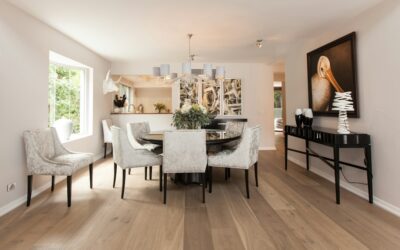
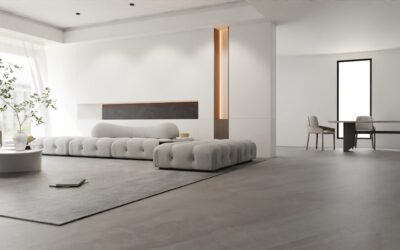
LVP wood flooring, shorthand for luxury vinyl plank designed to mimic hardwood, has become one of the most requested flooring categories among homeowners weighing style against budget and water resistance. Manufacturers now print wood grain onto vinyl with enough texture and depth that many buyers can’t tell it apart from oak or hickory at a glance, which explains why LVP has steadily displaced laminate as the go-to wood-look product in kitchens, entryways, and basements.
What Makes LVP Look Like Real Wood
Modern LVP planks use a high-resolution printed layer, often photographed directly from real wood species, bonded beneath a clear wear layer that ranges from 6 to 30 mils depending on the product tier. Embossed texturing, sometimes registered to align exactly with the printed grain pattern, adds a tactile roughness that mimics hand-scraped or wire-brushed hardwood finishes.
Higher-end lines vary plank length and width within a single box, similar to how real hardwood mills produce boards of differing dimensions, avoiding the repetitive pattern that gave early 2000s vinyl flooring its artificial look. Beveled edges on premium planks create the shadow lines seen in site-finished hardwood, adding another layer of visual realism that budget laminate alternatives often skip.
Color range has expanded considerably too. Where early LVP wood collections offered maybe five or six generic oak tones, current catalogs commonly include 15 to 30 color options per line, spanning whitewashed Scandinavian looks, warm hickory and walnut tones, and gray-brown “weathered barn” finishes that match modern farmhouse and transitional interior styles. Matte and low-sheen finishes have also largely replaced the glossy look of older vinyl, since a flatter sheen reads as more authentic under natural light.
Construction and Core Types
LVP wood-look planks generally fall into three core categories. Rigid core, sometimes labeled SPC (stone plastic composite), uses a dense limestone-and-PVC blend that resists dents from furniture legs and stays dimensionally stable across temperature swings, making it a strong choice for sunrooms or homes with in-floor heating.
WPC (wood plastic composite) core products use a foamed core that’s softer underfoot and quieter to walk on, though slightly less dent-resistant than SPC. Traditional flexible vinyl plank, the oldest category, costs less but shows subfloor imperfections more readily and isn’t recommended over uneven concrete without a leveling pass first.
Cost Comparison by Tier
Budget LVP wood-look planks run $1.50 to $3 per square foot for material only, typically featuring a thinner 6 to 12 mil wear layer suited to low-traffic bedrooms or guest rooms. Mid-range products land between $3 and $5 per square foot, usually rigid-core SPC construction with a 12 to 20 mil wear layer appropriate for living rooms, hallways, and kitchens.
Premium lines with 20 to 30 mil wear layers, realistic embossing, and longer warranties (often 25 years to lifetime residential) run $5 to $8 per square foot. Installation labor adds $1.50 to $3 per square foot for click-lock floating installation, or up to $4 per square foot if the installer needs to level a subfloor first with a self-leveling compound.
Installation Methods
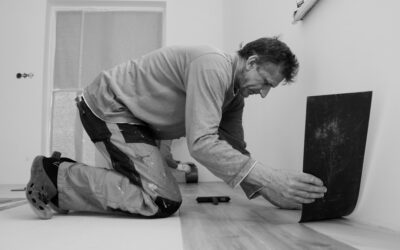
Most LVP wood products use a click-lock floating system, where planks snap together at the edges without glue or nails and rest freely over an underlayment pad, either pre-attached to the plank or installed separately. This method suits DIY installers, with an experienced homeowner typically covering 200 to 300 square feet in a weekend.
Glue-down installation, less common for residential LVP but still used in commercial settings or homes with heavy rolling furniture traffic, bonds planks directly to the subfloor with a pressure-sensitive or wet-set adhesive. It’s more labor-intensive and harder to reverse, but it eliminates any minor flex or hollow sound some floating floors develop over large open spans.
Before installing over concrete, check for moisture with a calcium chloride test or moisture meter; most manufacturers cap acceptable vapor emission at 3 to 5 pounds per 1,000 square feet per 24 hours, and installing over a slab that exceeds this can void the product warranty even though vinyl is inherently water-resistant.
Durability and Water Resistance
LVP wood handles standing water far better than engineered or solid hardwood, making it a common choice for bathrooms, laundry rooms, and basements where real wood simply isn’t practical. The vinyl core itself won’t warp or swell from moisture, though water can still seep into seams and reach the subfloor if left standing for extended periods, so it’s not truly waterproof in every installation scenario despite marketing language that sometimes implies otherwise.
Wear layer thickness directly correlates with scratch and dent resistance. A 12 mil wear layer suits average residential foot traffic, while homes with large dogs, frequent furniture rearranging, or high-traffic entryways benefit from stepping up to 20 mil or higher, adding roughly $1 to $2 per square foot to the material cost.
LVP Wood Versus Real Hardwood
Solid hardwood costs $6 to $12 per square foot installed and requires refinishing every 7 to 10 years, plus careful humidity control to prevent gapping or cupping. LVP wood costs less upfront, needs no refinishing, and tolerates humidity swings and moisture exposure that would damage solid wood outright.
Resale value still favors real hardwood in many markets, particularly in higher-end homes where buyers specifically seek solid or engineered wood floors. However, in rental properties, basements, and moisture-prone climates, LVP wood often makes more practical sense despite the slight difference in perceived value.
Maintenance and Longevity
Routine care involves sweeping or vacuuming to remove grit that can scratch the wear layer over time, plus damp mopping with a manufacturer-approved cleaner; avoid steam mops, which can force moisture into seams and damage the core over repeated use. Most quality LVP wood products carry a residential lifespan of 10 to 20 years depending on wear layer thickness and traffic level, with commercial-grade products in busy households sometimes reaching 25 years before replacement is needed.
Felt pads under furniture legs and area rugs in high-traffic zones extend the surface life meaningfully, since repeated point-load pressure from chair legs is one of the more common causes of premature wear layer breakdown in kitchens and dining rooms.
Direct sunlight is another factor worth planning around. UV exposure through south-facing windows without protective film or curtains can fade printed color layers over five to ten years, most noticeably in a stripe pattern that tracks where sunlight hits the floor daily. Manufacturers have improved UV inhibitors in recent formulations, but rotating rugs or adding UV-blocking window film remains a cheap way to protect color consistency in bright rooms.
Acclimation Before Installation
Because vinyl expands and contracts with temperature more than it does with humidity, manufacturers typically recommend letting boxed planks sit in the installation room for 48 hours before installation, allowing the material to reach room temperature and stabilize. Skipping acclimation is a common cause of gapping or buckling that shows up weeks after installation, particularly in homes where flooring was stored in a cold garage or delivered during a hot summer shipment.
Leave an expansion gap of roughly 1/4 inch around the room’s perimeter, covered later by baseboard or quarter-round trim, to give the floating floor room to shift slightly with seasonal temperature changes without buckling at the seams.
Prefer to explore on your own?
See how new flooring looks in your actual room in seconds — free, no signup.
Try the free Floor Studio →