
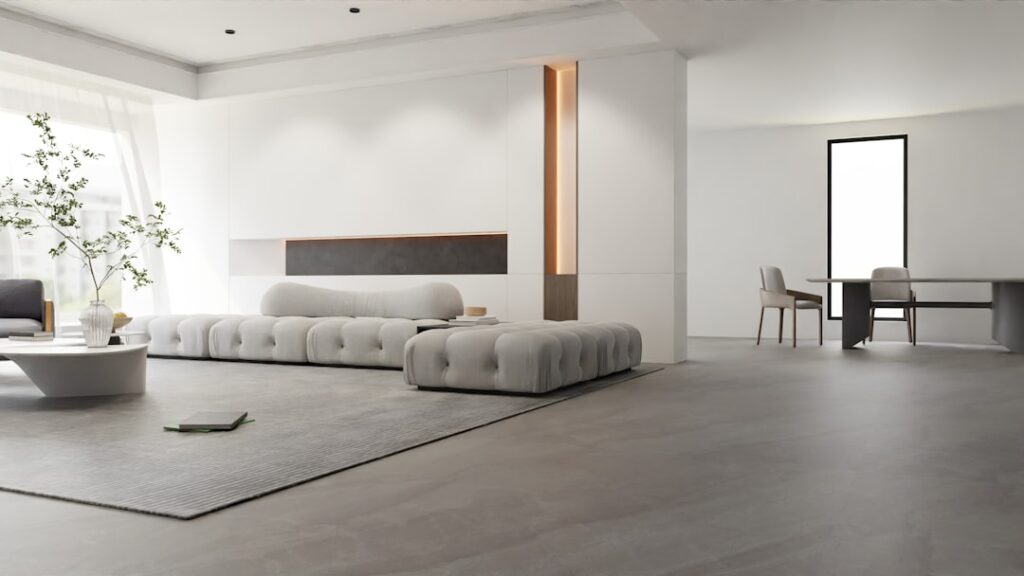
Walk into any flooring showroom and you’ll see one product dominating the displays: lvt flooring planks. Luxury vinyl tile in plank form has eaten roughly 30% of the residential market because it solves the two problems that plague hardwood and laminate — water and dents. Whether you’re redoing a basement, a kitchen, or a whole house, this guide breaks down the spec sheet so you stop overpaying for features you don’t need.
What Makes a Plank “LVT” vs Sheet Vinyl
LVT stands for luxury vinyl tile, and the “tile” part is misleading. Planks mimic hardwood, while squares mimic stone or ceramic. The construction is identical: a printed photographic layer sandwiched between a rigid or flexible core and a clear urethane wear layer. Sheet vinyl rolls out in 12-foot widths and glues down. Planks click together or glue down individually in dimensions like 7 by 48 inches or 9 by 60 inches.
The two structural families matter more than marketing names. SPC (stone plastic composite) uses limestone powder bound with PVC for a dense, dead-quiet, drop-proof core around 4 to 6 mm thick. WPC (wood plastic composite) swaps the stone for foamed plastic, giving you a softer, warmer plank closer to 6 to 8 mm thick. SPC handles heavy furniture and rolling chairs better; WPC feels more forgiving underfoot.
Wear Layer: The Most Important Number
Forget core thickness for a second. Wear layer thickness, measured in mils (thousandths of an inch), tells you how long the floor survives. Builder-grade product runs 6 mil and barely lasts five years in a busy kitchen. Mid-grade lands at 12 mil and carries a 15-year residential warranty. Anything 20 mil and up is rated for light commercial — think dental offices and boutique retail.
For a family home with kids and dogs, never buy below 20 mil. The price gap between 12 and 20 mil is often only 40 cents per square foot, and the lifespan doubles. Shaw’s Floorte Pro line ships at 20 mil for around $3.49 per square foot. Mannington’s Adura Max Apex hits 22 mil. Karndean Korlok Select carries 30 mil and costs closer to $5.25 per square foot but outlasts most marriages.
Pricing Tiers and What You Actually Get
Budget tier ($1.49 to $2.49 per sq ft) buys you 4 mm SPC, 6 to 12 mil wear layer, basic embossing, and 4-side micro-bevels that show grout-style seams. Home Depot’s Lifeproof and Lowe’s STAINMASTER house brands play here. Expect a 10-year light residential warranty.
Mid tier ($2.50 to $4.49 per sq ft) is the sweet spot. You get 5 to 6 mm SPC or 8 mm WPC, 20 mil wear layer, registered embossing (texture that lines up with the printed grain), and attached IXPE or cork underlayment. COREtec Pro Plus, Shaw Floorte Pro, and Mohawk RevWood Plus all live here.
Premium tier ($4.50 to $7.50 per sq ft) brings 28 to 40 mil wear layers, painted bevels, longer planks up to 72 inches, and digital print files captured from real wood. Karndean Van Gogh, Mannington Adura, and Amtico Spacia anchor this category. These get specified into Class A commercial jobs.
Click-Lock vs Glue-Down Installation
Click-lock floats over almost any hard surface and installs at roughly 200 square feet per day for a competent DIYer. Subfloor flatness tolerance is 3/16 inch over 10 feet — tighter than most people realize, and the reason hollow spots show up in finished floors. Use a self-leveling compound like Ardex Feather Finish to fix low spots before laying a single plank.
Glue-down works better for slab-on-grade installations, rooms over 40 feet long in any direction, and anywhere rolling loads (office chairs, wheelchairs) cross the floor. You’ll need a 1/16-inch U-notch trowel and a pressure-sensitive adhesive like Bostik GreenForce. Add about $0.45 per square foot for adhesive and another $1.25 per square foot in labor versus click-lock.
Brand Spotlight: COREtec Pro Plus HD
COREtec invented the category back in 2012 and still sets the benchmark. The Pro Plus HD line runs 7 by 48-inch planks, 5 mm thick with a 20 mil wear layer and a 1 mm attached cork backer. Cork is the secret — it cuts impact noise to around 18 IIC dB and adds R-value, which matters over concrete basements. The Uniclic angle-tap locking system tolerates slightly imperfect subfloors better than competing locks from Valinge.
Real-world pricing runs $3.79 to $4.29 per square foot at flooring specialty stores. Expect to wait two weeks for delivery on most colors. The Bevel Pine Cove and Indiana Hickory SKUs move fastest because they hide seams well in open-plan layouts.
Where LVT Planks Beat the Alternatives
Against engineered hardwood, LVT wins on water resistance and dent resistance, loses on resale value and the warmth real wood projects. Against laminate, LVT wins outright in wet rooms — laminate’s HDF core swells permanently when standing water sits more than four hours. Against porcelain tile, LVT wins on installation cost (no thinset, no grout) and comfort underfoot but loses on heat tolerance near fireplaces and on resale in luxury markets.
The honest answer is that LVT belongs in kitchens, baths, basements, mudrooms, and rental properties. It works in main living areas if you accept that buyers in $750K-plus homes still expect real wood in formal rooms.
Pros and Cons at a Glance
- Pros: Waterproof when properly seamed; resists dents up to 500 PSI; installs over most existing floors; FloorScore certified for indoor air quality; warranties up to 30 years residential
- Cons: Cannot be refinished; off-gases plasticizers (look for phthalate-free); fades in direct UV without window film; dings under dragged refrigerator legs
Final Buying Checklist
Before you swipe the card, confirm five things: wear layer at least 20 mil for whole-home use, FloorScore or GreenGuard Gold certification, attached underlayment (saves $0.30 per sq ft), 25-year-minimum residential warranty, and at least three full boxes in stock so you have leftovers for repairs. Always order 10% overage for waste, 15% on diagonal layouts. Acclimate boxes flat in the room for 48 hours at 65 to 85 degrees before installation, and you’ll get a floor that outlives the loan on the house.
Prefer to explore on your own?
See how new flooring looks in your actual room in seconds — free, no signup.
Try the free Floor Studio →

