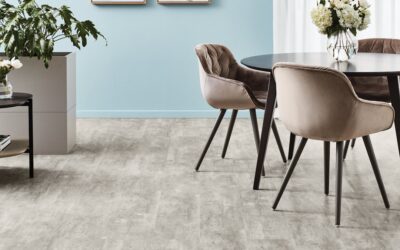
LVT stick down flooring is luxury vinyl tile that bonds directly to your subfloor with adhesive, either a peel-and-stick backing or a separately troweled glue. Unlike floating click-lock vinyl, these planks and tiles have no rigid locking edge; they lie flat and thin, usually 2mm to 5mm, and rely on the bond beneath them to stay put. That glued-down construction makes for an exceptionally stable, quiet floor that resists the slight movement and hollow sound some floating floors have, and it is one of the most affordable ways to get a realistic wood or stone look in a home.
How Stick Down LVT Works
There are two common formats. Peel-and-stick (sometimes called self-adhesive) tiles come with a pressure-sensitive glue already on the back, protected by a film you remove before pressing the tile into place. Dryback or glue-down LVT has a plain back, and you spread the correct adhesive on the subfloor with a notched trowel, then set the planks into it. Professionals generally prefer the troweled glue-down method because the bond is stronger and more reliable over the long term.
Both types share the same layered makeup as other luxury vinyl: a backing layer, a printed decor film that mimics wood grain or stone, and a clear wear layer on top that determines durability. Because stick-down tiles are flexible and thin, they conform closely to the subfloor, which is exactly why surface preparation matters more here than with almost any other floor type.
The Advantages
Cost is the first draw. Stick-down LVT is typically the cheapest luxury vinyl format to buy, and peel-and-stick versions are genuinely DIY-friendly for small rooms. The thin profile is another benefit; at 2mm to 3mm, the floor barely raises the height of the room, so it slides under existing door clearances and transitions cleanly to adjacent flooring without big thresholds.
- Low material cost compared with rigid-core or hardwood options
- Very thin, so doors and transitions usually need no adjustment
- Glued bond gives a solid, quiet, non-hollow feel underfoot
- Individual tiles can be replaced if one is damaged
- Water-resistant surface that suits kitchens and laundries
- Wide range of realistic wood and stone looks
Because each tile is a separate piece set in adhesive, a damaged plank can often be lifted and swapped without disturbing the whole floor, a real advantage in high-traffic or accident-prone rooms. The glued-down stability also handles temperature swings well, making it a common pick for sunrooms and spaces with large windows where floating floors can expand.
The Drawbacks
The subfloor is everything. Because the tiles are thin and flexible, any bump, dip, nail head, or piece of grit telegraphs straight through to the surface, and seams can lift if the floor below is not clean, dry, and smooth. Preparing the subfloor properly, sometimes with a self-leveling compound, can add time and cost that erases part of the low material price.
Peel-and-stick adhesive is the weak link in budget products. Cheap self-adhesive tiles can lose their grip over time, especially with temperature changes, sunlight, or moisture seeping at the edges, leading to curling corners and gapping seams. Removal is the other headache; glued-down LVT and its adhesive residue can be labor-intensive to pull up when you eventually want to replace the floor. And like all LVT, it is a printed surface that cannot be refinished, so worn or dated floors get replaced rather than restored.
Stick Down vs Click-Lock LVT
The choice between glued and floating vinyl comes down to priorities. Stick-down wins on cost, thinness, and a rock-solid underfoot feel, and it performs better in very large rooms and hot, sunny spaces because it cannot expand and contract as a floating sheet. Click-lock wins on installation speed, easier subfloor tolerance, and simpler removal, since it floats free and can be lifted without adhesive.
If your subfloor is already flat and smooth, or you are gluing over a sound concrete slab, stick-down LVT is an excellent value. If your subfloor is uneven, or you want a faster install you can pull up later, a rigid-core click-lock product is usually the more forgiving route despite the higher price.
What It Costs
In the US, stick-down LVT material commonly runs from about $1.50 to $5 per square foot, with peel-and-stick at the lower end and thicker commercial-grade dryback tiles toward the top. Professional installation typically adds $1.50 to $4 per square foot, plus any subfloor prep. Self-leveling compound, patching, and primer can add $1 to $3 per square foot if your base is in rough shape, so always inspect the subfloor before assuming the cheapest sticker price is your real cost.
Budget for adhesive if you choose dryback tiles, plus a notched trowel and a flooring roller to press the tiles for a proper bond. Order roughly 10 percent extra to cover cuts and to keep spare tiles for future repairs, since dye lots and patterns change over time and an exact match later can be hard to find.
Installation Essentials
Success with stick-down LVT is mostly about preparation. The subfloor must be clean, dry, structurally sound, and flat, generally within 3/16 inch over 10 feet. Remove old adhesive, fill low spots, sand down high spots, and vacuum thoroughly so no grit remains under the tiles. On concrete, run a moisture test, because excess slab moisture is a leading cause of adhesive failure.
Let the tiles acclimate to room temperature for the recommended period, often 24 to 48 hours, so they are stable when bonded. For dryback products, spread adhesive only as far as you can lay tile within the glue’s working time, and follow the open-time instructions on the can precisely. Roll the floor with a weighted roller to drive out air and ensure full contact, then keep traffic off it while the bond cures. Tight, staggered seams and a careful starting line keep the finished layout looking professional.
Care and Maintenance
LVT is easy to live with. Sweep or vacuum regularly to keep abrasive grit off the wear layer, and damp-mop with a pH-neutral vinyl cleaner. Avoid steam mops and harsh solvents, which can attack the adhesive and the surface. Wipe spills before they reach the seams, since standing water that works under a tile is the main way a glued floor fails early.
Protect the floor with felt pads under furniture and walk-off mats at entrances, and avoid dragging heavy appliances directly across the surface. Use only non-staining, vinyl-safe protectors, because some rubber-backed mats can discolor LVT. With sensible care, a quality stick-down floor lasts 10 to 20 years.
Is Stick Down LVT Right for You?
Stick-down LVT is a smart choice when you want an affordable, thin, quiet floor and you either already have a smooth subfloor or are willing to prep one properly. It shines in kitchens, laundries, sunrooms, and budget renovations where every dollar counts. If your subfloor is uneven, you want the fastest possible install, or you expect to change the floor again soon, a floating click-lock vinyl may serve you better. Match the wear-layer thickness to your traffic, prep the base carefully, and stick-down LVT delivers a remarkable amount of style and durability for the price. The team at D and G Flooring can help you weigh peel-and-stick against glue-down for your specific room and subfloor.
Prefer to explore on your own?
See how new flooring looks in your actual room in seconds — free, no signup.
Try the free Floor Studio →