
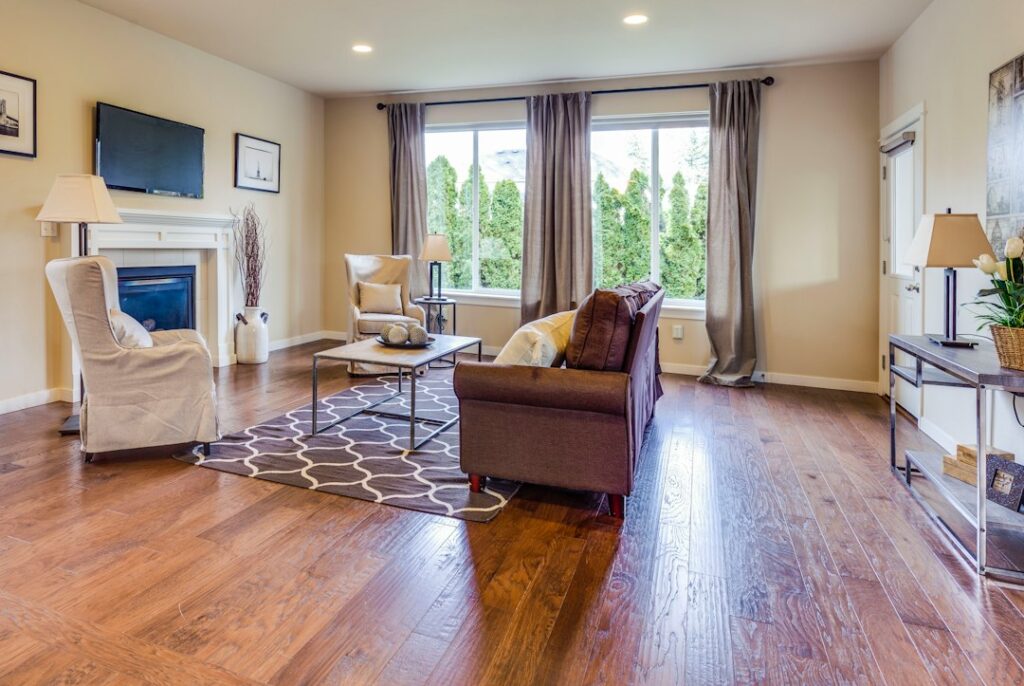
Within Mannington’s Adura family, the name tells you most of the story. Mannington Adura Rigid is the stone polymer composite (SPC) line, a thinner and denser floating floor than the WPC-based Adura Max and a very different product from the glue-down Adura Flex. On Mannington’s own product pages, Adura Rigid planks and tiles list a 5.5 mm overall thickness, a 20 mil aluminum oxide wear layer, an attached pad and a waterproof rating.
That combination makes Adura Rigid a practical pick for kitchens, basements over concrete and busy family rooms where you want a hard, dent-resistant surface and a click floor you can float. It gives up some of the cushioned feel and sound damping that the thicker Max line offers, and it does not use Mannington’s HydroLoc locking system.
Specs, line comparison, installation basics and care are all covered here, using figures confirmed on the manufacturer’s product pages. Where numbers vary by pattern, check the spec sheet for the exact color you choose.
Mannington Adura Rigid Specs
These values come from Mannington’s product pages for an Adura Rigid wood-look plank (Heritage Buckskin) and a tile (Century Pumice). Other patterns may differ, and retailer listings sometimes show older or different specs, so treat the carton label and current spec sheet as the final word.
| Spec | Value | What it means |
|---|---|---|
| Core type | SPC (stone polymer composite) | Dense, rigid core that resists dents and hides minor subfloor flaws |
| Overall thickness | 5.5 mm | Slimmer than WPC lines; easier transitions at doorways |
| Wear layer | 20 mil, aluminum oxide | A thick wear layer for residential use; adds scratch resistance |
| Plank size | 6 in x 48 in (Heritage) | Classic plank width; other patterns vary |
| Tile size | 12 in x 24 in (Century) | Stone-look format for kitchens and baths |
| Attached pad | Yes | No separate underlayment needed in most cases |
| Waterproof | Yes | Surface spills will not swell the core |
| HydroLoc locking | No | HydroLoc is an Adura Max feature |
| Edge and texture | Micro-bevel, embossed, low gloss | Subtle plank definition with a matte look |
| Warranty | Lifetime residential; 10-year light commercial | Read the warranty document for exclusions |
Mannington also lists ScratchResist surface protection, Microban surface protection, FloorScore certification and steam mop approval for the Heritage plank. The plank carton holds 24 sq ft in 12 pieces, which helps with ordering math.
Adura Rigid vs Adura Max vs Adura Flex
The three sibling lines share the Adura name and visual design approach, but their cores and install methods differ. This is the most common source of confusion when shopping.
- Adura Rigid: SPC core, 5.5 mm overall, 20 mil wear layer on the patterns checked, attached pad, floating install. Hard underfoot and stable in temperature swings.
- Adura Max: Mannington describes it as a floating expanded polymer core floor, also called WPC, with a thicker core, an attached pad and HydroLoc locking designed to help stop liquids from seeping through the joints. Mannington says the core dampens sound by up to 30 percent. Retailers list Max at a thicker build than Rigid; confirm the exact figure on the spec sheet.
- Adura Flex: a flexible, glue-down luxury vinyl rather than a rigid click plank. It suits commercial-style installs, rooms with heavy rolling loads and areas where a floating floor is not ideal. Thickness and wear layer vary by product, so check the current specs.
Which one to choose
Pick Adura Rigid when you want a slimmer, harder floating floor at a lower step than Max, for example over existing tile or in a basement with tight door clearances. Pick Adura Max for the softest, quietest floating feel and added joint protection against liquids. Pick Adura Flex when you need a glue-down installation.
Where Adura Rigid Works Best
Mannington Adura Rigid suits most rooms in a home, but a few settings play to its strengths. Kitchens benefit from the waterproof core and the 20 mil wear layer, which stand up to dropped utensils, chair legs and daily spills. Basements over a dry concrete slab are another good fit, since SPC stays stable when temperatures swing and the attached pad adds a little warmth and sound control underfoot.
Bathrooms work well too, as long as you leave the expansion gap at the tub and toilet and seal those edges with a flexible caulk rather than pinning the floor. Sunrooms and spaces with large south-facing windows deserve more thought: any floating vinyl can move in strong direct sun, so check the installation guide’s temperature limits and use window coverings. In rooms with heavy fixed islands or built-ins, install the cabinets first and run the floor up to them, so the floating floor is never trapped under a heavy load.
For homes with pets, the dense surface handles claws better than softer vinyl, and the low-gloss embossed texture helps hide fine scratches. Keep nails trimmed and wipe up accidents promptly, since moisture sitting at the seams for hours is still worth avoiding.
Tools and Materials
- Vinyl plank flooring cutter or a utility knife with spare blades
- Tape measure, square and pencil
- Tapping block and pull bar made for click vinyl
- Rubber mallet
- Spacers for the expansion gap
- 6-mil polyethylene sheeting if the installation instructions call for a vapor barrier over concrete
- Floor leveling compound and a long straightedge
- Transition moldings and quarter round or baseboard
Installation Basics
- Acclimate the cartons. Store them flat in the room at normal living temperature for the time the instructions specify.
- Check the subfloor. It must be clean, dry and flat within the tolerance stated in Mannington’s installation guide. Grind high spots and fill low spots.
- Test concrete moisture. Follow the guide’s moisture testing requirements; waterproof flooring still needs a dry slab to prevent mold under the floor.
- Plan the layout. Run planks parallel to the longest wall or main light source, and balance the first and last rows so neither is a sliver.
- Cut and stagger. Score and snap planks with a cutter or knife. Stagger end joints by the minimum distance the instructions give.
- Click rows together. Angle the long side in, lower it, then tap the short end with a tapping block. Do not strike the locking edge directly.
- Leave expansion space. Keep the gap at walls and fixed objects, and do not pin the floor with cabinets or nails through the planks.
- Finish the edges. Install transitions and trim, fastening trim to the wall, not the floor.
Because the planks have an attached pad, adding a second underlayment usually voids the warranty or makes the joints too soft. Read the installation guide before adding anything under the floor.
Troubleshooting
- Joints peak or gap: the subfloor is not flat enough, or the floor is pinned. Check for trim nailed through planks or a cabinet sitting on the floor.
- Hollow sound in spots: a dip in the subfloor. Lift the affected rows and fill the low area.
- End joints will not lock: debris in the groove or a damaged tongue. Clean the edge or replace the plank.
- Edge chipping during install: use a tapping block and pull bar made for vinyl, not a hammer on bare edges.
- Dull or scuffed spots: clean with a cleaner made for vinyl floors; avoid wax, oil soaps and abrasive pads.
Care and Maintenance
Sweep or vacuum with a hard-floor setting, then damp mop with a vinyl floor cleaner. Mannington lists the Heritage plank as steam mop approved, but confirm this for your pattern. Use felt pads under furniture, a protective mat under rolling chairs and doormats at exterior entries to keep grit off the wear layer.
General Cost Ranges
Adura Rigid generally sits in the mid-range for branded SPC flooring, typically above entry-level rigid core and below many premium WPC products. Prices depend on pattern, format and retailer. Professional installation of a floating click floor is usually charged per square foot, with extra for subfloor prep, stairs, trim and furniture moving. Order about 10 percent more than your measured area for cuts, and more for diagonal layouts.
When to Call a Pro
Hire an installer for stairs, large open areas with long runs, rooms with multiple doorways that need careful layout, or a subfloor that needs significant leveling. If the existing floor is old sheet vinyl or tile from before the 1980s, have it tested for asbestos before you remove it. Basements with active moisture problems need a moisture fix before any floor goes down.
Frequently Asked Questions
Is Mannington Adura Rigid waterproof?
Yes. Mannington lists Adura Rigid as waterproof. It does not use the HydroLoc joint system that Adura Max has, so wipe up standing water promptly.
What is the wear layer on Adura Rigid?
The patterns checked on Mannington’s site list a 20 mil aluminum oxide wear layer. Confirm the figure for your specific color.
Is Adura Rigid SPC or WPC?
Adura Rigid is SPC. Adura Max is the WPC line.
Does Adura Rigid need underlayment?
It has an attached pad. Follow the installation guide, which may call for a vapor barrier over concrete but not an added cushion.
Which is better, Adura Rigid or Adura Max?
Neither is better for every room. Rigid is slimmer and harder, while Max is thicker, quieter and has HydroLoc joints.
Prefer to explore on your own?
See how new flooring looks in your actual room in seconds — free, no signup.
Try the free Floor Studio →

