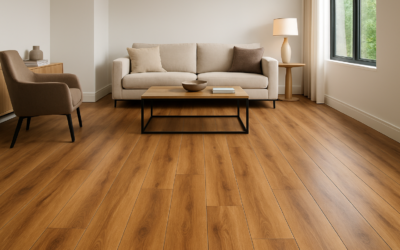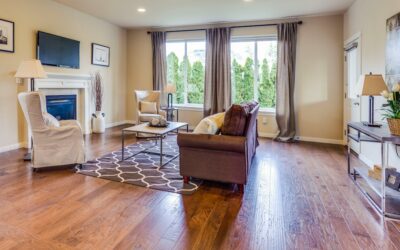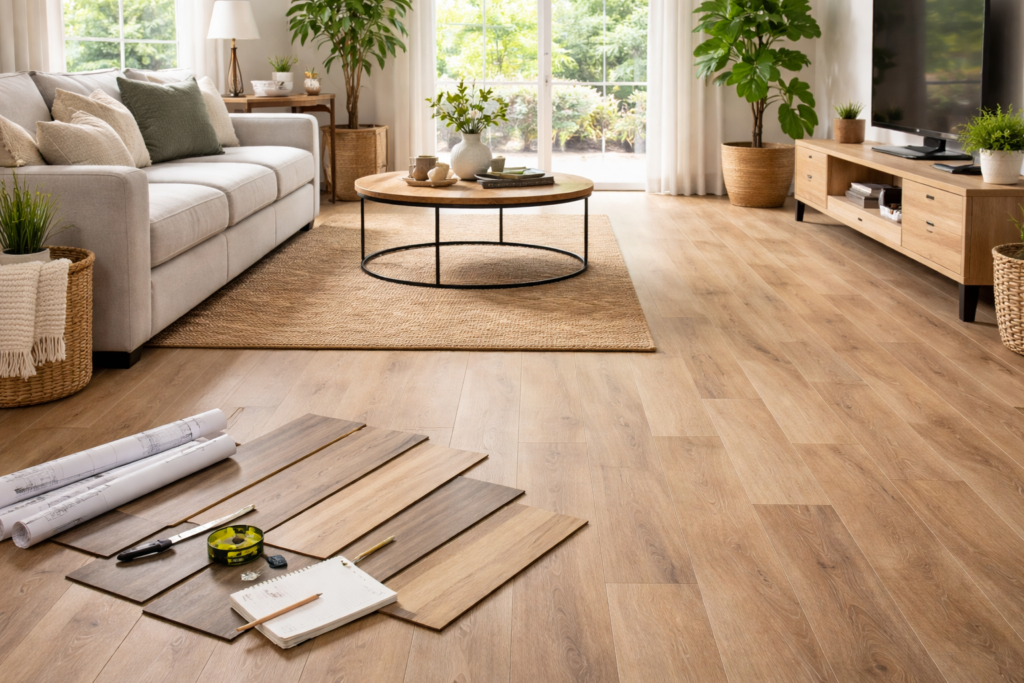
For an American-made luxury vinyl you can trust, Mannington vinyl plank flooring is near the top of the short list. Mannington has been making floors in New Jersey since 1915, and that long manufacturing pedigree shows up in the quality of their vinyl. Their Adura line, in particular, suits kitchens, basements, and busy family rooms.
But Mannington isn’t a single product; it’s a family of ranges built in different formats and price points, and choosing the wrong one for your room is an easy mistake. Below is a breakdown of the Adura collections, the specs that actually matter, and honest, evergreen cost expectations so you can walk into a showroom knowing exactly what to ask.
Why Mannington Earns Its Reputation
Mannington’s strength is realism and durability in equal measure. The wood-look Adura planks use detailed embossing and varied plank designs so the same knot and grain pattern doesn’t repeat every few boards, which is the giveaway of cheaper vinyl. Their stone and tile looks include grout-line options that read convincingly as ceramic without the cold, unforgiving feel of real tile underfoot.
Beyond looks, the company backs its residential floors with strong warranties and, importantly, is a domestic manufacturer with reliable batch consistency. Ordering more of a color months later for an extension or repair should get a match. That reliability matters more than most buyers realize until they’re trying to patch a discontinued or mismatched floor.
Mannington also builds genuine waterproofing into the Adura range, which is why it is a common spec for below-grade basements and moisture-prone kitchens and laundry rooms. A waterproof core means a burst dishwasher hose or an overflowing tub is a cleanup job, not a floor replacement.
The Adura Ranges: Max, Rigid, and Flex
Mannington’s Adura family splits into three main formats, and understanding them is the whole game. Adura Max is a floating floor built on a waterproof composite core with an attached pad. It clicks together, spans large rooms, and is the most DIY-friendly of the three because it tolerates minor subfloor imperfections and needs no separate underlayment. This is the default recommendation for most homeowners.
Adura Rigid is built on a firmer SPC-style core that resists denting and handles temperature swings well, making it a smart pick for sunrooms, homes with big windows, or anywhere the floor sees heat and light. It’s dimensionally stable, so it’s forgiving in rooms where a softer floating floor might expand or contract more noticeably.
Adura Flex is the glue-down format. It bonds fully to the subfloor for the flattest, most permanent, most solid-feeling result, and it’s often chosen for high-traffic areas or where a fully adhered floor is preferred. Flex demands a smoother, better-prepped subfloor and is harder to remove later, but it gives that premium, no-hollow-sound underfoot feel. All three share Mannington’s designs, so you can usually get the same visual in the format that suits your room and skill level.
Wear Layers, Thickness, and Everyday Toughness
As with any vinyl, the wear layer is the number that governs how long your floor looks new. Mannington’s residential Adura ranges typically carry a wear layer around 20 mil (0.5mm), which is notably thicker than many mass-market floors that skimp at 6 to 12 mil. That heavier wear layer is a big reason Adura shrugs off dog claws, dropped toys, and dragged kitchen stools better than budget alternatives.
Total plank thickness varies by format, generally landing around 5mm to 8mm including the attached pad on the floating ranges. That thickness gives Adura a solid, quiet feel underfoot and helps bridge small subfloor irregularities on the floating products. Remember, though, that the total thickness and the wear layer are different specs; the wear layer protects the print, while overall thickness affects feel and forgiveness.
In practical terms, Adura floors are built for children, pets, and rolling office chairs. It’s not scratch-proof, so use felt pads under furniture legs and a doormat at entries to catch grit, but for a real-world household it’s one of the more resilient vinyls available.
Waterproofing and Where Mannington Shines
The waterproof core is Mannington’s headline feature, and it’s not marketing fluff. Because the Adura Max and Rigid cores don’t absorb water, these floors can go into basements, bathrooms, laundry rooms, and kitchens where solid hardwood and laminate would swell and fail.
A word of nuance: “waterproof plank” and “waterproof installation” aren’t the same thing. The plank won’t swell, but water can still travel through seams and sit on the subfloor if a room floods for an extended time. For full bathrooms, pay extra attention to sealing perimeters and around fixtures. The floor itself will survive; you just don’t want trapped moisture breeding mold in the subfloor beneath it.
For below-grade and moisture-prone spaces, the floating Adura Max is usually the pick because it’s fast to install and easy to lift a section if you ever need to inspect the subfloor. In a laundry room or mudroom that needs a fully bonded, immovable floor, Adura Flex glue-down is the better call.
Warranties and the Fine Print
Mannington backs its residential Adura floors with substantial warranties, commonly lifetime residential coverage on wear, staining, and waterproofing for the premium ranges, with lighter commercial terms. That’s a genuinely strong package, but as always the coverage assumes proper installation and normal use.
The warranty won’t help you if the floor was laid over a subfloor that was too uneven, if the expansion gap around a floating installation was skipped, or if damage came from dragging heavy appliances without protection. Read the document, follow the acclimation and installation instructions, and register the product if the manufacturer requests it. These small steps protect a big investment.
The standard advice applies here: keep your purchase records, note the batch and color numbers, and stash a spare box in a closet. On a floating floor you can unclick your way to a damaged plank and swap it; on a glue-down floor an installer can cut one out and bond a matched replacement. Having leftover planks from the same run makes either repair seamless.
What Mannington Vinyl Plank Really Costs
Let’s set realistic, evergreen expectations. Mannington Adura material typically runs in the range of roughly $3.50 to $6 per square foot for the plank, with Adura Max often in the middle of that band and premium Rigid options toward the upper end. It sits in the upper-mid tier, above builder-grade vinyl but generally below the most exclusive designer imports.
Installation adds to that. A DIYer laying floating Adura Max saves the labor entirely and only pays for materials plus a few tools and trim pieces. Professional installation commonly adds $2 to $5 per square foot for a floating floor and more for glue-down Flex, which needs greater subfloor prep. Factor in transition strips, baseboard or quarter-round, and any subfloor leveling, and a fully installed floor often totals $6 to $11 per square foot.
A good Mannington quote separates materials, prep, and labor so you can see where the dollars go. The plank is only part of the story; a properly prepped, level, dry subfloor is what makes the finished floor look and perform like the showroom sample. Skimp on prep and even the best vinyl disappoints.
Installation and DIY Notes
For most homeowners, Adura Max is the realistic DIY project. Let the boxes acclimate flat in the room for a day or two, confirm the subfloor is clean and reasonably flat, and plan your layout so you don’t finish with a sliver of plank against the far wall. The click system is straightforward, but rushing the first row or ignoring the perimeter expansion gap causes headaches later.
Adura Flex glue-down is a job for a pro unless you’re experienced. The subfloor must be very smooth and dry, the correct adhesive troweled at the right rate, and the floor rolled to ensure a full bond. Get the adhesive stage wrong and edges lift within months. Rigid installs much like Max but is a bit stiffer to work with and even more tolerant of ambient temperature swings.
Whichever format you pick, the boring fundamentals win: clean and level the subfloor, acclimate the material, respect expansion gaps, and use quality transitions. Do that, and Mannington vinyl plank flooring rewards you with a quiet, waterproof, good-looking floor that holds up to real family life for many years, which is exactly why it stays a staple recommendation.
Frequently Asked Questions
How do you clean Mannington vinyl plank floors?
Sweep or vacuum regularly with a hard floor setting, then damp-mop with a pH-neutral cleaner made for vinyl. Skip wax, polish, oil soaps, and abrasive scrubbers, which leave a film or dull the wear layer. Avoid steam mops, which most vinyl manufacturers warn against because heat and moisture can affect the joints. Wipe up spills promptly even though the planks are waterproof.
Can Mannington Adura Max be installed over existing tile?
Often, yes. As a floating floor, Adura Max can usually go over ceramic or porcelain tile that is flat, solidly bonded, and free of cracks. Deep or wide grout lines and uneven tiles can telegraph through or stress the locking joints, so fill and level them first. Check Mannington’s installation instructions for flatness limits to keep the warranty valid.
What is the difference between Mannington LVT and LVP?
Mannington LVP is the plank format with wood-look designs, while its LVT comes in tile shapes with stone, slate, and ceramic looks, often with grout-line detailing. Both are luxury vinyl sold within the Adura line, so the choice is mostly about the look you want. Tile looks suit bathrooms, entries, and laundry rooms, and planks suit living areas.
Prefer to explore on your own?
See how new flooring looks in your actual room in seconds — free, no signup.
Try the free Floor Studio →