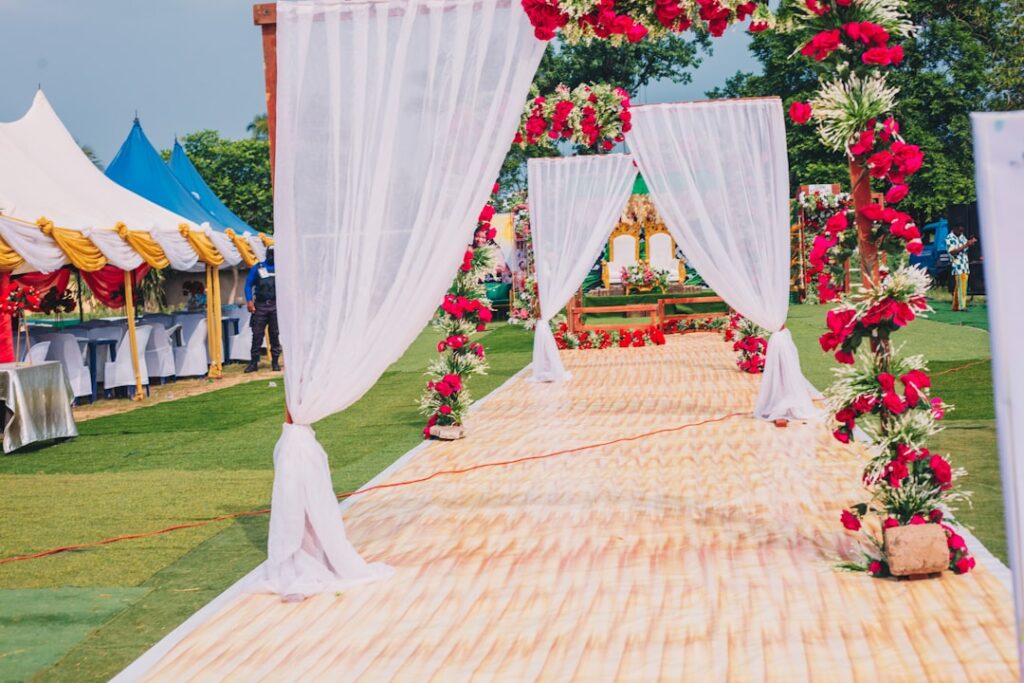
Marquee flooring transforms a temporary tent or marquee structure from a bare grass or gravel surface into a finished, comfortable, and safe event space. Whether you are planning a wedding, corporate event, festival, or exhibition, the right flooring makes the difference between a polished, professional setting and an uneven, muddy disappointment.
- Why Marquee Flooring Matters
- Types of Marquee Flooring
- Plywood Subfloor Systems
- Interlocking Event Tiles
- Carpet Flooring for Marquees
- Vinyl and Dance Floor Options
- Artificial Grass
- Sizing and Layout Planning
- Weather Protection Strategies
- Rental vs Buying
- Installation Tips
- Cost Breakdown
- Frequently Asked Questions
- Do I really need flooring in a marquee?
- Can I just use carpet on grass without a subfloor?
- What is the best flooring for a wet-weather marquee event?
- How far in advance should I book marquee flooring?
- Can marquee flooring be installed on concrete or asphalt?
- How do I prevent marquee flooring from smelling?
- What flooring works for a marquee on a slope?
This guide covers every marquee flooring option — from basic plywood subfloors to premium interlocking systems, carpet overlays, vinyl surfaces, and engineered event flooring — along with sizing calculations, rental vs purchase decisions, weather protection strategies, and cost breakdowns.
Why Marquee Flooring Matters
A marquee without flooring is just a roof. The ground underneath is typically grass, soil, gravel, or asphalt — none of which provides a suitable surface for guests in dress shoes, high heels, or formal attire. Without flooring, you face several problems.
- Uneven ground: Natural terrain is rarely flat, making tables and chairs wobble and creating trip hazards
- Mud and moisture: Rain before or during the event turns grass into a slippery, muddy mess that ruins shoes and clothing
- Cold and discomfort: Bare ground conducts cold, making the space uncomfortable in cooler weather
- Insect and pest issues: Grass and soil attract insects that bother guests
- Aesthetic shortfall: A beautifully decorated marquee with a grass floor looks incomplete and undermines the entire visual presentation
Proper marquee flooring solves all of these problems. It creates a level, clean, dry, and visually finished surface that elevates the entire event experience.
Types of Marquee Flooring
There are five main categories of marquee flooring, each suited to different events, budgets, and ground conditions.
| Type | Best For | Cost Level | Appearance |
|---|---|---|---|
| Plywood subfloor | Raised base for any overlay | $$ | Functional (needs overlay) |
| Interlocking tiles | Multi-purpose events | $$$ | Good to excellent |
| Carpet overlay | Weddings, formal events | $ to $$ | Elegant |
| Vinyl/dance floor | Dancing, corporate events | $$$ to $$$$ | Polished, modern |
| Artificial grass | Garden parties, casual events | $ | Natural, casual |
Plywood Subfloor Systems
Plywood is the foundation of most professional marquee flooring installations. It creates a raised, level platform that separates the finished floor from the ground below.
How It Works
Plywood panels (typically 8×4 feet or metric equivalents) are laid on a framework of timber bearers or adjustable legs that level the surface regardless of the ground slope. The panels are secured together to create a stable, continuous platform. A finished surface — carpet, vinyl, or a decorative overlay — is then laid on top.
When You Need a Plywood Subfloor
- The ground is significantly uneven or sloped
- Rain has made the ground soft or muddy
- You want a raised floor to protect against ground moisture
- The event involves heavy furniture, staging, or equipment
- Guests will be dancing (a solid subfloor prevents the floor from flexing)
Types of Plywood Subfloor
- Flat plywood on bearers: The simplest system — plywood panels laid on timber battens directly on the ground. Works for relatively flat sites.
- Cassette floor system: Pre-fabricated modules with integrated bearers that clip together. Faster to install and level. Used by professional event companies.
- Adjustable leg system: Steel or aluminium legs with screw adjustments that can level the floor over significant slopes. The most versatile but also the most expensive option.
Interlocking Event Tiles
Interlocking tiles are modular flooring systems that snap or click together without tools, creating a finished floor surface directly on the ground or over a plywood subfloor.
Types of Interlocking Tiles
Polypropylene tiles: Similar to garage tiles (like Swisstrax), these snap-together plastic tiles create a raised, ventilated surface that handles outdoor conditions. Available in various colours and patterns, they drain water and can be installed directly on grass or gravel.
Vinyl-top interlocking tiles: Polypropylene base with a decorative vinyl surface that mimics wood, stone, or parquet. These provide a finished appearance without the need for a separate overlay.
Wooden interlocking panels: Real or engineered wood panels that interlock to create a natural hardwood dance floor or event surface. Popular for weddings where a wood-floor aesthetic is desired.
Advantages of Interlocking Tiles
- Fast installation and removal — no tools required
- Reusable for multiple events
- Self-draining (raised designs allow water to pass underneath)
- No adhesive or permanent modification to the ground
- Modular design fits any space shape or size
Carpet Flooring for Marquees
Carpet is the most popular overlay for marquee flooring at weddings and formal events. It provides warmth, comfort, sound absorption, and an elegant appearance.
Types of Marquee Carpet
Exhibition carpet: Thin, non-woven carpet designed for short-term use. Available in a wide range of colours. Affordable but not luxurious — suitable for corporate events and exhibitions.
Velour carpet: Thicker, denser carpet with a soft velvet-like pile. Looks and feels more luxurious than exhibition carpet. The preferred choice for weddings and high-end events.
Coir matting: Natural coconut fibre matting that provides a rustic, textured look. Popular for country weddings, barn events, and bohemian-themed occasions.
Installation
Carpet is rolled out over the plywood subfloor or directly onto the ground (for less formal events). Seams are joined with double-sided tape or seam tape. Edges are tucked under the marquee walls or trimmed and taped. For formal events, the carpet should extend wall-to-wall with no visible seams in the main event space.
Vinyl and Dance Floor Options
Vinyl flooring and purpose-built dance floors provide a hard, smooth surface for dancing, performances, and corporate presentations.
Portable Dance Floors
Modular dance floor panels interlock to create a glossy, finished surface ideal for dancing. Available in wood-look (oak, walnut, maple), black-and-white checkerboard, and solid colours. These panels are a staple of event hire companies.
Vinyl Sheet Overlay
Commercial vinyl sheet can be laid over a plywood subfloor to create a seamless, waterproof surface. Vinyl offers a clean, modern look and is easy to clean — popular for food service areas, bars, and VIP lounges within the marquee.
LED and Starlit Dance Floors
For entertainment and wow-factor, LED dance floors with programmable lighting or starlit floors with fibre-optic lights create a dramatic focal point. These are premium rental items available from specialist event companies.
For permanent vinyl flooring information, see our vinyl flooring guide.
Artificial Grass
Artificial grass is a budget-friendly option for casual outdoor events where a natural, garden-party aesthetic is desired.
Best Uses
- Garden parties and barbecues
- Festival and outdoor cinema events
- Children’s events and family gatherings
- Casual wedding receptions
Limitations
- Not suitable for high heels (they sink into the surface)
- Cannot be used for dancing
- Difficult to level on uneven ground without a subfloor
- Can feel hot in direct sunlight
Artificial grass works best as a decorative element or for casual zones within a larger event, rather than as the primary flooring surface.
Sizing and Layout Planning
Proper sizing ensures your marquee flooring covers the space efficiently without waste or gaps.
Measuring the Space
Measure the internal dimensions of the marquee. The flooring should cover the entire internal area, extending to within 50mm of the walls to allow for expansion and air circulation. For a raised subfloor, account for the bearers extending slightly beyond the plywood edges.
Common Marquee Sizes
- 6m x 12m (20×40 ft): 72 sqm — seats 50-60 for dinner, 80-100 standing
- 9m x 18m (30×60 ft): 162 sqm — seats 100-120 for dinner, 180-200 standing
- 12m x 24m (40×80 ft): 288 sqm — seats 180-200 for dinner, 300-350 standing
- 15m x 30m (50×100 ft): 450 sqm — seats 300+ for dinner, 500+ standing
Zoning the Floor
Large events often use different flooring in different zones. A common wedding layout uses carpet for the dining area, a portable dance floor in the centre, and vinyl or hard flooring for the bar and catering area. Plan these zones in advance so the flooring is installed in the correct positions before furniture arrives.
Weather Protection Strategies
Weather is the biggest variable in outdoor event planning, and your flooring strategy must account for it.
Before the Event
- Site drainage: Choose a site that drains well. Avoid low-lying areas where water pools.
- Ground protection: Lay ground protection mats or trackway over the access route to prevent vehicles from churning the ground into mud during setup.
- Raised subfloor: If rain is likely, a raised plywood subfloor is essential. It keeps the finished floor above ground-level water and prevents moisture from wicking up through carpet or underlayment.
During the Event
- Entrance matting: Place high-quality entrance mats at every doorway to catch mud and moisture from shoes before they reach the main floor
- Gutter management: Ensure the marquee’s rain gutters and drainage channels direct water away from the entrance and the floor perimeter
- Backup supplies: Keep spare carpet, mats, and cleaning supplies on hand for emergencies
After the Event
- Remove all flooring promptly to allow the ground underneath to recover
- Dry carpet and plywood before storage to prevent mould
- Clean interlocking tiles before stacking for reuse
Rental vs Buying
The rental vs purchase decision depends on how often you need marquee flooring and the scale of your events.
When to Rent
- One-off events (weddings, corporate functions)
- Large-scale events where transport and storage of flooring is impractical
- When you want the latest styles and options without capital investment
- When you need professional installation included
When to Buy
- Event venues that host regular marquee events (5+ per year)
- Event hire companies building their inventory
- Permanent or semi-permanent marquee structures
- Small-scale events where a few interlocking tile packs cover the space
Rental vs Purchase Economics
Renting typically costs 15% to 30% of the purchase price per use. If you use the flooring more than 4 to 5 times, purchasing becomes more economical. Factor in storage and transport costs when making the calculation — flooring takes up significant space.
Installation Tips
- Install after the marquee is up: The structure should be fully erected and tensioned before flooring installation begins
- Level before laying: Use a long spirit level or laser level to identify high and low points. Address unevenness with bearer adjustments or shimming before laying plywood
- Work from one end: Start at the far end of the marquee and work toward the entrance so you do not walk on finished sections
- Leave expansion gaps: All hard flooring needs a small gap at the edges to accommodate expansion from temperature changes
- Secure loose carpet: Tape all carpet edges and seams with heavy-duty double-sided tape. Loose carpet is a trip hazard, especially for guests in heels
- Test furniture placement: Set up a few tables and chairs before the full furniture delivery to confirm the floor is level and the surface is stable
- Allow time: Floor installation for a large marquee takes a full day. Do not schedule it for the morning of the event
Cost Breakdown
Rental Costs (per event)
- Plywood subfloor: $3 to $8 per square foot (includes levelling and installation)
- Exhibition carpet overlay: $1 to $3 per square foot
- Velour carpet overlay: $2 to $5 per square foot
- Interlocking event tiles: $3 to $7 per square foot
- Portable dance floor: $5 to $15 per square foot
- LED/starlit dance floor: $15 to $35 per square foot
Purchase Costs
- Interlocking polypropylene tiles: $3 to $6 per square foot
- Vinyl-top interlocking tiles: $5 to $10 per square foot
- Wooden dance floor panels: $8 to $20 per square foot
- Exhibition carpet roll: $0.50 to $2 per square foot
Example: 100 sqm Wedding Marquee Floor
A 100-square-metre wedding marquee with a raised plywood subfloor, velour carpet in the dining area, and a 4x4m portable dance floor typically costs $3,500 to $7,000 to rent fully installed. This is a significant line item in the event budget but one that dramatically impacts the guest experience.
Frequently Asked Questions
Do I really need flooring in a marquee?
For formal events — weddings, corporate dinners, galas — yes. Flooring is essential for comfort, safety, and appearance. For casual garden parties and summer barbecues, you may be able to skip flooring if the ground is flat, dry, and in good condition. However, even casual events benefit from a basic ground covering.
Can I just use carpet on grass without a subfloor?
For short events in dry weather on flat ground, carpet can be laid directly on grass. However, any moisture in the ground will wick through the carpet, and the uneven ground will show through. A plywood subfloor provides a much better result and is recommended for events lasting more than a few hours.
What is the best flooring for a wet-weather marquee event?
A raised plywood subfloor with a waterproof overlay (vinyl or interlocking tiles) is the best option for wet conditions. The raised subfloor keeps the finished surface above ground-level water, and the waterproof overlay prevents moisture from reaching guests’ feet.
How far in advance should I book marquee flooring?
Book flooring rental 3 to 6 months before your event during peak season (May through September). Popular weekends book up early, and last-minute bookings may have limited style and colour options.
Can marquee flooring be installed on concrete or asphalt?
Yes. On hard surfaces, you may not need a raised subfloor — carpet, vinyl, or interlocking tiles can often be laid directly on the surface. This simplifies installation and reduces cost. However, concrete and asphalt can be cold, so an insulated underlay or thicker carpet improves comfort.
How do I prevent marquee flooring from smelling?
Musty odours in marquee flooring usually come from carpet that was stored damp or plywood that has absorbed moisture. Ensure all flooring materials are completely dry before storage. For rental flooring, ask the supplier about their storage and maintenance practices.
What flooring works for a marquee on a slope?
An adjustable-leg subfloor system is the best solution for sloped ground. The legs can be individually adjusted to create a level platform regardless of the ground slope. For gentle slopes, a bearer-and-plywood system with shimming can also work. Interlocking tiles alone cannot compensate for slopes.
Prefer to explore on your own?
See how new flooring looks in your actual room in seconds — free, no signup.
Try the free Floor Studio →