One adhesive choice can make or break a tile job, and using mastic glue for tile in the wrong place is one of the most common DIY mistakes. Mastic is an organic, premixed adhesive that’s fast, sticky, and beginner-friendly, which makes it perfect for dry wall tile like a kitchen backsplash. But it’s the wrong product for floors, showers, and anywhere water lingers. Knowing that single distinction will save you from a failed installation down the road.
Part of our Tile & Grout guide — explore the full guide →
What Mastic Actually Is
Mastic is a ready-to-use, water-based organic adhesive sold in tubs. You open it, trowel it on, and start setting tile, no mixing required. It has high initial grab, meaning tiles tend to stay put on a vertical surface without sliding, which is a real advantage when you’re tiling a wall by yourself. It dries by releasing moisture into the air, hardening as that moisture escapes.
That drying mechanism is exactly why mastic has limits. Because it cures by losing moisture, it needs air exposure to set properly, and it can soften again if it stays wet. Trap it under a non-porous tile in a wet area and it may never fully cure, or it may re-emulsify and let tiles loosen.
Where Mastic Works Great
For the right job, mastic is excellent and honestly easier than thinset for beginners. It shines in dry, vertical, interior applications.
- Kitchen backsplashes made of ceramic or glass mosaic tile, where splashes are occasional and dry quickly.
- Dry interior wall tile in living areas, laundry rooms, or behind a stove.
- Small, lightweight wall tile where mastic’s grip holds pieces in place without sagging.
- Mosaic sheets that benefit from the strong instant tack.
In these spots, mastic’s convenience, grab, and forgiving working time make it a smart pick. A standard tub covers a typical backsplash and costs less than buying and mixing a bag of thinset.
Where You Must Not Use Mastic
This is the part that matters most. Mastic fails in conditions thinset handles easily, so reserve thinset for these jobs.
- Floors. Mastic doesn’t have the compressive strength to support foot traffic and furniture loads. Floor tile needs thinset, period.
- Showers, tub surrounds, and steam areas. Constant moisture prevents mastic from curing and can cause it to soften, leading to loose tiles and mold behind them.
- Large or heavy tile. Tiles larger than roughly 6 by 6 inches, and any heavy stone, can sag or pull off the wall before mastic sets. These need thinset’s body and strength.
- Exterior or freezing environments. Mastic isn’t built for outdoor temperature swings or moisture.
- Over non-porous backings where the adhesive can’t release its moisture to cure.
Mastic vs. Thinset at a Glance
Thinset is a cement-based mortar you mix from powder and water. It’s stronger, waterproof once cured, and rated for floors, wet areas, large-format tile, and stone. Mastic is premixed, convenient, and high-grab but limited to dry walls and small tile. Think of it this way: if water will sit on it, or feet will walk on it, or the tile is big and heavy, choose thinset. For a dry interior wall with modest-sized tile, mastic is the easier path.
How to Apply Mastic Correctly
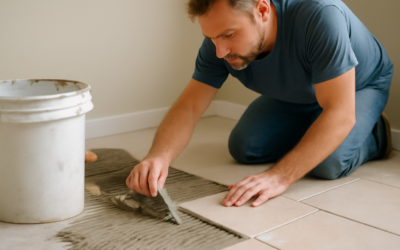
- Prep a clean, dry, sound surface. Mastic bonds to drywall, cement board, or properly primed walls. Remove dust, grease, and loose paint.
- Choose the right trowel. A 3/16-inch V-notch suits small mosaics; a 1/4-inch square notch fits slightly larger wall tile.
- Spread only what you can tile in 15 to 20 minutes. Mastic skins over quickly, and a skinned surface won’t bond.
- Press and twist each tile to collapse the ridges and maximize contact. Check coverage by pulling one tile to confirm the back is well coated.
- Let it cure fully before grouting, typically 24 to 48 hours, and longer in humid conditions since mastic needs to dry to harden.
Common Mistakes to Avoid
The biggest error is reaching for mastic glue for tile on a bathroom floor or shower wall because it’s sitting on the shelf and seems easier. It will eventually fail. Another mistake is troweling on too thick a layer with non-porous glass or stone tile; the center can stay gummy for weeks because the moisture has nowhere to escape. Finally, don’t grout before the mastic has fully cured, or you’ll seal in moisture and trap the adhesive in a soft state.
Coverage, Cost, and Open Time
A standard one-gallon tub of mastic covers roughly 40 to 50 square feet with a small-notch trowel, which is plenty for a typical kitchen backsplash. Premixed convenience comes at a modest price premium per square foot over a bag of thinset, but for a small wall job the difference is minor and the time saved is real. Pay attention to open time: once spread, mastic begins skinning over within about 15 to 20 minutes, faster in a warm, dry room. If a ridge of adhesive has formed a dull skin, the bond is compromised, so scrape it off and re-spread rather than tiling over it. Work in small sections and you’ll never fight the clock.
How to Tell If You Have a Mastic or Thinset Situation
When you’re standing in the aisle unsure which to buy, run through three quick questions. Will water sit on this surface for any length of time? Will anyone walk on it? Is the tile larger than about 6 inches or made of heavy stone? If you answer yes to any of those, choose thinset. If it’s a dry interior wall with small to medium ceramic or glass tile, mastic is the easier, perfectly appropriate choice. This simple filter steers you right nearly every time and prevents the most expensive tiling mistakes.
The Bottom Line
Mastic is a genuinely useful adhesive when you respect its limits. Use it for dry interior walls, backsplashes, and small or mosaic tile, where its grab and convenience are real advantages. Switch to thinset for floors, showers, wet areas, and large or heavy tile. Match the adhesive to the job and your tile will stay put for decades; mismatch them and even a beautiful tile layout can come crashing down.
Prefer to explore on your own?
See how new flooring looks in your actual room in seconds — free, no signup.
Try the free Floor Studio →