Choosing among the many mastic siding colors is one of the most exciting and important decisions when re-siding your home, because the color sets the tone for your entire exterior and stays with you for decades. Mastic, part of the Ply Gem family of exterior products, is a well-known vinyl siding brand offering a wide, curated palette of colors designed to hold up under sun and weather. From soft, timeless neutrals to bold, saturated statement hues, Mastic’s color range gives homeowners plenty of ways to boost curb appeal. Understanding the palette, how colors pair with different home styles, and what to consider before committing will help you land on a choice you love.
Part of our Tile & Grout guide — explore the full guide →
This guide walks through Mastic’s color families, popular picks, style pairings, and buying tips.
- About Mastic Siding and Its Color Technology
- Mastic Siding Color Families
- Popular Mastic Color Choices
- Pairing Siding Colors With Home Style
- How to Choose the Right Color
- Light vs. Dark Siding Considerations
- Common Mistakes to Avoid
- Coordinating Trim, Shutters, and Accents
- How Siding Color Affects Curb Appeal and Resale
- Getting the Best Result
About Mastic Siding and Its Color Technology
Mastic siding uses color and fade-resistant technology engineered to keep hues looking vibrant despite years of UV exposure. Because vinyl siding color runs through the material rather than sitting only on the surface, scratches and scuffs are far less noticeable than on painted surfaces, and you never have to repaint. Mastic offers its colors across multiple profiles and product lines, including horizontal lap, Dutch lap, and shake and shingle accents, so you can carry a color scheme across the whole exterior.
Mastic Siding Color Families
Neutrals and whites
Timeless and versatile, whites, creams, and soft off-whites like classic white, linen, and almond suit almost any architectural style and pair well with nearly any trim and roof color. These are the safest resale choices and brighten a home.
Grays and greiges
Grays remain enormously popular. From light silvers and pewters to deep charcoals and slate tones, gray and greige (gray-beige blends) give homes a modern, sophisticated look that works in both traditional and contemporary settings.
Blues
Soft blues, coastal blue-grays, and deep navy tones bring personality and charm. Lighter blues evoke a coastal or cottage feel, while deep navy makes a bold, upscale statement, especially with white trim.
Greens
Earthy sage, olive, and forest greens have surged in popularity for their natural, grounded look. They pair beautifully with stone accents and wooded lots.
Warm earth tones
Tans, khakis, clays, and warm browns create a welcoming, traditional look that blends with brick and stone and hides dust well.
Bold and dark hues
Deep reds, rich blacks, and dramatic dark tones make a striking statement on modern farmhouse and contemporary homes. Mastic’s fade-resistant technology helps these darker colors hold up better than untreated vinyl would.
Popular Mastic Color Choices
- Classic White and Linen: Clean, bright, and endlessly versatile.
- Pewter and Granite Gray: Modern neutrals that read upscale.
- Coastal Blue and Harbor: Soft blues for cottage and coastal styles.
- Sage and Cypress: Earthy greens for a natural, current look.
- Deep Navy and Midnight: Bold, sophisticated statement colors.
- Clay and Sandstone: Warm tones that pair with brick and stone.
Exact color names and availability vary by product line and region, so always confirm the current offerings with a Mastic dealer and view large physical samples.
Pairing Siding Colors With Home Style
- Traditional and colonial: Whites, soft grays, and warm neutrals with contrasting shutters and trim.
- Modern farmhouse: Crisp white or deep black siding with black or white trim for high contrast.
- Craftsman: Earthy greens, warm browns, and tans with natural stone accents and shake details.
- Coastal and cottage: Light blues, seafoam, and soft grays with white trim.
- Contemporary: Charcoal, deep gray, and navy for a sleek, sophisticated look.
How to Choose the Right Color
Picking a siding color is a big commitment, so take these steps before deciding:
- Consider fixed elements: Your roof, stone, brick, and driveway are not changing. Choose a siding color that complements them.
- Look at the neighborhood: Aim to fit in tastefully; wildly clashing colors can hurt resale and may violate HOA rules.
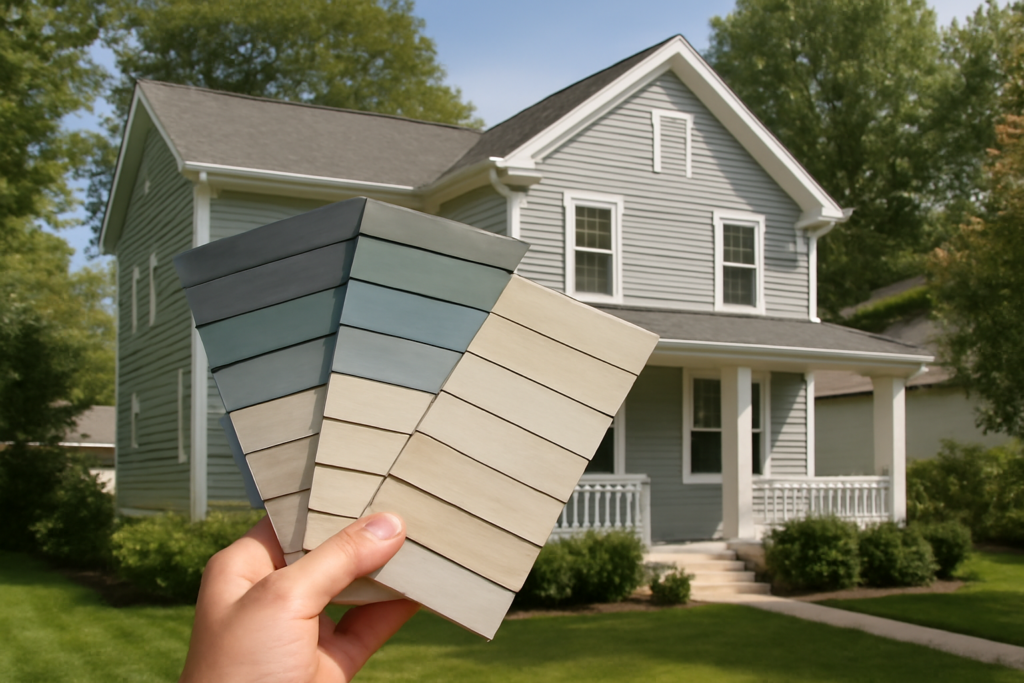
- Get large samples: Small chips mislead. View big samples on your actual house, in different light and times of day, since color reads lighter or darker outdoors.
- Think about trim and accents: Plan the whole scheme, including trim, shutters, and shake accents, not just the field color.
- Factor in climate and dust: Very dark colors show pollen and dust more and absorb more heat; light colors show dirt in some areas.
Light vs. Dark Siding Considerations
Dark siding colors are dramatic and increasingly popular, but they absorb more heat and historically posed a risk of warping on cheaper vinyl. Mastic’s fade- and heat-resistant formulations improve dark-color performance, but darker shades can still show more expansion, so proper installation with room for movement is essential. Lighter colors stay cooler, hide expansion better, and tend to have broader appeal for resale. Balance the look you want against these practical trade-offs.
Common Mistakes to Avoid
- Choosing from a small chip: Always view a large sample on the house before committing.
- Ignoring the roof and stone: A siding color that clashes with fixed elements looks off.
- Forgetting the trim scheme: Plan siding, trim, and accents together as a whole.
- Overlooking HOA rules: Confirm allowed colors before ordering.
- Picking trendy over timeless for resale: Bold colors are great if you plan to stay; neutrals hold broader appeal.
Coordinating Trim, Shutters, and Accents
The field color of your siding is only part of the equation; the trim, shutters, soffit, and accent colors determine whether the whole exterior looks cohesive or disjointed. A reliable approach is to choose three colors: a main field color for the bulk of the siding, a trim color for windows, corners, and fascia, and an accent color for shutters, the front door, or shake details. High contrast, like white trim against a deep navy or charcoal field, reads crisp and modern, while a low-contrast, tonal scheme feels soft and traditional.
Mastic offers coordinating trim, soffit, and accent products so you can build a matched palette across the entire home rather than mixing brands and finishes. Shake and shingle accents in a complementary color add texture and interest to gables, dormers, and entryways without recladding the whole house in a bolder color. When planning, pull the accent color from something fixed on the home, such as a tone in the stone or brick, to tie everything together. A thoughtfully coordinated three-color scheme almost always looks more polished than siding chosen in isolation.
How Siding Color Affects Curb Appeal and Resale
Siding color has an outsized effect on curb appeal and, by extension, resale value, because it is the first thing buyers see. Neutral and broadly popular colors, such as soft grays, warm whites, and gentle earth tones, tend to appeal to the widest range of buyers and are the safest bet if you may sell within a few years. Bolder choices like deep navy, black, or dramatic greens can look stunning and set a home apart, but they are more polarizing, so they make the most sense when you plan to stay long enough to enjoy them.
Color also interacts with the perceived size and style of the home. Lighter colors can make a house appear larger and are cooler in sunny climates, while darker colors add drama and can make a home feel more substantial and modern, though they show dust and pollen more readily. Consider the architectural style, the neighborhood context, and how the color looks in your specific light before committing. Because quality vinyl siding lasts for decades, choosing a color that will still feel right years from now, rather than chasing a fleeting trend, protects both your enjoyment and your home’s value.
Getting the Best Result
Once you have narrowed your choices, order physical sample boards and place them on multiple sides of your home to see how sun and shade change the color. Photograph the samples on your house and view them alongside your roof and trim. Work with a reputable Mastic dealer who can show completed homes in the colors you are considering. And remember that proper installation, with correct nailing and expansion gaps, protects the finish and appearance of any color you choose, especially darker shades.
With its broad, fade-resistant palette, Mastic siding colors give homeowners the flexibility to create a fresh, lasting exterior that fits their style and their home. Whether you lean toward timeless neutrals, popular grays and greens, or a bold navy or black statement, taking time to sample colors on your actual house and coordinate the whole scheme will help you choose a color you will love for the decades your new siding lasts.