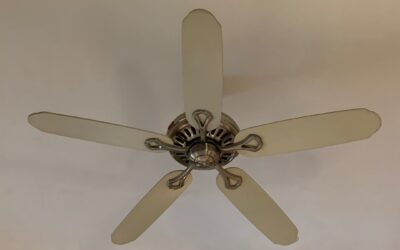
An MCM ceiling fan brings the clean lines and warm materials of mid-century modern design to a fixture that most rooms treat as an afterthought. Rather than the bulky, ornate fans of past decades, a mid-century-inspired fan features slim blades, sculptural motor housings, and finishes like walnut, brushed brass, and matte black that echo the furniture and lighting of the 1950s and 60s. The result is a fan that cools the room and doubles as a design statement.
This guide explains what defines the mid-century look, how to choose the right size and blade style, lighting options, motor and airflow considerations, and how to install and place one for the best effect in your home.
- What Makes a Fan "Mid-Century Modern"?
- Choosing the Right Size
- Blade Materials and Finishes
- Lighting Options
- Motors, Airflow, and Efficiency
- Installation Basics
- Placement and Styling Tips
- Matching a Fan to Your Ceiling Height
- Where the Mid-Century Look Shines
- Getting the Details Right
- Is an MCM Fan Right for You?
What Makes a Fan “Mid-Century Modern”?
Mid-century modern design prizes simplicity, organic shapes, and honest materials, and a well-designed fan carries those cues into the ceiling. Rather than layered scrollwork or crystal accents, an MCM fan leans on geometry and material contrast. Typical hallmarks include:
- Slim, tapered blades — often in natural wood tones or two-tone finishes that recall Danish furniture.
- Sculptural housings — rounded or drum-shaped motor casings in brass, chrome, or matte finishes.
- Warm, restrained palettes — walnut, teak-look, brushed gold, and black rather than glossy white.
- Integrated globe or opal lighting — a frosted glass sphere or disc that nods to atomic-era fixtures.
The overall feel is uncluttered and intentional, the fan reading almost like a piece of hanging sculpture when the blades are still.
Choosing the Right Size
Fan size, measured as blade span or sweep, should match the room so it moves air effectively without overwhelming the space. Use these general guidelines:
- Up to 75 sq ft (bathrooms, small offices) — 29 to 36 inch span.
- 75 to 175 sq ft (bedrooms, kitchens) — 42 to 48 inch span.
- 175 to 350 sq ft (living and dining rooms) — 52 to 56 inch span.
- Over 350 sq ft (great rooms) — 60 inches or larger, or consider two fans.
Mid-century fans often use three or four blades rather than five, which suits the minimalist aesthetic; well-engineered three-blade fans still move plenty of air.
Blade Materials and Finishes
Because the blades are the most visible element, their finish sets the tone. Solid wood or wood-veneer blades in walnut and teak tones deliver the most authentic mid-century warmth, while painted blades in black or white offer a cleaner, more graphic look. For rooms with humidity, such as covered patios or bathrooms, choose blades rated for damp or wet locations, since real wood can warp. Pair the blade tone with the housing finish thoughtfully: brass or gold housings feel luxe against walnut, while black hardware reads more modern and understated.
Lighting Options
Lighting is where the atomic-era influence shines. Many MCM fans include an integrated LED light in a frosted globe, opal disc, or schoolhouse-style shade that glows softly and evenly. When shopping, consider:
- Color temperature — warm white around 2700K to 3000K suits mid-century interiors best.
- Dimmability — look for a dimmable LED so you can shift from task light to ambient glow.
- Light output — check the lumen rating to be sure a single fixture lights the room adequately.
- Bulb vs. integrated — replaceable bulbs offer flexibility, while integrated LEDs give a cleaner look but must be replaced as a unit eventually.
Motors, Airflow, and Efficiency
Looks matter, but the fan still has to do its job quietly and efficiently. Two motor types dominate the market. DC motors are more energy-efficient, run cooler and quieter, and typically offer more speed settings and a slim profile that complements the mid-century look. AC motors cost less up front and are perfectly adequate for most rooms. Whatever the type, check the airflow rating in cubic feet per minute (CFM); a good living-room fan moves roughly 5,000 to 7,000 CFM. A remote or wall control adds convenience, and a reversible motor lets you run the fan clockwise in winter to push warm air down.
Installation Basics
Installing a ceiling fan is a manageable project for a confident DIYer, though the wiring must be done safely. Key steps and cautions include:
- Turn off power at the breaker and confirm it is off with a voltage tester before touching wires.
- Use a fan-rated box — a standard light box is not built to carry a fan’s weight and motion; install a brace box designed for fans.
- Match the downrod to ceiling height — keep blades at least 7 feet above the floor and about 8 to 10 inches below the ceiling for standard heights; use a longer downrod for vaulted ceilings.
- Balance the blades — after mounting, use a balancing kit if the fan wobbles at speed.
If you are not comfortable working with household wiring or need a new fan-rated box installed, hire a licensed electrician; the cost is modest compared with the risk of a poorly supported fan.
Placement and Styling Tips
Center the fan in the room or over the primary seating or sleeping area for even airflow. In a dining space, hang it above the table so it becomes a focal point. Coordinate the fan’s finish with other metals and wood tones in the room so it feels part of a cohesive scheme rather than an add-on. Because a mid-century fan is meant to be seen, avoid crowding it with busy ceiling details; let the clean silhouette stand on its own.
Matching a Fan to Your Ceiling Height
Ceiling height determines how the fan should mount, and getting this right affects both safety and airflow. For standard 8-foot ceilings, a low-profile or flush-mount fan, sometimes called a hugger, keeps the blades safely above head height while still moving air. For 9-foot ceilings and taller, a downrod lowers the fan into the room’s occupied zone where you actually feel the breeze; a rough guide is to add about 6 inches of downrod for every foot of ceiling above 8 feet. On sloped or vaulted ceilings, you will need a longer downrod and possibly an angled mounting adapter so the fan hangs level. Whatever the height, keep the blades at least 7 feet off the floor for safety and about 18 inches from the nearest wall for unobstructed airflow.
Where the Mid-Century Look Shines
An MCM fan can anchor the design of several rooms in the home, and matching the fan to the space amplifies the effect:
- Living rooms — a walnut-bladed fan with a globe light becomes a sculptural centerpiece over the seating area.
- Bedrooms — a quieter DC-motor fan with warm dimmable light supports a restful, retro-styled room.
- Dining spaces — hung above the table, the fan doubles as a statement fixture and gentle air mover.
- Home offices and dens — a compact three-blade fan reinforces a mid-century furniture scheme.
Because the style leans on clean geometry, it works best in rooms where the fan can be seen and appreciated rather than crowded by busy ceiling details.
Getting the Details Right
Small choices separate a fan that looks authentically mid-century from one that feels like a generic builder fixture. Favor slim, tapered blades over wide paddle shapes, and look for warm material contrast, such as wood blades against a brass or matte-black housing. Choose a light with a frosted opal globe or disc rather than a cluster of exposed bulbs in ornate arms. Keep the number of blades low, three or four, for a cleaner silhouette. Finally, coordinate the fan’s metal finish with the room’s other hardware and lighting so it reads as an intentional part of a cohesive design rather than an isolated accessory.
Is an MCM Fan Right for You?
If you love clean lines, warm woods, and a touch of retro character, an MCM ceiling fan delivers both function and style in a single fixture. It cools and lights your space while reinforcing a mid-century design theme that never really goes out of fashion. Match the size to your room, choose a finish that ties into your décor, and pair it with warm dimmable lighting for a fan that feels like an intentional part of the design rather than a utilitarian afterthought.