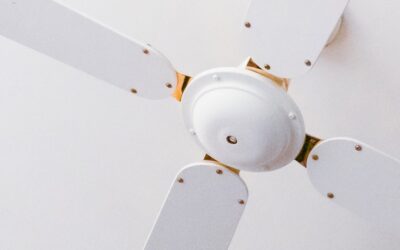
A brass ceiling fan with light combines two functions in one elegant fixture, moving air to keep a room comfortable while providing warm, ambient illumination. Brass has surged back into popularity as homeowners move away from cool chrome and stark nickel toward warmer metallics, and a well-chosen brass fan can serve as both a practical appliance and a jewelry-like focal point overhead.
This guide walks through the brass finishes available, how to size a fan for your room, lighting and motor considerations, installation basics, and care tips so you can choose a fixture that looks refined and performs reliably for years.
- Why Brass Is Back
- Understanding Brass Finishes
- Choosing the Right Size
- Lighting Options
- Motors, Airflow, and Controls
- Installation Basics
- Caring for a Brass Fan
- Matching the Fan to Your Ceiling Height
- Choosing Between Bright and Ambient Lighting
- Avoiding Common Selection Mistakes
- Is a Brass Fan Right for You?
Why Brass Is Back
For years, brass was associated with dated 1980s fixtures, but today’s versions look nothing like those shiny, orange-gold pieces. Modern brass finishes are more sophisticated, ranging from soft satin to aged patina, and they bring genuine warmth to a space. Brass pairs beautifully with a wide range of palettes, glowing against white and navy, complementing wood tones, and adding richness to darker rooms. Because a ceiling fan is one of the most visible fixtures in a room, choosing brass lets it double as a design statement rather than a purely functional appliance, tying into the brass hardware, lighting, and faucets many homeowners now favor.
Understanding Brass Finishes
Brass comes in several tones, and the finish dramatically changes the look:
- Satin or brushed brass — a soft, matte gold that hides fingerprints and reads modern and understated.
- Polished brass — bright and reflective, a traditional, luxe look with warm depth.
- Antique or aged brass — a darker, weathered tone that suits vintage, rustic, and transitional rooms.
- Champagne or soft gold — a pale, elegant version that feels contemporary and refined.
For a cohesive room, match the fan’s brass tone to your other metals; brushed brass hardware and lighting pair naturally with a brushed brass fan.
Choosing the Right Size
A fan must match the room to move air effectively without dominating the space. Use blade span as your guide:
- Up to 75 sq ft (small rooms, bathrooms) — 29 to 36 inch span.
- 75 to 175 sq ft (bedrooms, kitchens) — 42 to 48 inch span.
- 175 to 350 sq ft (living and dining rooms) — 52 to 56 inch span.
- Over 350 sq ft (great rooms) — 60 inches or larger, or two fans.
Also consider blade count and style; brass fans come in sleek three-blade designs for modern rooms and more traditional four- or five-blade layouts, all of which move air well when properly engineered.
Lighting Options
The integrated light is a key part of the fixture’s appeal, and there are several approaches to consider:
- Integrated LED — a built-in panel or shade that gives a clean look and long life, though it must be replaced as a unit eventually.
- Replaceable bulbs — offer flexibility to change brightness and color temperature over time.
- Frosted or opal shades — diffuse the light softly and evenly, avoiding glare.
- Exposed or schoolhouse globes — add a decorative, vintage touch that complements brass.
Look for warm white light around 2700K to 3000K to match the warmth of brass, choose a dimmable option for flexibility, and check the lumen rating to be sure the fixture lights the room adequately.
Motors, Airflow, and Controls
Beyond looks, a fan must perform quietly and efficiently. Two motor types dominate: DC motors run cooler and quieter, use less energy, and offer more speed settings and a slimmer profile, while AC motors cost less and are perfectly capable for most rooms. Check the airflow rating in cubic feet per minute (CFM); a good living-room fan moves roughly 5,000 to 7,000 CFM. A remote or wall control adds convenience for adjusting speed and dimming the light, and a reversible motor lets you run the fan clockwise in winter to push warm air down from the ceiling, improving heating efficiency.
Installation Basics
Installing a ceiling fan with a light is a manageable project for a confident DIYer, but the electrical work must be done safely. Keep these points in mind:
- Turn off power at the breaker and verify it is off with a voltage tester before touching wires.
- Use a fan-rated electrical box — a standard light box cannot safely support a fan’s weight and motion; install a brace box designed for fans.
- Match the downrod to your ceiling height — keep blades at least 7 feet above the floor and about 8 to 10 inches below the ceiling; use a longer downrod for vaulted ceilings.
- Wire the fan and light circuits per the instructions, ideally with separate controls or a compatible remote so you can operate each independently.
- Balance the blades after mounting if any wobble appears at speed.
If your ceiling lacks a fan-rated box or you are uncomfortable with wiring, hire a licensed electrician; the modest cost is worthwhile for safety and reliable operation.
Caring for a Brass Fan
Brass finishes stay attractive with simple upkeep. Dust the blades and housing regularly with a soft, dry cloth to prevent buildup, and wipe the metal occasionally with a slightly damp cloth, drying it afterward. Avoid abrasive cleaners and polishes on lacquered or coated brass, which can damage the finish; a gentle wipe is all that is needed. If your fan uses a living, unlacquered brass that develops a patina, embrace the natural aging or polish it periodically if you prefer a brighter shine. Keeping the light’s diffuser clean also ensures the fixture stays bright and even.
Matching the Fan to Your Ceiling Height
Ceiling height determines how the fan should mount for both safety and airflow. On a standard 8-foot ceiling, a low-profile or flush-mount fan keeps the blades safely above head height while still moving air effectively. For taller 9- and 10-foot ceilings, a downrod drops the fan into the zone where you actually feel the breeze; a common guideline adds roughly 6 inches of downrod for every foot of ceiling above 8 feet. Vaulted or sloped ceilings call for a longer downrod plus an angled mounting adapter so the fan hangs level. Regardless of height, keep the blades at least 7 feet off the floor and about 18 inches from the nearest wall so air circulates freely and the fan operates safely.
Choosing Between Bright and Ambient Lighting
How you plan to use the room shapes the lighting you want from the fan. In a bedroom or living room where the fan may be the main light source, prioritize a fixture with a strong lumen output and a dimmable, warm-white LED so you can shift from bright task light to a soft evening glow. In a room that already has other lighting, the fan’s light can serve as a gentle accent, and a lower-output frosted globe is plenty. Consider these points when weighing options:
- Lumens — check the total output to be sure it lights the room adequately.
- Dimmability — a dimmable LED offers the most flexibility across activities.
- Color temperature — warm 2700K to 3000K light flatters brass and creates a cozy mood.
- Shade style — frosted diffusers spread light evenly, while exposed bulbs add decorative sparkle.
Avoiding Common Selection Mistakes
A few missteps can leave you disappointed with a brass fan, so shop with these in mind. Do not buy a fan that is the wrong size for the room, as an undersized fan moves too little air and an oversized one overwhelms the space. Avoid mismatching your metals; a lone brass fan in a room full of chrome or black hardware can look out of place, so coordinate finishes. Be wary of very cheap fans with thin, plasticky “brass” coatings that scratch easily or look artificial, since the finish is the whole reason to choose brass. Finally, do not overlook the mounting hardware; make sure your ceiling has a fan-rated box, because a standard light box cannot safely carry the weight and motion of a fan.
Is a Brass Fan Right for You?
A brass ceiling fan with light offers the best of both worlds, delivering comfort and illumination while serving as a warm, stylish focal point overhead. It suits modern, transitional, and traditional rooms alike and coordinates beautifully with today’s popular brass and gold accents. Match the size to your room, choose a brass tone that ties into your décor, opt for warm dimmable lighting and an efficient motor, and install it on a proper fan-rated box for a fixture that looks elegant and performs dependably for many years.