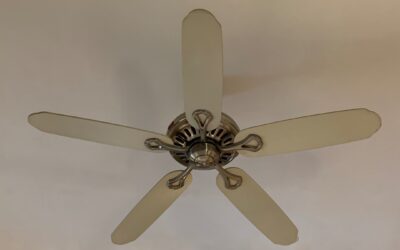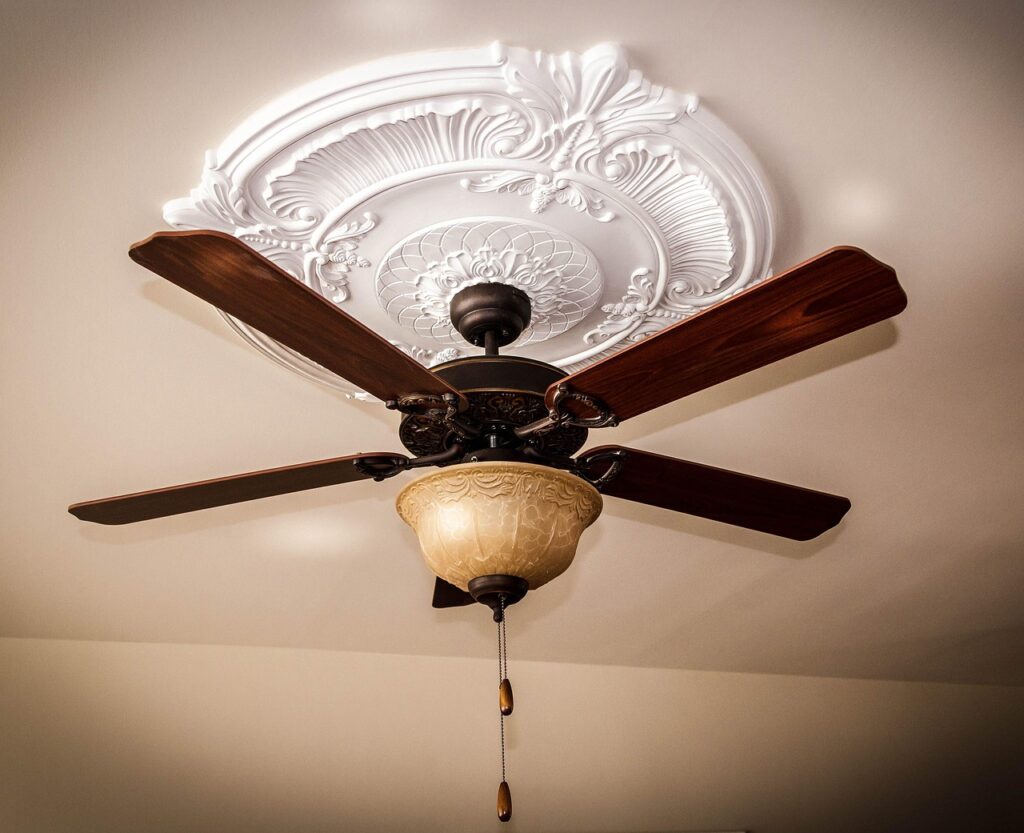
A wooden ceiling fan brings natural warmth to a room that metal and plastic simply cannot match. The grain of real timber or a convincing wood-look finish softens modern interiors, anchors farmhouse and rustic designs, and pairs beautifully with hardwood floors and exposed beams. Beyond looks, a well-chosen wood fan moves air efficiently, cuts cooling costs, and can run year-round if it has a reverse setting.
Not all “wooden” fans are the same, though. Some use solid hardwood blades, others use plywood or MDF with a wood veneer, and many use ABS plastic printed with a wood-grain pattern. Knowing the difference protects your budget and helps you match the fan to the room. This guide walks through blade materials, finishes, sizing, motors, and what a realistic install costs.
- Why Choose Wood Over Metal Blades
- Blade Materials: Solid Wood, Veneer, and Wood-Look
- Finishes That Match Your Decor
- Sizing the Fan to the Room
- Motors and Airflow Performance
- Cost Expectations
- Installation Basics and Safety
- Care and Maintenance
- Light Kits and Controls
- Matching the Fan to Your Room Style
Why Choose Wood Over Metal Blades
Wood blades have a distinct aesthetic advantage. They read as warm and organic, which suits living rooms, bedrooms, sunrooms, and covered porches. Wood also tends to run quieter than cheap metal because dense blades resist the flutter and hum that lighter materials produce.
The trade-offs are weight and moisture sensitivity. Solid wood blades are heavier, so they demand a well-balanced motor and secure mounting. Real wood can also warp in humid or damp locations unless it is sealed and rated for the space. For a covered patio, look specifically for a damp-rated or wet-rated fan with treated or composite blades.
Blade Materials: Solid Wood, Veneer, and Wood-Look
Understanding what you are actually buying matters, because the label “wood” covers a wide range:
- Solid hardwood blades (oak, walnut, maple, or teak) are premium, heavy, and beautiful. They cost the most and are usually found on high-end fans from brands like Minka-Aire and Fanimation.
- Plywood or veneer blades use a hardwood face over a stable core. They resist warping better than solid wood and cost less while still showing real grain.
- MDF with laminate offers a smooth, uniform look at a budget price but is heavier and vulnerable to moisture if the edges are exposed.
- ABS plastic wood-grain blades mimic timber at the lowest price, resist humidity, and are common on Hunter and Harbor Breeze models under $150.
If you want authentic character, choose solid wood or veneer. If you want the look with low maintenance in a bathroom or porch, wood-grain composite is the practical pick.
Finishes That Match Your Decor
Finish drives the whole vibe of a wooden ceiling fan. Popular options include light natural oak for coastal and Scandinavian rooms, mid-tone walnut for transitional spaces, dark espresso for traditional interiors, and weathered or distressed gray for farmhouse and rustic looks. Reversible blades that show a different finish on each side let you flip the fan to update a room without buying new hardware.
Match the fan’s wood tone to your dominant wood elements: flooring, cabinetry, or ceiling beams. It does not need to be an exact match, but the undertones should agree. A cool gray-brown floor pairs awkwardly with a warm honey-toned fan.
Sizing the Fan to the Room
Fan size, measured as blade span or sweep, must match the room square footage for effective airflow. Use these guidelines:
- Up to 75 sq ft (bathrooms, breakfast nooks): 29 to 36 inch span
- 76 to 144 sq ft (bedrooms, kitchens): 42 to 48 inch span
- 145 to 225 sq ft (living rooms, master bedrooms): 50 to 54 inch span
- 225 to 400 sq ft (great rooms): 56 inch or larger, or dual fans
Ceiling height matters too. Blades should hang 8 to 9 feet above the floor for best airflow and safety. For tall ceilings, add a downrod to bring the fan into the effective zone; for ceilings under 8 feet, use a low-profile “hugger” mount.
Motors and Airflow Performance
The motor determines how much air the fan actually moves and how quietly it runs. Airflow is rated in CFM (cubic feet per minute); look for at least 4,000 to 5,000 CFM for a bedroom and 6,000-plus for a large living room.
DC motors are the premium option. They use up to 70 percent less energy than traditional AC motors, run quieter, offer more speed settings, and start smoother. AC motors are cheaper upfront and perfectly adequate for most rooms. If you run a fan many hours a day, a DC motor pays back its higher price in electricity savings over a few years.
Cost Expectations
Prices span a wide range depending on materials and features:
- Budget wood-look fans with ABS blades: $80 to $150
- Mid-range veneer or plywood-blade fans with lights and remotes: $150 to $350
- Premium solid-wood, DC-motor designer fans: $350 to $900 or more
Professional installation typically adds $100 to $250, more if an electrician must run new wiring or reinforce the ceiling box. Replacing an existing fan where wiring and a fan-rated box already exist is far cheaper than a fresh install.
Installation Basics and Safety
A wooden ceiling fan, especially one with heavy solid blades, must hang from a fan-rated electrical box secured to a joist or a listed brace bar. A standard lighting box cannot support the weight and vibration and will eventually loosen or fall. This is the single most important safety point in any fan install.
The general process: turn off the circuit at the breaker, confirm power is off with a tester, install or verify the fan-rated box, assemble the downrod and canopy, wire the fan to house wiring matching black to black, white to white, and ground to ground, then attach the blades. Blade balancing kits, included with most fans, eliminate wobble by adding small weights. If you are not confident working in the ceiling with live circuits, hire a licensed electrician.
Care and Maintenance
Wood blades collect dust and can dry out over time. Dust them monthly with a microfiber cloth or a specialized fan-blade duster. For solid wood, an occasional wipe with a wood-safe cleaner keeps the finish healthy; avoid soaking the blades, which can cause warping. Every year or so, check the blade screws and mounting hardware for tightness, since normal vibration slowly loosens fasteners.
Remember to flip the reverse switch seasonally. Counterclockwise in summer pushes cooling air down, while clockwise on low in winter gently pulls cool air up and circulates warm air trapped near the ceiling, cutting heating costs.
Light Kits and Controls
Many wooden ceiling fans come with an integrated light kit or the option to add one, which matters if the fan is the room’s primary light source. Consider how the fixture is controlled and lit:
- Integrated LED light kits are energy efficient, last for years, and stay cool, though the whole panel is replaced as a unit if it fails.
- Standard bulb kits let you swap bulbs and choose your own color temperature, from warm 2700K for cozy rooms to brighter 3000K to 4000K for kitchens.
- Remote controls handle both fan speed and light dimming from your chair, and many can be added to fans that did not ship with one.
- Smart fans connect to Wi-Fi and work with Alexa or Google Assistant, letting you schedule the fan or adjust it by voice.
- Wall control units replace the pull chains with a switch plate for a cleaner look.
If your room has only a single switch loop, a remote or smart control lets you run the fan and light independently without rewiring for a second switch.
Matching the Fan to Your Room Style
A wooden ceiling fan is a statement piece, so coordinate it with the room’s design language. In a farmhouse or rustic space, look for distressed or weathered wood blades paired with a bronze or matte-black motor housing. For a coastal or Scandinavian room, choose light natural oak or whitewashed blades with a white or brushed-nickel body. Mid-century and transitional rooms suit walnut-toned blades with clean, low-profile housings, while a lodge or craftsman interior calls for darker, richly grained wood.
Pay attention to the motor housing finish as much as the blades, since the two together create the overall look. A honey-oak blade on a shiny chrome body reads very differently from the same blade on an oil-rubbed bronze body. When in doubt, echo a metal finish already present in the room, such as your light fixtures or cabinet hardware, so the fan feels like part of a coordinated design rather than an afterthought.
Chosen with the right blade material, finish, size, and motor, a wooden ceiling fan delivers years of quiet, efficient comfort while giving a room the natural warmth that only wood can provide. Match it to your floors and decor, mount it on a proper fan box, and it will become one of the most-used fixtures in your home.