
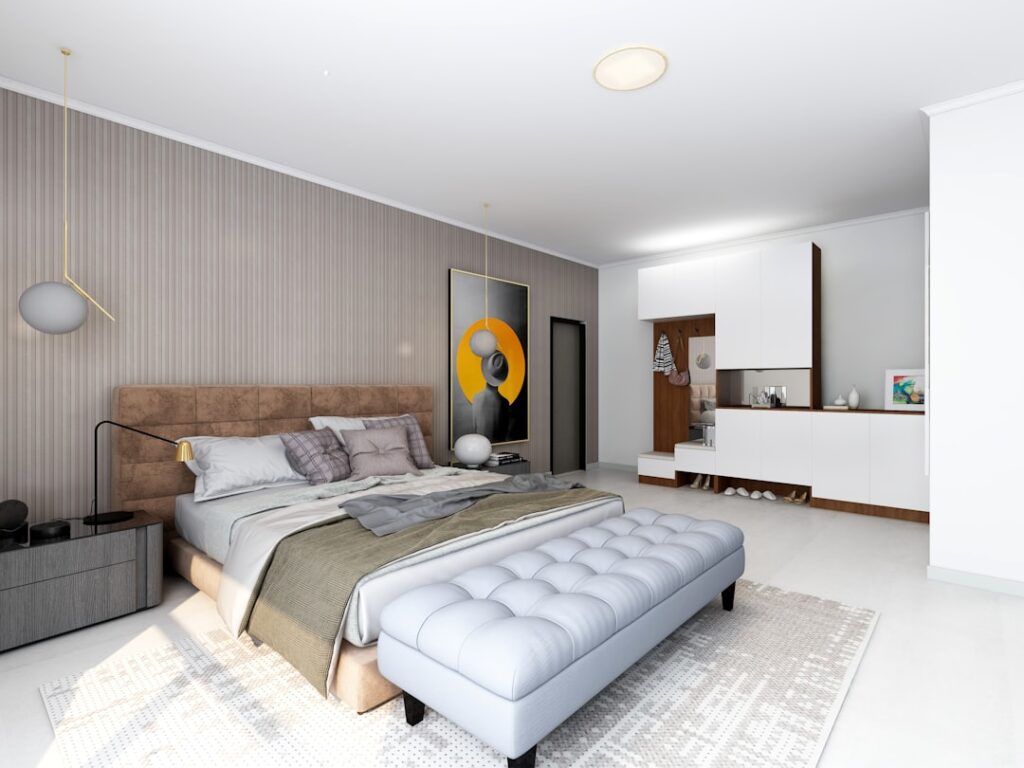
A minimalist bedroom is not about sleeping on a mattress on the floor with bare white walls. Done well, it is a calm, intentional space where every piece of furniture earns its place and visual clutter disappears. The result is a room that feels larger, promotes better sleep, and takes minutes to clean. Getting there requires thoughtful editing rather than simply throwing things away.
Core Principles of Minimalist Bedroom Design
Minimalism in interior design follows three rules: reduce to the essential, choose quality over quantity, and let negative space do the work. In a bedroom, that translates to a bed, nightstands, storage, and lighting, with everything else evaluated on whether it adds function or genuine beauty.
This does not mean cold or sterile. Texture, warmth, and personality come from the materials and finishes you choose rather than the number of objects you display. A linen duvet, a solid wood nightstand, and a single piece of meaningful artwork create more visual impact than a room filled with decorative pillows and wall collages.
Choosing the Right Bed Frame
The bed dominates any bedroom, so the frame sets the minimalist tone. Platform beds with clean lines and low profiles are the default choice. Look for frames in solid walnut, white oak, or matte black metal without headboard tufting, carved details, or ornate legs.
A good minimalist bed frame costs $400 to $1,200 for a queen. The Article Nera, Floyd Platform Bed, and IKEA Malm are popular options at different price points. Skip the footboard entirely, as it adds visual weight without function. If storage is tight, a platform bed with built-in drawers underneath combines two pieces of furniture into one.
Color Palette and Walls
Neutral tones anchor a minimalist bedroom. White, warm gray, soft beige, and muted earth tones keep the space feeling open and restful. Paint all walls the same color to avoid visual breaks that make the room feel smaller.
An accent wall behind the headboard can work if executed with restraint. Wood slat panels, a limewash paint technique, or a textured plaster finish adds depth without introducing color complexity. Avoid gallery walls with multiple frames; instead, choose one oversized piece of art or a large mirror that reflects light and expands the sense of space.
Lighting That Keeps Things Clean
Overhead lighting should be recessed or flush-mount to avoid cluttering the ceiling line. A single pendant light centered over the bed works if the design is simple, think a paper lantern, a linen drum shade, or a matte globe.
Wall-mounted sconces on either side of the bed eliminate the need for table lamps and free up nightstand surface area. Hardwired sconces with swing arms cost $50 to $200 each and are among the best upgrades for a minimalist bedroom. They provide task lighting for reading while keeping the room’s profile clean. Warm LED bulbs at 2700K create a soft, sleep-friendly atmosphere.
Smart Storage Solutions
Minimalism fails when you hide clutter instead of addressing it. Start by decluttering aggressively. If you have not worn it in 12 months, donate it. Once your belongings are edited down, storage becomes much simpler.
- Closet systems — Install double-hang rods, shelf dividers, and drawer inserts. A $150 to $300 closet organizer from ClosetMaid or IKEA doubles usable space.
- Under-bed storage — Low-profile bins or built-in drawers store seasonal clothing and extra bedding out of sight.
- Floating nightstands — Wall-mounted shelves or small floating consoles free up floor space and make the room feel lighter. Prices range from $40 to $150.
- Dresser inside the closet — Moving the dresser out of the bedroom and into the closet keeps the room’s furniture count low while maintaining full storage capacity.
Textiles and Bedding
Keep bedding simple. A fitted sheet, a flat sheet, one duvet or comforter, and two pillows per person is all you need. Skip the decorative pillow mountain. Linen bedding in white, oatmeal, or soft gray drapes beautifully and improves with washing over time. A quality linen duvet cover costs $100 to $250 and lasts years.
One area rug beside the bed or under the lower two-thirds of the bed adds warmth and texture to hard floors. Choose a low-pile rug in a neutral tone. Wool flatweaves and jute rugs fit the minimalist aesthetic without adding visual noise.
What to Remove
Audit your bedroom with fresh eyes. Items that commonly clutter a minimalist bedroom include excess throw pillows, stacks of books (move them to a living room shelf), collections displayed on dressers, exercise equipment, and laundry chairs. The bedroom should serve sleep and rest, not double as a home office, gym, or storage unit.
If your bedroom currently holds a desk, consider relocating it. If that is not possible, use a simple wall-mounted desk that folds flat when not in use. Visual separation between work and rest zones matters for sleep quality, something minimalist design inherently supports by limiting stimuli in the room.
Making It Feel Warm, Not Sterile
The biggest criticism of minimalist bedrooms is that they feel cold and impersonal. Counter this with material choices, not more objects. A chunky knit throw at the foot of the bed, a ceramic vase with a single branch on the nightstand, and curtains in a natural linen all add warmth without clutter.
Wood tones are essential. Whether it is the bed frame, a nightstand, or floating shelves, the natural grain and warmth of wood prevents the all-white minimalist bedroom from feeling like a hospital room. Mix one or two wood species with matte metal hardware for a balanced, lived-in look that still reads as clean and intentional.


