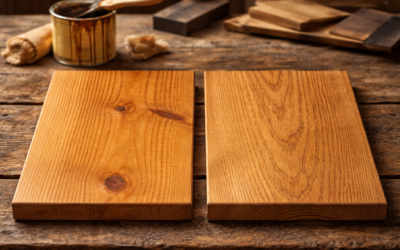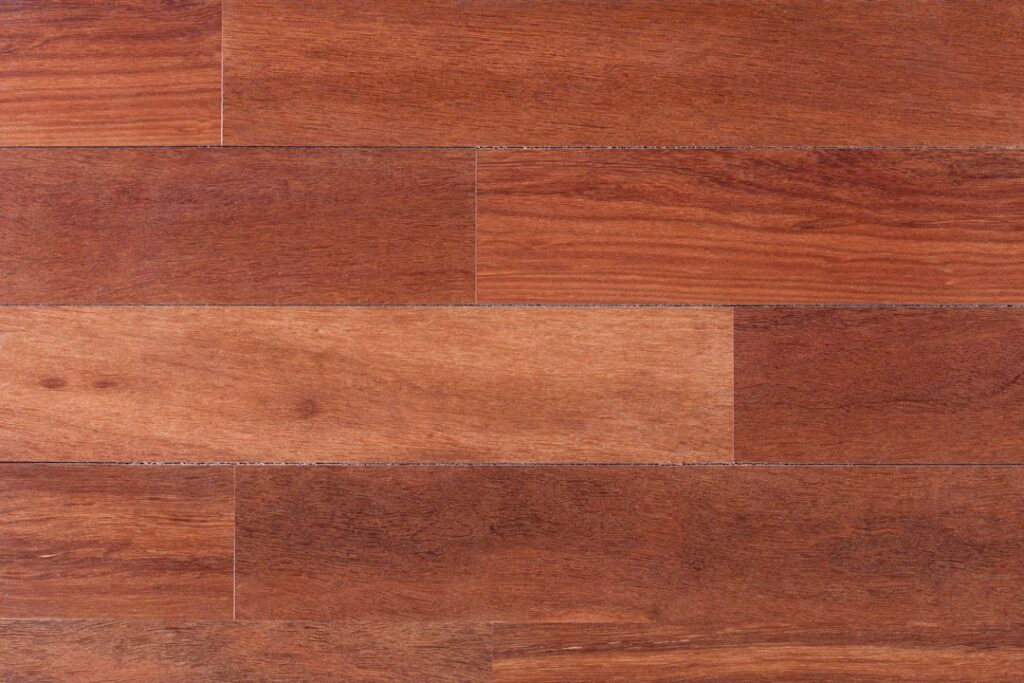
Cherry is one of the few stain colors that looks dramatically different depending on the board under it. Minwax Cherry stain, color 235 in the oil-based Wood Finish line, is a semi-transparent penetrating stain that Minwax files in its brown color family, but on most woods it reads as a warm reddish brown. On pine it can turn blotchy and pink-orange, on oak the grain pulls it darker, and on birch it can go uneven unless you prep the wood first.
If you want the look of aged cherry furniture on a less expensive wood, 235 is a reasonable place to start. Test it on a scrap of your actual project wood, use a pre-stain wood conditioner on softwoods and blotch-prone hardwoods, and control the depth of color by how long you leave it on before wiping.
Minwax also sells a water-based Cherry (MW235) in its Wood Finish Water-Based Semi-Transparent Color Stain line.
Minwax Cherry Stain Specs and Species Guide
The spec rows come from the maker’s current Wood Finish product page and color chart. The species rows describe typical behavior of a semi-transparent penetrating stain on each wood, not a lab swatch, so always test first.
| Spec or species | Value or typical result | What it means |
|---|---|---|
| Color name and number | Cherry 235 (oil-based Wood Finish) | Use the number when buying to avoid the water-based MW235 |
| Color family on chart | Brown, semi-transparent | A red-leaning brown, not a true red |
| Sheen | None on its own | Sheen comes from the topcoat you choose |
| Dry and recoat time | 2 to 3 hours | Longer in cool or humid rooms |
| Coverage | 500 to 600 sq ft per gallon | A quart handles roughly a bookcase or small table set |
| Use and cleanup | Interior only; mineral spirits cleanup | Not for decks, fences or exterior doors |
| On pine | Brighter orange-red, prone to blotching | Conditioner strongly recommended |
| On red or white oak | Deeper reddish brown with dark grain lines | Open pores absorb more pigment |
| On birch | Even to blotchy red-brown, depending on the board | Conditioner helps; test on each batch |
| On maple or poplar | Lighter, sometimes uneven | Tight grain takes less pigment; consider a second coat |
Minwax describes the product as delivering color in one coat, with a second coat for a darker result. The longer you leave the stain on before wiping, the deeper the color.
How Cherry 235 Looks on Each Wood
Pine
Pine is soft, with resin-rich latewood and thirsty earlywood. A penetrating stain soaks into the soft areas faster, so Cherry can come out as patchy orange-red stripes and dark knots. A coat of pre-stain wood conditioner evens absorption, and Minwax specifically recommends conditioner on soft woods. Expect a lighter, more orange cherry on pine than on hardwoods.
Oak
Red and white oak have big, open pores. Those pores grab pigment, so Cherry on oak shows bold, dark grain against a warm red-brown background. Red oak already has a pinkish cast, which pushes the result redder. White oak tends to give a browner cherry. Wiping across the grain first, then with it, helps pack stain into the pores evenly.
Birch
Birch has a fine, tight grain that looks a lot like maple, and it often blotches with dark stains. Cabinet-grade birch plywood can stain more evenly than solid birch, but boards vary. Conditioner plus a short dwell time and a fast wipe usually give the most uniform cherry tone.
Maple and poplar
Both are dense and less absorbent. Cherry tends to look lighter and can blotch on maple. If you want a deep cherry on maple, a gel stain or a toner coat is easier to control than repeated coats of a penetrating stain.
Cherry vs Red Chestnut vs Red Mahogany
These three oil-based Wood Finish colors are the usual shortlist when someone wants a warm red-brown. All three are semi-transparent and appear in the brown family on the color chart.
- Cherry 235: a medium reddish brown. A middle-ground option when you want obvious warmth without going dark.
- Red Chestnut 232: a red-brown that tends to read a bit browner and earthier, closer to an aged furniture look.
- Red Mahogany 225: a deeper, darker red-brown, good for traditional furniture and a richer, more formal look.
If Cherry looks too pink on your wood, Red Chestnut is often the fix. If it looks too light, step to Red Mahogany. Sedona Red 222 sits on the same chart for anyone who wants a stronger red. Because screens and printed charts never match real wood exactly, make a three-board test strip with each color on your project species.
Tools and Materials
- Minwax Wood Finish Cherry 235 (half-pint, quart or gallon)
- Pre-stain wood conditioner for pine, birch, maple and other blotch-prone woods
- Sandpaper in 120, 150 and 180 grit
- Tack cloth or a vacuum with a brush attachment
- Natural bristle brush, foam brush or lint-free rags
- Clean lint-free rags for wiping
- Nitrile gloves, safety glasses and a respirator rated for organic vapors as the label directs
- Mineral spirits for cleanup
- A metal can with a lid, or a bucket of water, for used rags
- Your choice of clear topcoat in satin, semi-gloss or gloss
How to Apply Minwax Cherry Stain
- Sand evenly. Work up to 150 to 180 grit. Going finer can burnish the surface and reduce absorption. Sand with the grain.
- Remove dust. Vacuum, then wipe with a tack cloth. Dust trapped in the pores shows up as dark specks.
- Condition if needed. On pine, birch, maple or alder, apply pre-stain wood conditioner and follow its label for timing before staining.
- Stir, do not shake. Pigment settles. Stir thoroughly and stir again during the job.
- Apply generously. Brush or wipe on a liberal coat with the grain, working one section at a time.
- Let it penetrate. Leave it a few minutes for a lighter tone, longer for deeper color. Test the timing on scrap.
- Wipe off the excess. Wipe with the grain using a clean rag. Leftover stain on the surface stays tacky and can peel under the topcoat.
- Dry. Allow at least the 2 to 3 hours on the label, longer in cool or humid weather. Add a second coat if you want it darker.
- Topcoat. When the stain is fully dry, apply a clear protective finish. Stain alone does not protect the wood.
Safety: Fumes and Oily Rags
Oil-based stain contains flammable solvents. Work with windows open and a fan pulling air out of the room, and wear a respirator if the label calls for one. Keep vapors away from pilot lights, furnaces, water heaters, space heaters and sparks. Wear gloves and eye protection, and never mix stain with other chemicals or cleaners.
Rags soaked with oil-based stain can heat up and catch fire on their own as they dry. Never pile them in a trash can or leave them in a heap. Lay them flat outdoors to dry, away from buildings, or put them in a water-filled metal container with a tight lid, then dispose of them according to local rules.
Troubleshooting
- Blotchy color: Skipped conditioner or uneven sanding. Sand back on a test area, condition, and restain.
- Too pink or orange: Common on pine and red oak. A second coat of a browner shade such as Red Chestnut can tone it down.
- Too light: Leave the next coat on longer, or step up to Red Mahogany.
- Tacky surface: Excess stain was not wiped. Wipe with a rag lightly dampened with mineral spirits and let it dry fully.
- Topcoat lifting color: The stain was not fully dry. Allow more drying time before brushing on the finish.
Cost and When to Hire a Pro
As a general range, a quart of oil-based stain generally costs somewhere around $10 to $25, and a gallon covers a large project such as a set of cabinet doors or a small floor. Professional refinishing of cabinets or furniture costs far more because most of the price is labor and prep. Hire a refinisher for antiques, veneered pieces, or anything already finished, since stripping and sanding thin veneer is easy to ruin. If the piece has old paint and was made before 1978, test for lead before sanding and follow lead-safe practices.
Frequently Asked Questions
What number is Minwax Cherry stain?
The oil-based Wood Finish Cherry is color 235. The water-based version uses the code MW235, so check the label to make sure you are buying the formula you want.
Does Minwax Cherry stain look red?
It reads as a warm reddish brown on most woods and sits in the brown family on the color chart. It looks redder on red oak and pine, and browner on white oak.
Do I need conditioner with Minwax cherry stain on pine?
Yes, conditioner is strongly recommended on pine because the soft wood absorbs stain unevenly. It also helps on birch, maple and alder.
How long does Cherry 235 take to dry?
The maker lists a dry and recoat time of 2 to 3 hours. Allow more time in cool or humid conditions, and make sure it is fully dry before applying a topcoat.
Can I use Minwax Cherry stain outside?
No. The oil-based Wood Finish line is labeled for interior use only. Use an exterior-rated stain for decks, fences and outdoor furniture.
What sheen does Minwax Cherry stain have?
The stain itself has no sheen. Your final look comes from the clear topcoat, which you can choose in satin, semi-gloss or gloss.