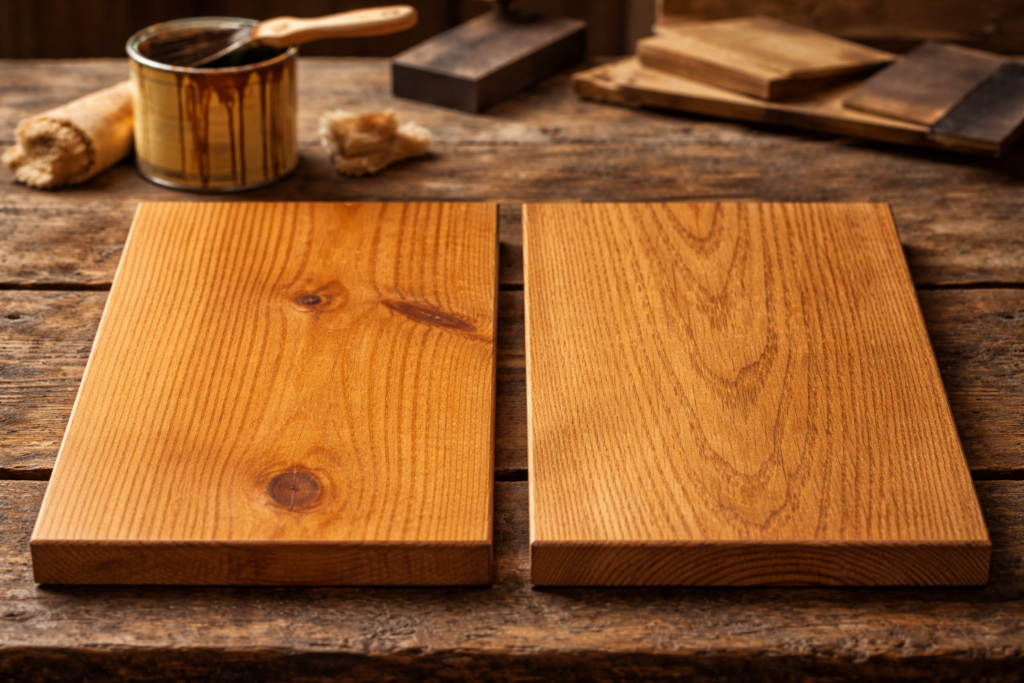
Plenty of people pick a stain from a tiny printed chip, brush it on a pine shelf, and end up with something far more orange than they pictured. Minwax Fruitwood stain is one of the colors where that surprise happens most often, because it sits right at the point where warm brown turns golden. On the current Minwax color chart it is listed as color 241 in the oil-based Wood Finish penetrating stain line, and it also appears as MW241 in the water-based semi-transparent and solid color stain lines.
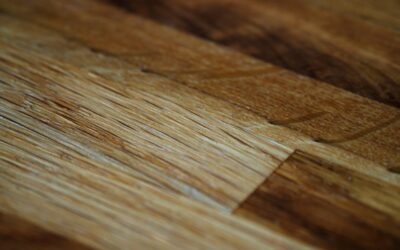
In plain terms, Fruitwood is a warm, amber-leaning mid-tone. It is darker than a natural or honey stain but lighter than the classic brown colors like Early American or Special Walnut. Retail listings usually file it in the yellow or amber family rather than the brown family, and that matches how it behaves on light woods: it adds glow more than depth. On red oak it looks like a soft caramel; on pine it can read as golden orange unless you control blotching first.
- Minwax Fruitwood Stain at a Glance
- How Fruitwood Looks on Pine, Oak, Maple and Birch
- Fruitwood vs Golden Pecan vs Early American
- Tools and Materials
- How to Apply Fruitwood Stain Step by Step
- Safety: Fumes and Oily Rags
- Troubleshooting Common Problems
- What It Costs
- When to Call a Pro
- Frequently Asked Questions
If you want a warm, slightly old-fashioned look on furniture, trim or cabinet doors without going dark, Fruitwood is worth sampling. If you want a neutral or brown look, it is probably the wrong can.
Minwax Fruitwood Stain at a Glance
Before you buy, it helps to know exactly which product you are holding, because Minwax sells the same color name across more than one formula. The oil-based Wood Finish version is the one most people mean when they search for minwax fruitwood stain, and it is the version sold in half pints, quarts and gallons at most paint counters. The water-based version carries the MW prefix and dries faster with a slightly different look.
| Spec | Value | What it means |
|---|---|---|
| Color name and number | Fruitwood, 241 (oil-based) | Match this number when ordering so you do not get a lookalike |
| Water-based code | MW241 | Same color name in the water-based stain lines; tone can differ slightly |
| Product type | Oil-based penetrating stain | Soaks into the wood rather than forming a film on top |
| Opacity | Semi-transparent | Grain stays visible; the wood species changes the final look |
| Sheen | None on its own | A penetrating stain dries flat; your clear topcoat sets the sheen |
| Color character | Warm amber mid-tone | Leans golden rather than brown, especially on pale woods |
| Use | Interior wood | Furniture, trim, doors, cabinets; not a deck or exterior stain |
| Topcoat needed | Yes | Stain alone does not protect against wear or water |
Because the stain has no sheen of its own, the satin, semi-gloss or gloss you see on a finished sample board comes from the clear coat. Pick that separately. Formulas get updated from time to time, so check the current label and color chart before a big project.
How Fruitwood Looks on Pine, Oak, Maple and Birch
A semi-transparent stain borrows much of its final color from the wood underneath. That is why one can of Fruitwood can look like four different colors across a single room. Here is what to expect on the species you are most likely to stain.
| Wood species | Typical result | Blotch risk | Tip |
|---|---|---|---|
| Pine | Golden orange to warm honey | High | Use a pre-stain conditioner and wipe evenly |
| Red oak | Soft caramel with darker grain lines | Low | Open pores pick up color, so the grain pops |
| White oak | Muted golden tan | Low | Looks less orange than on red oak |
| Maple | Light amber, often patchy | High | Condition first; consider a gel stain if blotch persists |
| Birch | Pale warm gold | Moderate to high | Sand to 180 grit, not finer, and condition |
| Poplar | Warm tan with green streaks muted | Moderate | Test on scrap; color varies board to board |
Pine is the species where Fruitwood surprises people most. Soft earlywood rings absorb a lot of stain and hard latewood rings absorb very little, so you get stripes and blotches that exaggerate the orange. A pre-stain wood conditioner evens out that absorption so the color lands more uniformly. On oak, the opposite is true: the wood is forgiving and the stain mostly deepens the grain contrast.
Fruitwood vs Golden Pecan vs Early American
Most people trying to decide on Fruitwood are also looking at two neighbors on the Minwax chart. Golden Pecan is color 245 and Early American is color 230, both in the same oil-based Wood Finish line. They are close enough in depth that sampling all three on your own wood is the only reliable way to choose.
- Golden Pecan (245): lighter and more yellow-gold. It reads as a sunny honey tone and suits cabin-style pine or pale oak where you want brightness.
- Fruitwood (241): a step warmer and slightly deeper, with more amber. It gives a soft antique look on furniture and trim.
- Early American (230): noticeably browner and more neutral. It is the choice when you want warmth without the golden glow, and it is a common pick for oak floors and trim.
A quick rule: if your sample of Fruitwood looks too orange, Early American is usually the fix. If it looks too dull or brown, try Golden Pecan. Early American also has its own guide on this site if you want a deeper look at that color.
Tools and Materials
- Fruitwood stain in the size your project needs (a quart covers a small dresser or several doors)
- Pre-stain wood conditioner for pine, maple, birch and other softwoods or blotch-prone hardwoods
- Sandpaper in 120, 150 and 180 grit, plus a sanding block or random orbit sander
- Lint-free cotton rags or a foam brush and a natural-bristle brush
- Tack cloth or a microfiber cloth for dust removal
- Clear protective topcoat in your chosen sheen
- Nitrile gloves, safety glasses and a respirator rated for organic vapors
- A metal can with a lid, or a bucket of water, for used rags
- Scrap boards of the same species for test samples
How to Apply Fruitwood Stain Step by Step
- Make a sample board. Sand a scrap of the same wood exactly as you will sand the project, then apply conditioner on half and stain over the whole thing. Add the topcoat to part of it. This shows you the real color, not the chip.
- Sand evenly. Work up through 120, 150 and finish at 180 grit for most woods. Sanding finer than about 220 can burnish the surface and keep stain from soaking in.
- Remove all dust. Vacuum, then wipe with a tack cloth. Dust trapped under stain shows up as dark specks.
- Condition blotch-prone wood. On pine, maple and birch, brush on a pre-stain conditioner, let it penetrate for the time on its label, and wipe off the excess. Stain within the window the label gives, usually within a couple of hours.
- Stir, do not shake. Pigment settles at the bottom. Stir thoroughly and keep stirring every so often as you work.
- Apply with the grain. Brush or wipe on a generous, even coat over a manageable section such as one door panel or one drawer front.
- Wipe off the excess. After a short wait (commonly 5 to 15 minutes; follow the time on your can, and remember the longer it sits, the deeper the color), wipe with the grain using a clean rag. Leaving puddles creates a sticky, uneven surface.
- Add a second coat only if needed. For a deeper tone, recoat after the interval on your can. The product data sheet for the oil-based formula has listed about 4 to 6 hours before a second coat.
- Let it dry fully. Oil-based stain should cure at least 8 hours before an oil-based clear coat, and longer (often 24 hours) before a water-based clear coat. Cool, humid rooms slow drying.
- Topcoat. Brush on two or three thin coats of clear finish, sanding lightly with 220 or finer between coats per that product’s label.
Safety: Fumes and Oily Rags
Oil-based stain gives off solvent vapors, so ventilate the room with open windows and a fan pulling air outward. Wear nitrile gloves and eye protection, and use a respirator rated for organic vapors when the label calls for it or the space is tight. Keep cans, rags and vapors well away from pilot lights on water heaters, furnaces and gas dryers. Never mix stain with other chemicals or solvents unless the label directs it.
The bigger hidden risk is the rags. Cloths soaked with oil-based stain can heat up as they dry and catch fire on their own, a process called spontaneous combustion. Never ball them up in a trash can. Lay them flat outdoors to dry on a non-flammable surface, or drop them into a metal can filled with water and sealed with a lid, then dispose of them according to your local hazardous waste rules. Store leftover stain with the lid tight, away from heat sources, and out of reach of kids and pets.
Troubleshooting Common Problems
Too orange
This is the most common complaint, especially on pine. If the finish is still fresh, wiping with mineral spirits can lift some color. If it is dry, a light coat of a browner stain such as Early American can tone it down, or you can strip and start over with conditioner. A clear coat with less ambering also helps.
Blotchy patches
Blotching comes from uneven absorption. Conditioner before staining is the cure. After the fact, a gel stain applied lightly over the top can even out the worst spots.
Sticky or tacky surface
Excess stain was left on the surface. Wipe firmly with a rag dampened with mineral spirits, let it dry, and continue.
Color too light
Let the stain sit longer before wiping, or add a second coat after the recommended wait. Sanding too fine can also block absorption, so check your final grit.
What It Costs
Oil-based wood stain from a major brand typically runs in the low teens for a half pint, roughly 10 to 20 dollars for a quart and somewhere in the 30 to 60 dollar range for a gallon, depending on store and formula. Add a pre-stain conditioner, sandpaper and a clear topcoat, and a small furniture project usually lands between 40 and 90 dollars in materials. Hiring a refinisher to strip and stain a dresser often costs a few hundred dollars, while professional cabinet refinishing for a whole kitchen can run into the thousands.
When to Call a Pro
Small furniture, shelves and trim are good DIY projects. Consider a professional finisher when you are refinishing a full kitchen of cabinets, staining an entire hardwood floor, working on a valuable antique, or dealing with old finishes on pieces that may carry lead paint. If you plan to sand or strip painted wood from before 1978, test the paint for lead first and follow lead-safe practices or hire a certified contractor.
Frequently Asked Questions
What color number is Minwax Fruitwood?
In the oil-based Wood Finish penetrating stain line, Fruitwood is color 241. The water-based semi-transparent and solid color versions use the code MW241. Check the current color chart before buying, since product lines get updated.
Is Fruitwood more orange or brown?
It leans warm and amber, so it reads more golden than brown, especially on pine and maple. On oak it looks more like caramel. If you want a browner tone, a color such as Early American is usually a better match.
Do I need wood conditioner with Fruitwood stain?
On pine, maple, birch and other blotch-prone woods, a pre-stain conditioner is strongly recommended because it evens out absorption. On oak it is usually not needed, though it does no harm.
What sheen does Fruitwood stain have?
The stain itself has no real sheen because it soaks into the wood. The final look, from matte to gloss, comes from the clear topcoat you apply over it.
Can I use Fruitwood on a floor?
Yes, it can be used on interior hardwood floors under a durable floor-rated clear finish. Test it on a spare board or a closet area first, because large floor areas magnify any orange tone.
How long should Fruitwood dry before polyurethane?
Plan on at least 8 hours before an oil-based polyurethane and about 24 hours before a water-based one, longer in cool or humid weather. Always follow the times printed on your specific can.