Manufactured homes and metal siding grew up together — millions of units from the 1960s through the 1990s left factories wearing horizontal aluminum or steel panels that are now dented, chalked, or missing after decades of weather. Replacing or repairing mobile home metal siding is one of the highest-value projects an owner can do: it’s the skin protecting a lightweight wall assembly with minimal sheathing behind it. This guide covers the panel styles you’re matching, where to actually buy mobile home metal siding today, and honest costs from a $200 patch to a full re-side.
I’ve re-skinned singlewides and repaired storm damage on dozens of park homes. The work is approachable, the materials are still made, and the pricing beats site-built siding jobs by a wide margin.
- Know What's On Your Home Now
- Repair and Match: The $200 to $2,000 Route
- Full Replacement Option 1: Like-for-Like Metal
- Full Replacement Option 2: Modern Ribbed Steel
- The Vinyl Alternative (and Why Metal Still Wins Sometimes)
- Installation Sequence for a Re-Side
- Storm Damage, Insurance, and Matching Claims
- Maintenance and Small Upgrades That Pay
- Frequently Asked Questions
Know What’s On Your Home Now
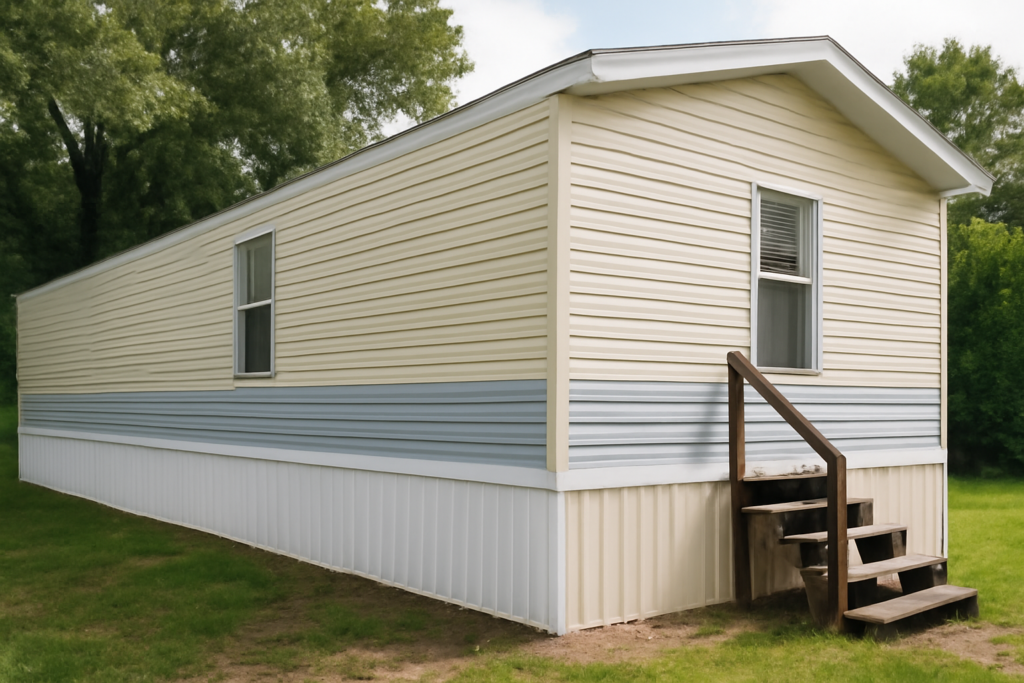
Most factory metal siding falls into a few recognizable styles:
- Horizontal aluminum lap, 8-inch: the classic pre-1990 singlewide skin — thin aluminum panels with a slight contour, interlocking top and bottom, often with a factory-baked enamel in white, tan, or pastel.
- Horizontal steel lap: similar profile in galvanized steel, common on 1980s-90s units; heavier and more dent-resistant than aluminum but rusts at scratches.
- Vertical ribbed panels: full-height corrugated or box-rib sheets on many older and budget models, trimmed with corner angles and a belt rail.
- Smooth or stucco-embossed aluminum: flat-look panels on some 1970s models, frequently with a texture pressed in.
Measure the exposure (visible face height — usually 8 inches on lap styles), note horizontal versus vertical, and check a hidden edge for a manufacturer stamp. Bring a removed piece when you shop; profile matching by eye across 40 years of products is guesswork.
Repair and Match: The $200 to $2,000 Route
Good news: 8-inch mobile home aluminum and steel lap siding is still manufactured. Mobile Home Depot, Mobile Home Parts Store, and regional manufactured-housing suppliers stock 8-inch horizontal panels in 12-foot lengths for roughly $20 to $40 per panel, plus matching corners, J-trim, and belt moldings. Standard modern colors (white, beige, clay, gray) are easy; matching a faded 1985 harvest gold is not — the honest play is re-siding one full elevation so the color break lands on a corner, where nobody’s eye catches it.
Typical repair economics: a wind-stripped gable or a mower-damaged skirt line runs $200 to $600 DIY, or $500 to $2,000 with a handyman, mostly labor. Panels remove upward — each interlocks over the one below and nails along its top flange — so replacing a mid-wall panel means unzipping down to it from above or using a zip tool and slitting technique like vinyl repair. Buy 10 percent extra; old surrounding panels are brittle and you will crack a neighbor.
Full Replacement Option 1: Like-for-Like Metal
Re-siding an entire home in new 8-inch metal lap keeps the original look, weight, and install logic. Material for a 14×70 singlewide (roughly 1,000 to 1,100 square feet of wall) runs $2,500 to $4,500 including trims; professionally installed, $5,000 to $9,000. A 28×60 doublewide roughly doubles material and lands $9,000 to $16,000 installed.
Weight matters on manufactured homes more than site-built — walls are typically 2×3 or 2×4 studs at 16 to 24 inches with wafer-thin sheathing — and aluminum at about 0.4 pounds per square foot is the gentlest option going back on. While the walls are open-ish, spend the extra day and $300 to $600 to add house wrap and foam board (1/2- to 1-inch XPS or polyiso); many older units have nothing but fiberboard behind the metal, and the insulation upgrade cuts heating bills noticeably in northern parks.
Full Replacement Option 2: Modern Ribbed Steel
A growing number of owners re-skin with contemporary ag-style panels — 26- or 29-gauge ribbed steel installed vertically. It reads modern, sheds water beautifully, spans imperfect old framing, and costs $3 to $7 per square foot installed. Trim kits (J, corners, base, eave) come from the same roll-formers. Two cautions: keep gauge light and check park rules first — many communities’ bylaws specify appearance standards, and a corrugated shop-building look gets rejected in some parks while it’s the norm in rural settings. Also confirm your state’s manufactured-housing alteration rules; a few jurisdictions treat full re-siding as a permitted alteration on titled homes.
The Vinyl Alternative (and Why Metal Still Wins Sometimes)
Vinyl lap is the other common re-side at $4 to $8 per square foot installed and is what most park refurbishers use. Metal holds three advantages worth weighing: fire resistance (relevant for park insurance), hail and puncture toughness in steel versions, and the ability to install over minimal sheathing without the waviness vinyl telegraphs on uneven old walls. Vinyl wins on color selection and dent-free longevity in ball-and-bike households. Insurance note: some carriers in hail states price metal-sided manufactured homes more favorably; a ten-minute call before choosing can tilt the decision.
Installation Sequence for a Re-Side
The order on a horizontal-lap metal re-side:
- Strip old panels top-down, pulling nails and noting damaged fiberboard; replace rotten sheathing sections ($20 a sheet) and check for wiring chew damage while it’s open.
- Wrap walls with WRB, tape seams; add foam board if budget allows.
- Snap a level line and install the starter strip at the belt line or bottom rail — manufactured homes are rarely level after decades of settling, so work from a laser or water level, not the frame.
- Hang panels bottom-up, nailing the top flange every 16 inches, locks engaged, leaving 1/4-inch expansion gaps at trims.
- Install window J-trim, corners, and top trim; seal penetrations (dryer vents, hose bibs, light blocks) with butyl and matching escutcheons.
- Reinstall or replace skirting last — vented vinyl or metal skirting runs $600 to $1,500 for a singlewide and finishes the job visually.
Two workers can strip and re-side a singlewide elevation in a weekend; a full home is a one- to two-week amateur project or three to five days for a crew.
Storm Damage, Insurance, and Matching Claims
Hail and wind claims are where siding knowledge pays cash. Manufactured-home policies typically cover metal siding damage, but adjusters price repairs against currently available materials — and when your 1988 profile is genuinely unmatchable, many states’ matching regulations or policy endorsements entitle you to replacement of the full elevation (sometimes the whole exterior) so the home isn’t left visibly mismatched. Document everything before repairs: photograph each dented elevation with a coin for scale, count impacts per 100-square-foot test square the way adjusters do, and get an independent quote from a manufactured-home specialist rather than accepting a patch-only estimate on sight.
Wind losses follow a pattern worth checking after any 50-mph event: panels strip from the windward corners first, starting at trim terminations. If one panel lifted, adjacent locks are usually stretched even where nothing’s missing — flag them in the claim, because re-securing stretched panels now costs a line item; replacing them after the next storm costs a deductible.
Maintenance and Small Upgrades That Pay
Metal-sided manufactured homes reward cheap upkeep: rinse annually, touch up scratches on steel with matching enamel before rust blooms, and re-caulk window and belt-rail joints every 5 to 8 years. Chalky-but-sound aluminum repaints beautifully — TSP wash, oil-based or acrylic bonding primer, then quality exterior acrylic, about $400 to $800 DIY for a whole singlewide, buying another 10 to 15 years of service. While you’re at it, upgrading the light blocks, shutters, and corner trim colors transforms curb appeal for under $500 — and in a park, curb appeal is resale value.
Bottom line: match and repair if damage is localized, re-side like-for-like in aluminum for originality and light weight, or go modern ribbed steel where rules allow. At $2,500 to $16,000 depending on scope, metal remains the most cost-effective durable skin a manufactured home can wear. Order all material in one purchase so every panel shares a color lot, keep the supplier’s spec sheet with your home’s paperwork for the next owner, and stash four spare panels under the home — the repair you’ll need in a decade wants today’s color, and suppliers rotate palettes every few years.
Frequently Asked Questions
How many siding panels does a mobile home need?
Divide the total wall area by the coverage of one panel, then add 10 percent for waste. A standard 8-inch exposure panel in a 12-foot length covers about 8 square feet, so a singlewide with roughly 1,000 square feet of wall needs around 125 panels before waste, or close to 140 with the extra. Subtract large window and door openings only if they are big.
Can you install new siding over old metal siding on a mobile home?
Yes, in many cases, as long as the old panels are flat, firmly attached and the wall behind them is dry and sound. Installers often add thin foam board or furring strips over the old metal to create an even, nailable surface. Remove the old skin instead if there is rot, soft sheathing or signs of leaks, because covering it only hides the problem.
How do you fix a dent in aluminum mobile home siding?
Small, shallow dents can be filled with an exterior body filler, sanded smooth and painted to match. Some dents pull out partly with a screw driven into the low spot and gently levered, then the hole is filled. Deep creases, torn panels or dents near the locking edges are better solved by replacing the panel, since filler can crack as the metal moves.
How long does metal siding last on a mobile home?
Aluminum and steel siding commonly last 30 to 50 years when the panels stay attached and the finish is maintained. Aluminum does not rust but dents easily and chalks as the paint ages. Steel resists dents better but needs scratches touched up quickly to prevent rust. Repainting a chalky but sound skin can add many more years of service.