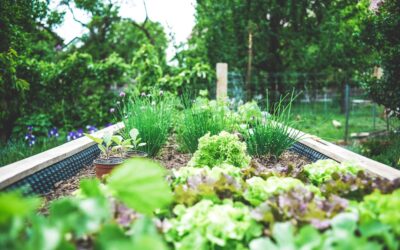
Most people who build a wooden raised bed end up wishing it were a different shape by the second season. Modular raised garden beds solve that problem with panels and corner connectors that bolt, slide or clip together, so a long rectangle can become an L, a U or two smaller squares without buying new material. They go up in an afternoon with basic hand tools, and most systems can be taken apart and moved if you relocate the garden or sell the house.
The three main families are coated steel panels, composite boards (a wood fiber and plastic blend) and recycled plastic or vinyl panels. Each one trades off cost, heat behavior, lifespan and looks differently. Expect to pay roughly $8 to $25 per square foot of growing area for a kit, compared with about $4 to $12 per square foot for a DIY cedar or pine bed, depending on height and lumber prices in your area.
If you want a garden that can grow with you, a modular raised garden bed kit is usually the fastest route. Pick the material, plan the layout on paper, prepare the ground properly and the rest is mostly tightening fasteners.
How Modular Raised Garden Beds Work
Every modular system relies on the same idea: identical wall panels joined at repeatable connection points. Steel kits use corrugated panels with pre-punched holes and a bolt-together corner post. Composite and plastic systems usually use slotted corner brackets or stacking posts, and the boards drop in from the top. Because every panel is the same length (commonly 2, 3 or 4 feet), you can add or remove sections to change the footprint.
Height is also modular in many kits. Stackable composite and plastic boards let you start with a 6-inch bed for lettuce and later add a second or third tier for tomatoes or root crops. Steel kits more often come in fixed heights of 11, 17 or 32 inches, but several brands sell extension panels. That flexibility is the real selling point of modular raised garden beds over a nailed-together box: the bed adapts instead of being rebuilt.
Pre made raised beds and prefab garden beds are sometimes the same thing sold under different names. The distinction worth caring about is whether the panels can be reconfigured. A one-piece molded plastic garden box is prefab but not modular, and you cannot change its shape later.
Choosing a Material: Steel, Composite or Recycled Plastic
Coated Steel Panels
Galvanized or zinc-aluminum coated steel is the most popular option for tall, long-lasting beds. Panels are thin (often 0.5 to 0.8 mm), light and strong thanks to the corrugation. Expect a 15 to 20 year life if the coating is intact. Steel does warm up in full sun, but in practice the soil mass buffers it, and only the outer inch of soil near the wall runs noticeably hotter. Rolled or capped top edges matter: raw panel edges can cut hands, so choose a kit with a safety trim or add one.
Composite Boards
Composite raised beds look like wood without the rot. The boards are heavier than steel, stay cooler to the touch and accept stacking corner posts well. They can bow on long spans once filled, so plan on a mid-span brace or stake for anything longer than 6 feet. Lifespan is similar to steel, and there is no paint or sealer to maintain.
Recycled Plastic and Vinyl
Recycled plastic raised beds and vinyl garden bed kits are the lightest and usually the easiest to assemble. A plastic raised planter or plastic garden box is a good fit for patios, rentals and portable garden bed setups because it weighs so little empty. Look for UV-stabilized, food-safe plastic (HDPE is common) and thick walls. Thin, inexpensive panels can bulge outward under wet soil and become brittle after a few summers in strong sun.
| Material | Typical Kit Cost per Sq Ft | Expected Life |
|---|---|---|
| Coated steel | $8 to $18 | 15 to 20 years |
| Composite | $12 to $25 | 15 to 25 years |
| Recycled plastic or vinyl | $8 to $20 | 10 to 20 years |
| DIY cedar (for comparison) | $6 to $12 | 8 to 15 years |
Sizing and Layout Ideas
Width matters more than length. Keep any bed you can reach from both sides at 4 feet wide or less, and beds against a fence or wall at 2 to 3 feet, so you never step on the soil. Length is limited mainly by how far you want to walk around it; 8 feet is a comfortable default.
Height depends on your soil and your back. A 11 to 12 inch bed is plenty over decent native soil because roots continue downward. Go 17 to 24 inches over clay, compacted ground or a hard surface, and 30 inches or more if you want to garden seated or without kneeling.
Popular modular layouts include:
- Straight run: the simplest, easy to fit along a sunny fence line.
- L-shape: wraps a corner of a patio or yard and gives two reachable arms.
- U-shape or keyhole: a narrow access path into the middle puts more growing space within arm’s reach. Keep the arms no wider than 3 feet.
- Grid of squares: several 3 by 3 or 4 by 4 beds separated by 2 to 3 foot paths, handy for crop rotation.
Leave at least 24 inches for walking paths and 36 inches where a wheelbarrow or a wheelchair needs to pass. Orient long beds north to south when possible so both sides get even sun.
Tools and Materials for Assembly
- The modular raised garden bed kit, including all panels, corners and hardware
- Cordless drill with a nut-driver bit, or a socket wrench (steel kits)
- Rubber mallet (composite and plastic kits)
- Work gloves, especially for steel panel edges
- Level, tape measure and string line
- Flat spade or sod cutter
- Hardware cloth if burrowing pests are common
- Cardboard for weed suppression
- Soil mix: roughly 60 percent topsoil, 30 percent compost and 10 percent aeration material such as pine bark fines
Step-by-Step Assembly
- Mark the footprint. Lay the panels loose on the ground in the shape you want, then outline it with string or marking paint. Check that the diagonals are equal so the bed is square.
- Clear and level the ground. Strip sod inside the outline and scrape high spots. A bed that sits on uneven ground will twist and gap at the corners once it is full. Aim for level within about half an inch over the length.
- Add a pest barrier if needed. Lay galvanized hardware cloth across the base and turn it up an inch or two at the walls. Skip it if gophers and voles are not an issue.
- Assemble the corners first. Attach panels to corner posts loosely, leaving bolts finger tight. For slide-in composite and plastic systems, set the corner brackets and tap each board down with a mallet.
- Square and tighten. Once the whole perimeter is joined, recheck the diagonals, then tighten fasteners in a crisscross pattern. Overtightening can dimple steel or crack plastic, so snug is enough.
- Install braces. Most kits over 6 feet long or 17 inches tall include cross braces or tension rods. Install them now; they stop the long walls from bowing outward once the soil is wet.
- Line and fill. Lay cardboard over any remaining weeds, then fill in layers, watering each 6 inches to settle the mix. Tall beds can take coarse organic material (logs, branches) in the bottom third to reduce soil volume.
A 4 by 8 foot bed that is 17 inches tall holds about 1.6 cubic yards of soil. Order bulk soil rather than bags for anything larger than a couple of small beds; it is usually half the cost.
Troubleshooting Common Problems
Walls bowing outward. Add a tension rod or a pair of stakes at mid-span. With plastic panels, a wooden stake driven inside the bed and screwed to the panel can hold it straight.
Corners separating. Usually a leveling problem. Empty the soil from that corner, shim or dig the base level, and re-seat the connector.
Soil drying out quickly. Tall metal and plastic beds drain fast. Mulch the surface with 2 inches of straw or shredded leaves and consider drip irrigation on a timer.
Plastic turning brittle. This is UV degradation. Panels without UV stabilizers rarely last more than a few seasons in hot climates, so check the spec sheet before buying.
Cost: Modular Kits vs DIY Wood
Using a common 4 by 8 foot bed as the benchmark, a 17-inch steel kit typically runs $150 to $300, a composite kit $250 to $500 and a recycled plastic kit $150 to $400. A DIY cedar box of the same size might cost $120 to $250 in lumber and screws, while untreated pine drops closer to $60 to $100 but may only last 4 to 7 years. Soil is often the bigger expense: expect $40 to $80 per cubic yard for bulk garden mix, plus delivery.
Over a 15-year horizon, modular raised garden beds often come out even or cheaper than wood because you are not replacing rotted boards. The reconfigurability is a bonus you cannot easily price.
When to Get Help
Kit assembly is a solid DIY project for one or two people. Consider hiring a landscaper if you are installing many beds on a slope that needs terracing, if the beds will sit on a deck or rooftop where weight loading is a concern, or if you want integrated irrigation plumbed from a hose bib with a backflow preventer. A filled 4 by 8 foot bed can weigh well over two tons when wet, so any elevated surface needs its capacity checked first.
Frequently Asked Questions
Are metal modular raised garden beds safe for vegetables?
Yes. Galvanized and zinc-aluminum coated steel beds are widely used for food crops. Zinc uptake from intact coatings is minimal and zinc is a plant nutrient in small amounts. Avoid painted panels with unknown coatings.
Do modular raised beds need a bottom?
No. Open-bottom beds let roots reach native soil and drain well. Add hardware cloth only for burrowing pests, and use a closed base only when the bed sits on a patio or deck.
How deep should a modular raised bed be?
Eleven to 12 inches works over good soil. Choose 17 to 24 inches over clay or compacted ground, and 30 inches or more for comfortable gardening without bending.
Can I move a modular raised bed after it is filled?
Not realistically. Empty the soil first, then unbolt or unclip the panels. Light plastic beds become portable once empty, which is why they suit renters.
How long do recycled plastic raised beds last?
Quality UV-stabilized HDPE beds typically last 10 to 20 years. Thin, non-stabilized plastic may crack or fade within 3 to 5 years in strong sun.