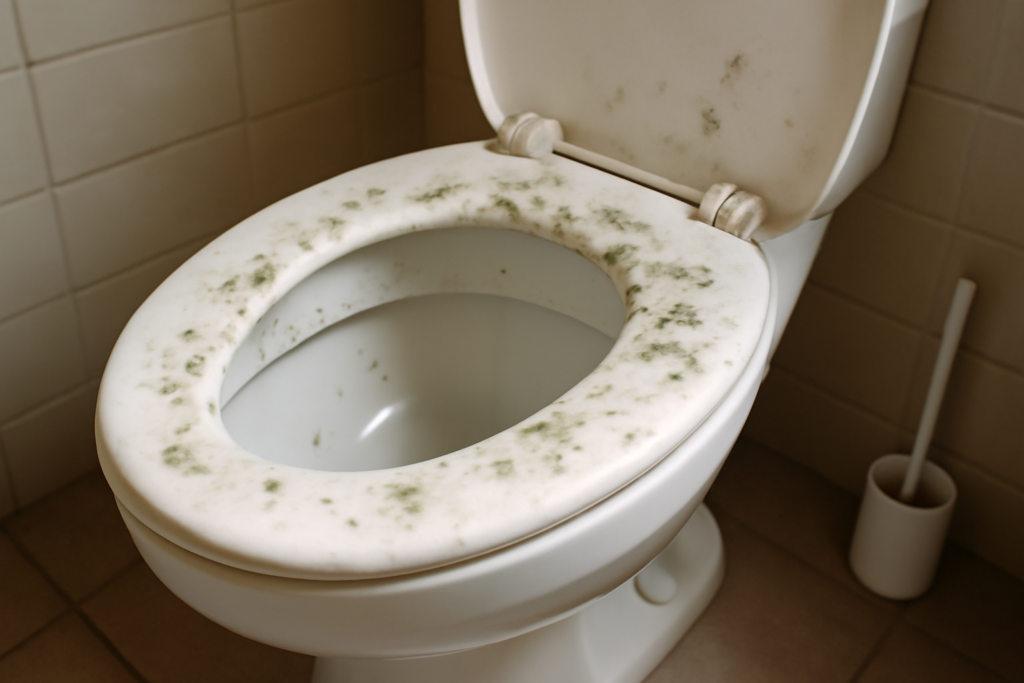
Black or pink crud building up under your toilet seat hinges is rarely “just dirt.” It is almost always a biofilm, mildew, or actual mold, and it grows fastest in bathrooms with poor ventilation, infrequent deep cleaning, and humidity above 60 percent. Visible mold on toilet seat hardware is a hygiene issue and a sign your bathroom climate needs work. The good news: full removal usually takes 20 minutes and stops the cycle if you also fix the moisture problem.
Part of our Bathroom Remodeling & Flooring guide — explore the full guide →
- What You Are Actually Looking At
- Why It Grows Where It Does
- Tools and Supplies for a Deep Clean
- Step-by-Step Cleaning Method
- Bleach Versus Vinegar Versus Hydrogen Peroxide
- Why Ventilation Is the Real Fix
- Plumbing Problems That Cause Recurring Mold
- Daily and Weekly Habits That Prevent It
- When to Call a Pro
- Frequently Asked Questions
What You Are Actually Looking At
The pink slime under the seat hinges is typically Serratia marcescens, an airborne bacteria that loves wet surfaces with soap residue. The black or dark green growth is mildew or Aspergillus mold. Both feed on the same conditions: standing moisture, organic film, and time. Neither is cosmetic. Serratia can cause urinary tract infections, and Aspergillus exposure aggravates asthma and allergies.
If the growth comes back within a week of cleaning, the toilet seat is not the problem — the bathroom environment is. Treat both.
Why It Grows Where It Does
Toilet seats are made of polypropylene, enameled wood, or molded urea formaldehyde. None of those materials are inherently moldy, but the hinges are the issue. The plastic hinge caps trap a small reservoir of water after every cleaning, and the seat-to-bowl gap stays damp for hours. Add residual urine splash, soap residue from spray cleaners, and warm bathroom air, and you have a growth chamber.
Tools and Supplies for a Deep Clean
- Disposable nitrile gloves and an N95 mask
- Old toothbrush and a small detail brush
- Distilled white vinegar
- Hydrogen peroxide (3 percent) or chlorine bleach
- Baking soda
- Microfiber cloths (do not reuse on other surfaces)
- A small flathead screwdriver or coin to release hinge caps
Never mix bleach and vinegar or bleach and ammonia. The fumes are toxic. Pick one chemistry and rinse thoroughly between products if you switch.
Step-by-Step Cleaning Method
- Open a window or run the bath fan for the entire process
- Pop off the hinge caps with a flathead screwdriver and unscrew the toilet seat completely
- Carry the seat to a bathtub or large utility sink
- Spray with a 1:1 vinegar and water mix, let sit 10 minutes, scrub with the detail brush
- Follow with a 1:10 bleach and water solution (or undiluted hydrogen peroxide for a milder option), wait 5 minutes, scrub the hinges and underside
- Rinse thoroughly, dry with a clean microfiber, reinstall
- Wipe the bowl rim, the floor around the toilet, and the wall behind it with the same disinfectant
If the seat is heavily stained or porous (older wooden seats often are), replace it. A quality polypropylene Bemis or Kohler replacement runs $25 to $60 and is easier than fighting permanent stains.
Bleach Versus Vinegar Versus Hydrogen Peroxide
Bleach kills mold spores fastest and brightens stained plastic but can corrode metal hinges over time. Vinegar penetrates biofilm and is safe on most finishes but is slower to disinfect. Hydrogen peroxide is the best all-arounder — it kills mold, lifts stains, and rinses cleanly. For routine weekly cleaning, peroxide. For a serious outbreak, bleach. For environmentally cautious households, vinegar plus baking soda paste.
Why Ventilation Is the Real Fix
Mold returns whenever bathroom humidity stays above 55 percent for hours after a shower. Most builder-grade bath fans are undersized — a 50 CFM fan in a 60 sq ft bathroom barely keeps up. Run the existing fan for at least 20 minutes after every shower. If it is loud and weak, upgrade to a Panasonic WhisperCeiling FV-0511VQ1 (110 CFM, very quiet, around $180). Add a humidity-sensing switch like the Leviton IPHS5 so the fan runs automatically when humidity rises.
Crack the door after showers, leave the shower curtain open to dry, and squeegee the walls. Aim for under 50 percent humidity within 30 minutes of finishing a shower.
Plumbing Problems That Cause Recurring Mold
If mold returns within days of cleaning, suspect a hidden leak. Check for:
- A slow toilet base leak (look for water staining the floor around the wax ring)
- A worn flapper that lets the bowl seep, keeping the rim damp
- Sweating tank in summer (anti-sweat valve fixes this for $40 in parts)
- A failing supply-line connection at the wall
A 4 oz cup of food coloring in the tank tells you in 15 minutes if a flapper leaks — color in the bowl without flushing means yes.
Daily and Weekly Habits That Prevent It
Wipe down the seat and hinges with a disinfecting wipe every 2 to 3 days. Loosen the hinge caps and let the area air out monthly. Avoid heavy soap-based sprays — they leave a residue that mold eats. A quick spray of hydrogen peroxide, 30 seconds of dwell time, and a microfiber wipe takes under a minute and keeps things in check.
Replace the toilet seat every 3 to 5 years. Plastic gets micro-scratched, hinges fatigue, and old seats hold biofilm even when they look clean.
When to Call a Pro
If you find mold on multiple surfaces — toilet, tub, walls, ceiling — you have a moisture and ventilation problem larger than one seat. Call an HVAC tech to evaluate fan sizing and ductwork. If you smell musty odors behind the wall or see drywall staining, a remediation specialist should test for hidden moisture. DIY surface cleaning will not fix structural mold inside a wall cavity.
Persistent mold on toilet seat surfaces is almost never about cleaning harder. It is about removing the moisture that lets it grow in the first place. Fix the climate, replace the seat if it is old, and the problem disappears for good.
Frequently Asked Questions
Can mold grow inside a soft cushioned toilet seat?
Yes. Once the vinyl cover on a padded seat cracks or splits, water and urine soak into the foam, and mold grows inside where cleaning cannot reach. A cracked cushioned seat cannot be properly disinfected, so replace it with a hard plastic or sealed seat that wipes clean.
Why does black mold keep coming back on the underside of the toilet seat?
The underside and the rubber bumpers stay damp from splashes and condensation, and the bumpers trap a thin film of moisture against the rim. Wipe the underside and bumpers dry after cleaning, pop the bumpers off occasionally to clean beneath them, and lower humidity with the bath fan so the surfaces dry between uses.