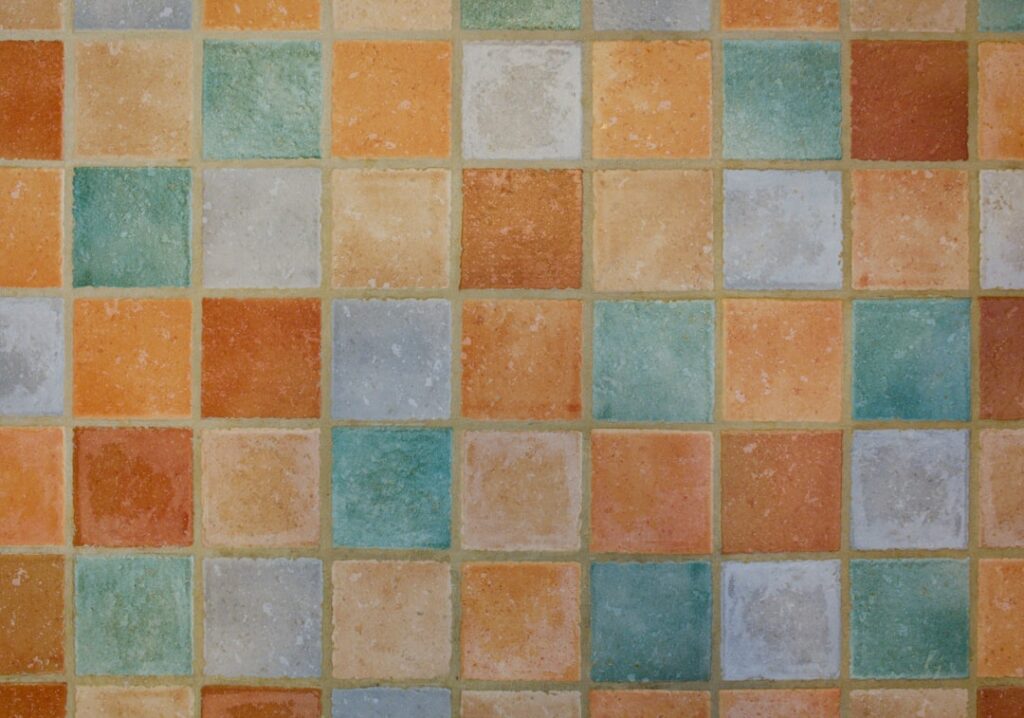
Mosaic flooring uses small tiles — typically 2 inches or smaller — arranged in patterns or grids and mounted on mesh backing for installation. The result is a floor surface with exceptional detail, texture, and visual interest that large-format tiles simply cannot achieve. From ancient Roman bath houses to modern luxury showers, mosaic floors have been a design staple for thousands of years.
This guide covers the most popular mosaic flooring applications, available materials, classic and contemporary patterns, installation considerations, grout requirements, cost, and maintenance for both historic and modern designs.
Mosaic Floor Applications
Mosaic flooring excels in specific applications where its small-tile format provides functional and aesthetic advantages over larger tiles.
Entryway Medallions and Foyers
Mosaic medallions in entryways and foyers create a striking first impression. A circular, hexagonal, or geometric mosaic pattern inset into the foyer floor acts as a focal point that sets the design tone for the entire home. These medallions can range from simple geometric borders to elaborate pictorial designs using hand-cut marble or glass tesserae.
Entryway mosaics are typically 3 to 6 feet in diameter and are often framed by larger field tiles. The contrast between the detailed mosaic center and the simpler surrounding tile creates visual hierarchy and draws the eye inward.
Shower Floors
Mosaic tile is the most popular shower floor material for two important functional reasons. First, the small tile size allows the floor to conform to the sloped shower pan gradient without the lippage (uneven tile edges) that large tiles create on curved surfaces. Second, the dense grid of grout lines provides significantly better slip resistance than smooth, large-format tiles — critical for a wet, soapy surface.
The most common shower floor mosaics are 1×1-inch or 2×2-inch square tiles, penny rounds, and pebble stone on mesh backing. Porcelain and marble are the most popular materials for shower floor mosaics.
Bathroom Floors
Full bathroom floors in mosaic tile create a vintage, spa-like, or luxurious aesthetic depending on the material and pattern chosen. Classic black-and-white hexagon mosaics evoke early-20th-century charm. Marble herringbone mosaics create a high-end spa feel. Glass mosaics in blues and greens produce a coastal or aquatic ambiance.
Bathroom floor mosaics work particularly well in small bathrooms where the detailed pattern adds visual interest that makes the space feel more considered and intentional rather than simply small.
Pool Surrounds and Water Features
Glass and porcelain mosaics are the standard for pool interiors, pool surrounds, and water features. The small tile size allows for complex curved surfaces (pool edges, fountain bowls, spa seats), and glass mosaics create a shimmering, light-reflective effect underwater that no other material can match.
Pool mosaics require frost-resistant, non-porous tiles (porcelain or glass) and epoxy grout to withstand constant water immersion and chemical exposure from pool treatments.
Mosaic Flooring Materials
Marble Mosaic
Marble is the most traditional and luxurious mosaic flooring material. Carrara, Calacatta, Thassos, Emperador, and Nero Marquina are the most popular varieties. Marble mosaics are available in polished (shiny, reflective), honed (matte, smooth), and tumbled (aged, textured) finishes.
Marble is porous and requires sealing before grouting and periodic resealing every 6 to 12 months. It is susceptible to etching from acidic substances (lemon juice, vinegar, certain cleaners) and staining from colored liquids. Despite this maintenance demand, marble mosaics remain the gold standard for luxury bathroom and entryway floors.
Porcelain Mosaic
Porcelain mosaics offer the widest range of styles with minimal maintenance. Porcelain is non-porous (water absorption below 0.5%), frost-resistant, scratch-resistant, and available in any color or pattern — including convincing marble and stone imitations. It does not require sealing and is significantly more durable than natural stone in wet, high-traffic applications.
For shower floors and pool areas, porcelain mosaics with a matte or textured finish provide the best combination of durability and slip resistance.
Glass Mosaic
Glass mosaics create a luminous, jewel-like quality that no other material replicates. They are impervious to water, stain-proof, and available in an infinite range of colors from translucent to opaque. Glass mosaics are commonly used on feature walls, pool interiors, and accent borders rather than entire floors because the smooth surface can be slippery when wet.
For floor applications, choose textured or frosted glass mosaics rather than smooth/polished versions. Glass is also harder than porcelain and does not scratch, but it can chip from heavy impact.
Pebble Stone Mosaic
Pebble mosaics use natural river stones mounted on mesh backing. The rounded, irregular surface provides excellent barefoot grip and a spa-like aesthetic that evokes natural riverbeds. Pebble floors are most popular in showers, outdoor spaces, and spa-inspired bathrooms.
The tradeoff is grout intensity — the irregular gaps between pebbles require significantly more grout than uniform tile mosaics, and cleaning between the rounded stones is more difficult. Pebble floors also feel bumpy underfoot, which some people find unpleasant for prolonged standing.
| Material | Cost (per sq ft) | Sealing Required? | Slip Resistance | Best Application |
|---|---|---|---|---|
| Marble | $8 – $30 | Yes (every 6–12 months) | Good (honed/tumbled) | Bathrooms, entryways |
| Porcelain | $4 – $18 | No | Excellent (textured) | Showers, bathrooms, pools |
| Glass | $10 – $40 | No | Low (smooth) to moderate (textured) | Accents, pools, feature walls |
| Pebble stone | $6 – $20 | Yes (recommended) | Excellent | Showers, outdoor, spa areas |
Popular Mosaic Patterns and Designs
The pattern of a mosaic floor determines its aesthetic impact as much as the material does.
Straight grid — the simplest pattern, with square tiles aligned in a uniform grid. Clean, modern, and easy to install. Best for contemporary bathrooms and minimalist designs.
Herringbone — rectangular tiles laid in an alternating V-pattern. Creates movement and visual interest. Popular in marble mosaics for high-end bathrooms and entryways.
Hexagon — six-sided tiles in a honeycomb arrangement. The quintessential early-20th-century bathroom pattern. Available in 1-inch (classic vintage) and 2-inch (modern) sizes. See our hexagon tile guide for more detail.
Penny round — small circular tiles (typically 3/4 to 1 inch in diameter) in a close-packed arrangement. Creates a retro, playful look. Available in flat and domed profiles. Our penny tile guide explores this pattern in depth.
Basket weave — rectangular tiles arranged in alternating pairs to create a woven textile effect. A classic traditional pattern that works well in marble for formal spaces.
Arabesque — ornate, curved teardrop-shaped tiles that interlock to form a Moorish-inspired pattern. Creates an exotic, decorative floor but is more difficult to install due to the irregular tile shape.
Medallion — a circular or geometric design, often custom-designed, that serves as a focal point in an entryway or center of a room. Medallions may incorporate multiple materials and colors.
Installation: Mesh-Backed and Beyond
Modern mosaic flooring installation relies heavily on mesh-backed tile sheets, which have transformed what was once an extremely labor-intensive process into a manageable — though still skilled — project.
Mesh-backed mosaic sheets consist of dozens of individual tiles pre-mounted on a fiberglass mesh backing in a factory. The installer applies thinset to the substrate, presses the sheet into place, and the mesh holds the tiles in position while the thinset cures. After curing, the entire surface is grouted as a single plane.
Substrate preparation is critical for mosaic floors. The surface must be flat, clean, and structurally sound. Any deflection in the subfloor will crack grout joints (which are more numerous and thinner in mosaics than in standard tile). Cement board or uncoupling membrane over plywood is the recommended substrate for residential mosaic installations.
Shower floor installation requires additional steps: a pre-sloped mortar bed (typically at a 1/4-inch-per-foot gradient toward the drain), a waterproof membrane (liquid-applied or sheet), and careful tile layout to position cut tiles symmetrically around the drain.
Hand-set mosaics (individual tiles placed one by one) are used for custom medallions, pictorial designs, and complex patterns that cannot be pre-mounted on mesh. This method is exponentially more labor-intensive and is typically reserved for high-end residential and commercial projects.
Thinset selection: Use a white, polymer-modified thinset for translucent glass mosaics and light-colored marble. Gray thinset may show through translucent tiles and affect the final color appearance.
Grout Considerations
Grout is a more significant factor in mosaic flooring than in standard tile work because there is proportionally far more grout surface area. In a 1×1-inch mosaic, grout may account for 15 to 20 percent of the visible floor surface — compared to 3 to 5 percent for a 12×12-inch tile.
Grout type: Unsanded grout is used for mosaic joints 1/8 inch or narrower. Sanded grout is used for joints wider than 1/8 inch (such as the irregular gaps in pebble mosaics). Epoxy grout is the premium option — it is waterproof, stain-proof, and mold-resistant, making it ideal for showers, pools, and wet areas.
Grout color: The grout color dramatically affects the look of a mosaic floor. Matching the grout to the tile color creates a seamless, unified appearance. Contrasting grout (white grout with dark tile, or dark grout with white tile) emphasizes the pattern and the individual tile shapes. Contrasting grout shows dirt and wear more but creates a bolder visual statement.
Grout sealing: Cement-based grout (both sanded and unsanded) must be sealed after curing to resist staining and moisture absorption. Reseal every 1 to 2 years in wet areas. Epoxy grout does not require sealing — it is naturally impervious.
Cost Breakdown
| Component | Cost Range |
|---|---|
| Porcelain mosaic tile (material) | $4 – $18 per sq ft |
| Marble mosaic tile (material) | $8 – $30 per sq ft |
| Glass mosaic tile (material) | $10 – $40 per sq ft |
| Pebble stone mosaic (material) | $6 – $20 per sq ft |
| Professional installation (mesh-backed) | $8 – $15 per sq ft |
| Professional installation (hand-set custom) | $20 – $50+ per sq ft |
| Grout (material) | $0.50 – $2 per sq ft |
| Waterproofing membrane (shower/wet area) | $1 – $3 per sq ft |
| Total installed (porcelain, mesh-backed) | $13 – $35 per sq ft |
| Total installed (marble, mesh-backed) | $17 – $48 per sq ft |
Mosaic flooring costs more to install than standard tile primarily because of the increased labor time. Setting, aligning, and grouting hundreds of small tiles per square foot takes significantly longer than setting a few large-format tiles. Budget 30 to 50 percent more for installation labor compared to standard tile of the same material.
Maintenance
Maintaining mosaic flooring focuses primarily on keeping the grout clean and sealed, since the grout joints are the most vulnerable component.
- Sweep or vacuum regularly to prevent grit from scratching tile surfaces and lodging in grout lines.
- Mop with a pH-neutral tile cleaner weekly. Avoid acidic cleaners on marble mosaics — they will etch the surface.
- Clean grout lines monthly with a grout-specific cleaner and a soft brush. For shower mosaics, weekly cleaning prevents mold and mildew buildup.
- Reseal cement grout every 1 to 2 years (annually in showers). Epoxy grout does not require resealing.
- Seal marble mosaics with a penetrating stone sealer every 6 to 12 months to prevent staining and moisture absorption.
- Address cracked or missing grout immediately. Damaged grout allows water to reach the substrate, leading to mold growth and tile loosening.
Historic vs Modern Mosaic Design
Mosaic flooring has a 4,000-year history, and the tension between historical and contemporary approaches drives much of today’s design conversation.
Historic mosaics — from Roman opus tessellatum to Victorian geometric tile floors to early-20th-century American hex tile — used simple materials (marble, ceramic, natural stone) in intricate, hand-laid patterns. The beauty came from the craftsmanship and artistry of the pattern rather than the material itself. These designs required weeks or months of skilled labor and are among the most durable floors in history — many Roman mosaics are still intact after 2,000 years.
Modern mosaics leverage mesh-backed technology, water-jet cutting, and digital printing to achieve complex patterns with less labor. Contemporary designers often blend mosaic elements with large-format tiles — a mosaic accent border surrounding a large-tile field, or a mosaic shower floor transitioning to large planks in the main bathroom. This approach manages cost while preserving the visual impact of the mosaic.
The strongest design trend in 2026 is mixing scales — using mosaic tile in key areas (shower floors, niches, feature strips) alongside larger tiles in the surrounding space. This approach maximizes the impact of the mosaic without the cost and grout-maintenance burden of an entirely mosaic floor. Check our mosaic tile guide for more inspiration.
Frequently Asked Questions
Is mosaic flooring hard to install?
Mesh-backed mosaic sheets are manageable for experienced DIYers, but the skill level required is higher than for standard tile. Maintaining even grout lines, cutting sheets to fit around drains and edges, and achieving a flat surface on a sloped shower pan all require patience and precision. Complex patterns and hand-set mosaics should be left to professional tile installers.
Is mosaic tile slippery when wet?
Most mosaic floors have good slip resistance because the dense grout lines create natural texture. Porcelain and pebble mosaics are the least slippery. Glass mosaics with smooth, polished surfaces can be slippery when wet — choose textured or frosted glass for wet-area floors.
Can I use mosaic tile on a shower floor?
Yes — mosaic tile is the most popular shower floor material. Small tiles (1×1 or 2×2 inches) conform to the sloped shower pan better than large tiles, and the grout lines provide slip resistance. Use porcelain or natural stone mosaics with epoxy grout for the best long-term performance in showers.
How do you clean mosaic tile floors?
Sweep regularly, mop with a pH-neutral tile cleaner weekly, and scrub grout lines monthly with a grout cleaner and soft brush. The key challenge is keeping the grout clean — mosaic floors have proportionally more grout than standard tile, so grout maintenance is a bigger part of the cleaning routine.
Is mosaic flooring expensive?
Mosaic flooring ranges from moderate to expensive. Porcelain mosaics start at $4 per square foot (material only), while premium marble and glass mosaics can exceed $30 per square foot. Installation adds $8 to $15 per square foot for mesh-backed products. The total installed cost is 30 to 50 percent higher than equivalent standard tile due to increased labor.
What grout should I use for mosaic floors?
Use unsanded grout for joints 1/8 inch or narrower (most mesh-backed mosaics) and sanded grout for wider joints (pebble mosaics). Epoxy grout is the best choice for showers, pools, and any wet area because it is waterproof, stain-proof, and mold-resistant without requiring periodic sealing.
Can mosaic flooring be used outdoors?
Yes, if you choose frost-resistant porcelain or natural stone and use a flexible, exterior-rated thinset and grout. Glass mosaics work in pools but are not recommended for outdoor walking surfaces due to slipperiness. Ensure the substrate has proper drainage to prevent freeze-thaw damage in cold climates.
Prefer to explore on your own?
See how new flooring looks in your actual room in seconds — free, no signup.
Try the free Floor Studio →