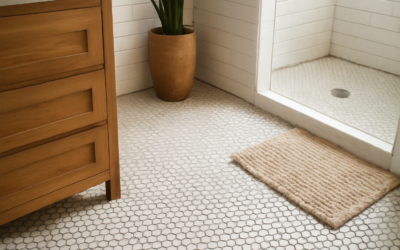
Penny tile is a small, round mosaic tile — typically 3/4 inch to 1 inch in diameter — that has been a staple of American design since the early 1900s. Named for its resemblance to a penny, this classic tile format is experiencing a major resurgence as homeowners blend vintage charm with modern aesthetics in bathrooms, showers, backsplashes, and entryways.
Part of our Tile & Grout guide — explore the full guide →
This guide covers everything about penny tile: material options, sizing, color and grout combinations, installation methods, cost breakdown, best uses, and the pros and cons you should weigh before committing to this distinctive flooring choice.
What Is Penny Tile?
Penny tile refers to small, circular mosaic tiles arranged in an interlocking pattern. Each individual tile is roughly the size of a penny — between 3/4 inch and 1 inch in diameter — and they are typically sold pre-mounted on 12″ x 12″ mesh-backed sheets for easier installation. A single sheet contains approximately 225 to 260 individual round tiles.
The format originated in the early 20th century when it was used extensively in bathrooms, commercial kitchens, subway stations, and public buildings. The rounded shape and small scale create a distinctive textured surface that offers excellent slip resistance (due to the high grout-to-tile ratio), making it especially popular for wet areas like shower floors and bathroom floors.
Unlike square mosaic tiles, penny tile’s circular shape leaves small gaps between each tile that are filled with grout. This means grout color plays an outsized role in the final appearance — a design characteristic that makes penny tile uniquely customizable.
Penny Tile Materials
Penny tile is available in several materials, each with distinct characteristics that affect appearance, durability, cost, and suitability for different applications.
| Material | Durability | Water Resistance | Cost per Sq Ft | Best For |
|---|---|---|---|---|
| Porcelain | Excellent | Excellent (near-zero absorption) | $5 – $15 | Shower floors, bathroom floors, outdoor use |
| Ceramic | Good | Good (requires sealing in wet areas) | $3 – $10 | Bathroom floors, backsplashes, accent walls |
| Glass | Moderate | Excellent | $10 – $25 | Backsplashes, accent areas, shower walls |
| Marble | Moderate | Fair (porous, needs sealing) | $12 – $30 | Bathroom floors, entryways, luxury designs |
| Metal (stainless, copper) | Good | Excellent | $15 – $35 | Backsplashes, accent strips, modern kitchens |
Porcelain penny tile is the most popular and practical choice for floor applications. Its near-zero water absorption rate (less than 0.5%) makes it ideal for showers, bathrooms, and even outdoor areas. Porcelain is also the most scratch-resistant and durable option for floors that see daily foot traffic.
Ceramic penny tile offers similar aesthetics at a lower price point but has higher water absorption. It works well for bathroom floors and backsplashes but is not the best choice for direct-water areas like shower floors unless properly sealed.
Glass penny tile adds a luminous, reflective quality that catches light beautifully. However, glass tiles can be slippery when wet and are more prone to chipping, making them better suited for walls and backsplashes than floors.
Marble penny tile offers unmatched elegance with natural veining and color variation. Each tile is unique, creating an organic, luxurious mosaic. Marble requires sealing and more careful maintenance but delivers a high-end look that no other material can replicate. For more on tile flooring in general, see our tile flooring guide.
Sizes, Colors & Grout Impact
Standard penny tile dimensions are 3/4 inch (19mm) for traditional size and 1 inch (25mm) for the slightly larger modern version. Some manufacturers produce 1-1/4 inch rounds, though these are technically classified as “round mosaic” rather than true penny tile. Sheet sizes are typically 11.25″ x 11.25″ or 12″ x 12″.
Popular penny tile colors include:
- Classic white — Timeless, clean, works in any design style.
- Black — Bold, dramatic, pairs with gold or brass hardware.
- Mixed/blended — Combinations of 2 to 5 colors for a scattered, organic look.
- Carrara marble — White with grey veining for a luxury feel.
- Matte pastels — Soft greens, blues, and pinks for retro or eclectic bathrooms.
- Metallic — Copper, bronze, or stainless for modern and industrial designs.
Grout color changes everything. Because penny tile has more grout visible than almost any other tile format, the grout color has a dramatic impact on the finished look:
- White tile + white grout = clean, seamless, modern, minimal contrast.
- White tile + dark grey/black grout = each penny is defined, graphic, retro feel.
- Black tile + black grout = dramatic, monolithic, sophisticated.
- Mixed tile + grey grout = terrazzo-like appearance, playful, eclectic.
Best Uses for Penny Tile
Penny tile excels in specific applications where its small scale, texture, and slip resistance are advantages.
Shower floors are the single most popular application for penny tile. The high grout line ratio provides excellent grip underfoot when wet, and the small tile size conforms easily to the slight slope required for shower drainage. Porcelain penny tile on a shower floor is both beautiful and functional. Browse our shower tile guide for more design ideas.
Bathroom floors benefit from penny tile’s slip resistance, water durability, and design impact. A full bathroom floor in penny tile creates a cohesive, spa-like feel that pairs beautifully with subway tile walls or large-format wall tile. See our bathroom tile ideas for inspiration.
Backsplashes in kitchens and bathrooms are another excellent application. The round shape adds visual interest and texture that contrasts nicely with rectangular counter and cabinet lines.
Entryways and mudrooms benefit from penny tile’s durability and the fact that it hides dirt well (especially in darker colors or mixed blends).
Installation Guide
Installing penny tile is manageable for experienced DIYers, though the grouting step requires patience due to the large number of joints.
Step-by-step installation:
- Prepare the substrate: Ensure the surface is flat, clean, and sound. For floors, use cement backer board. For shower floors, install a waterproof membrane (Schluter Kerdi, RedGard, or similar).
- Dry-lay sheets: Arrange mesh-backed penny tile sheets on the floor without adhesive to plan layout, check alignment between sheets, and identify where cuts are needed.
- Apply thin-set mortar: Spread modified thin-set mortar with a 1/4″ x 1/4″ square-notch trowel. Work in small sections (2 to 3 square feet at a time) because thin-set skins over quickly.
- Set sheets: Press mesh-backed sheets into the thin-set, ensuring consistent spacing between sheets that matches the spacing within the sheet. Use a grout float or rubber mallet with a board to press tiles evenly.
- Trim at edges: Cut individual tiles from the mesh as needed to fit edges and around obstacles. Use tile nippers for individual rounds.
- Allow thin-set to cure: Wait 24 hours minimum before grouting.
- Grout: Use unsanded grout for joints under 1/8 inch (most penny tile joints qualify). Apply with a rubber grout float at a 45-degree angle, working the grout into every joint. This is the most time-consuming step — work in small sections and wipe excess with a damp sponge as you go.
- Final cleanup: After grout hazes over (about 20 minutes), wipe with a damp sponge. Polish with a dry cloth after 24 hours.
- Seal grout lines: Apply a grout sealer after the grout has cured (typically 72 hours) to prevent staining and moisture penetration.
Penny Tile Cost
| Cost Component | Price Range |
|---|---|
| Porcelain penny tile (material) | $5 – $15 per sq ft |
| Ceramic penny tile (material) | $3 – $10 per sq ft |
| Glass penny tile (material) | $10 – $25 per sq ft |
| Marble penny tile (material) | $12 – $30 per sq ft |
| Professional installation | $8 – $15 per sq ft |
| Thin-set, grout, sealer | $1 – $2 per sq ft |
| Total installed (porcelain) | $14 – $32 per sq ft |
Professional installation for penny tile tends to be at the higher end of tile installation costs because the small tile size and extensive grouting require more labor hours per square foot than standard tile.
Vintage vs Modern Looks
One of penny tile’s greatest strengths is its versatility across design eras.
Vintage / retro look: Use classic white porcelain penny tile with black or dark grey grout. Pair with a black-and-white hex border, pedestal sink, and subway tile walls. This combination directly references early 20th-century American bathrooms and is the most recognizable penny tile aesthetic.
Modern minimalist: Use white penny tile with white grout for a seamless, textured surface. The individual rounds become subtle rather than graphic, creating an elegant, contemporary feel. Pair with frameless glass shower enclosures and wall-mounted vanities.
Eclectic / bohemian: Use mixed-color or gradient penny tile blends. Scattered blues, greens, and whites create a playful, mosaic-like effect that works in creative, personality-driven spaces.
Luxury / spa: Use marble penny tile (Carrara, Calacatta, or Thassos) with light grey grout. The natural veining in each tiny round creates a refined, organic mosaic that elevates the entire space.
Pros and Cons of Penny Tile
| Pros | Cons |
|---|---|
| Excellent slip resistance when wet | Grout-intensive — lots of grout lines to clean and maintain |
| Timeless design that works vintage or modern | Labor-intensive installation (higher labor costs) |
| Conforms to slopes and curves easily | Grout staining can be an issue if not properly sealed |
| Available in many materials and colors | Not ideal for large floor areas (visual busyness) |
| Mesh-backed sheets simplify layout | Individual tile replacement is difficult |
| Adds texture and visual interest | Shows dirt in grout lines if using light grout color |
Frequently Asked Questions
Is penny tile slippery?
No — penny tile is actually one of the least slippery tile options. The high number of grout lines between the small round tiles creates texture and grip. This is why porcelain penny tile is widely recommended for shower floors and wet areas.
Is penny tile hard to clean?
The tiles themselves clean easily, but the extensive grout lines require regular maintenance. Seal grout lines after installation and reseal annually. For daily cleaning, a pH-neutral tile cleaner and soft brush work well. Light-colored grout will show stains more than dark grout.
Can I install penny tile myself?
Yes, if you have basic tiling experience. The mesh-backed sheets make layout straightforward. The challenging part is grouting — there are far more grout joints per square foot than with standard tile, so grouting takes 2 to 3 times longer. Budget extra time and have plenty of sponges on hand.
Is penny tile outdated or trendy?
Penny tile is a classic that transcends trends. It has been in continuous use for over 100 years and is currently experiencing renewed popularity. Because it predates modern trends, it does not look “dated” — it looks intentional and timeless when executed well.
How much does penny tile cost per square foot?
Material costs range from $3 to $30 per square foot depending on the material. Porcelain ($5 to $15) is the most common choice. Professional installation adds $8 to $15 per square foot. A typical 40 sq ft shower floor costs $500 to $1,200 fully installed with porcelain penny tile.
What grout color should I use with white penny tile?
White grout creates a clean, modern, seamless look. Dark grey or black grout creates a graphic, retro look that highlights each individual round. Grey grout offers a middle ground. The “right” choice depends entirely on the aesthetic you want — there is no wrong answer.
Prefer to explore on your own?
See how new flooring looks in your actual room in seconds — free, no signup.
Try the free Floor Studio →