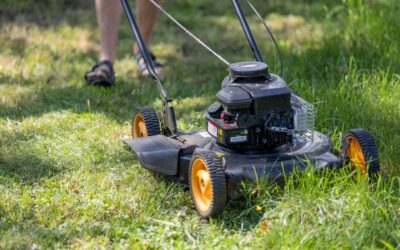
When a push mower stops making sense somewhere around the half-acre mark, most homeowners start shopping for a rider on a budget, and that search almost always turns up Murray. A Murray riding lawn mower is one of the most affordable ways to get onto a seat and cut an acre in a fraction of the time, which is exactly why the brand has sold millions of units through big-box retailers. Now built under the Briggs & Stratton umbrella, Murray riders trade some premium features for a lower price. This guide covers the specs you get, what they cost, the issues to watch for, and how to keep one running season after season.
Where Murray Fits in the Market
Murray occupies the entry-level tier of riding mowers, competing with brands like Yard Machines and lower Craftsman models. These are value machines aimed at homeowners with a half acre to two acres who want the time savings of a rider without spending $2,500 or more on a premium garden tractor.
Now part of Briggs & Stratton, Murray riders typically run Briggs engines, which is a plus for parts availability and service. You give up some refinement and heavy-duty components compared to John Deere or Cub Cadet, but the trade is a price point hundreds of dollars lower.
Typical Specs and Deck Sizes
Murray riding mowers commonly ship with cutting decks in the 30-inch to 42-inch range, with the compact 30-inch rear-engine models being especially popular for smaller yards and tight storage.
- 30-inch rear-engine rider: compact, fits a standard shed, good for a half to three-quarter acre
- 42-inch lawn tractor: the mainstream size, handles one to two acres efficiently
- Engines: Briggs & Stratton single or twin cylinder, roughly 10.5 to 17.5 HP
- Transmission: often a CVT or automatic hydrostatic on higher models, or manual gear drive on budget units
- Cutting height: adjustable, typically from about 1.5 to 4 inches
The compact 30-inch model deserves a special mention. Its short wheelbase turns tighter than a full tractor and stores in less space, making it a favorite for suburban lots that are just too big for a walk-behind. Its Briggs & Stratton engine, commonly a 10.5 HP single-cylinder in the 344cc range, sits behind the seat, keeping the machine’s overall length short enough to fit through a standard 32-inch shed door.
A few numbers help set expectations before you buy. A 30-inch deck cutting at a comfortable 3 to 4 mph clears roughly a half acre in 30 to 40 minutes, while a 42-inch tractor at similar speeds handles an acre in about 45 minutes to an hour. Fuel tanks typically hold 1 to 1.3 gallons on the compact riders and up to 2 gallons or more on the larger tractors, which is enough for one to two hours of cutting between fill-ups. Turning radius on the 30-inch model runs about 18 inches, tight enough to loop around a single tree without a three-point turn, whereas a 42-inch tractor needs a wider berth.
Safety Features and How to Operate One
Every modern Murray rider ships with a set of safety interlocks mandated across the industry, and knowing them prevents frustrating no-start situations that owners often mistake for a fault. The seat has a presence switch that kills the engine if you stand up while the blades are engaged. The blades will not engage unless you are seated and, on most models, the parking brake sequence is correct. And the engine will only crank with the brake set and the mowing deck disengaged.
Starting one is a simple, repeatable sequence: sit down, set the parking brake, disengage the blade lever (the PTO), move the throttle to choke or full, then turn the key. Once it fires, ease off the choke, release the brake, and use the pedal or gear selector to move. To mow, bring the throttle to full, lower the deck to your chosen height, and engage the PTO lever smoothly. Always disengage the blades and slow down before crossing gravel or turning on a slope, and never mow across a steep incline where the machine could tip; go up and down instead.
What They Cost
Affordability is the whole point. A Murray 30-inch rear-engine rider often sells for roughly $1,300 to $1,700, while a 42-inch lawn tractor typically lands around $1,600 to $2,200 depending on engine and transmission. Those prices undercut most premium brands by a wide margin.
The value equation makes sense for homeowners who don’t mow professionally and want reliable seasonal use. If you cut several acres weekly or mow rough terrain, stepping up to a heavier-built tractor may pay off over time, but for typical residential use a Murray delivers the core benefit at a lower entry cost.
Transmission Options Explained
How the mower delivers power to the wheels affects how easy it is to drive. Budget Murray models may use a manual gear-drive transmission where you select a speed and stick with it. Mid and upper models use an automatic or hydrostatic drive controlled by a pedal, letting you vary speed smoothly without shifting.
For most homeowners, the automatic or hydrostatic option is worth the small upcharge. It makes navigating around trees, flower beds, and slopes far less tedious than stopping to shift gears, and it holds a steady pace on inclines.
Common Issues to Watch For
Being a budget machine, a Murray rewards attentive maintenance and punishes neglect. Owners most often report a handful of predictable issues.
- Belt wear: drive and deck belts are wear items; keep a spare and learn the routing
- Battery drain: the small starting battery dies if left uncharged over winter; use a trickle charger
- Carburetor gumming: stale fuel clogs the carburetor; use fresh gas with stabilizer
- Deck spindle wear: the blade spindles need occasional greasing on models with fittings
- Steering play: lighter-duty front-end components can develop slop over years
Most of these are inexpensive and DIY-friendly. A belt runs $15 to $40, a battery $30 to $60, and staying ahead of them prevents a small annoyance from stranding you mid-mow.
Maintenance to Keep It Running
The Briggs engine follows familiar small-engine care. Change the oil after the first 5-hour break-in, then every 50 hours or once a season, using the grade Briggs specifies (commonly SAE 30 in warm weather or 10W-30 for all-season use). Replace the air filter and spark plug annually, and keep the blades sharp.
Before winter, stabilize or drain the fuel, remove or trickle-charge the battery, and clean grass buildup off the deck. Come spring, that little bit of fall prep is the difference between a first-turn start and an afternoon fighting a gummed carburetor.
Blade care deserves its own attention because it is the single biggest factor in cut quality. A 30-inch Murray uses one blade; a 42-inch deck uses two overlapping blades. Sharpen them at least once a season, or after any strike with a root or rock, keeping a slight nick-free edge rather than a razor edge, which chips fast. Balance a blade after sharpening by hanging it on a nail through the center hole; a heavy end that drops means you ground too much off the other side, and an unbalanced blade vibrates the spindle and shortens bearing life. Replacement blades run about $12 to $25 each and take 15 minutes to swap with the deck lowered and the spark plug wire pulled for safety.
Buying New vs. Used and Parts Support
New Murray riders sell almost exclusively through big-box retailers and their websites, which means seasonal pricing swings; the best deals appear in late summer and early fall as stores clear inventory. A used Murray in good shape often trades for $400 to $900 on local marketplaces, and because the Briggs engines are so common, parts and service are easy to source. Before buying used, start it cold, engage the blades, and listen for deck vibration or a smoking engine, all cheap-to-fix on paper but signs of a hard life.
Parts availability is a genuine Murray strength. Belts, blades, spindles, deck wheels, and Briggs tune-up kits are stocked at most hardware stores and countless online sellers, and the Briggs & Stratton service network can handle engine work if you would rather not. Keep your model and serial number, found on a plate under the seat, handy when ordering, since deck-specific belts and blades vary by exact model year.
Is a Murray Right for You?
A Murray riding lawn mower is the right call for a homeowner who wants an affordable, no-frills way to cut a half acre to a couple of acres and is willing to do basic seasonal maintenance. It is not built for commercial abuse or rough, rocky ground, but for ordinary residential mowing it delivers the essential benefit, a comfortable seat and a fast cut, at a price that is hard to beat. Keep the fuel fresh, the battery charged, and the blades sharp, and it will earn its keep for many seasons.