Few flooring materials carry the rugged, earthy character that natural slate floor tiles bring to a home. Quarried from metamorphic rock that formed over millions of years, slate delivers a surface no manufactured product can truly replicate. Whether you are drawn to the deep charcoal of a mudroom floor or the rusty greens and coppers of a sunroom, this stone rewards you with texture, durability, and a look that ages gracefully. In this guide, you will learn what slate costs, how it performs underfoot, and what it takes to keep it looking its best for decades.
Part of our Tile & Grout guide — explore the full guide →
What Makes Slate Different From Other Stone
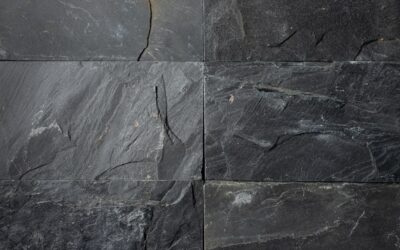
Slate is a fine-grained metamorphic rock, formed when shale and clay are compressed under intense heat and pressure. That geologic origin gives it a naturally cleft surface, meaning the stone splits along flat planes to reveal a subtly rippled, non-uniform face. Unlike polished marble or granite, slate is rarely glassy. Its texture is one of its greatest assets, providing grip and hiding the small scuffs of daily life.
Because every tile comes from a different section of the quarry, no two pieces look identical. You will find veins of rust, streaks of gold, and shifting bands of gray within a single pallet. Homeowners who want a perfectly consistent floor sometimes find this frustrating, but most fall in love with the organic variation. When you order, expect a range of tones rather than a single flat color.
Popular Colors and Where They Come From
Slate is quarried around the world, and its origin heavily influences its palette. Brazilian and Chinese slate tends to be affordable and comes in blacks, grays, and multicolor blends with strong rust and green tones. Indian slate is famous for its dramatic “autumn” mixes, full of copper, purple, and gold. Welsh and Vermont slate, prized for consistency and density, often carries premium pricing and cleaner grays, greens, and purples.
When you shop, pay attention to whether a tile is described as “select” or “multicolor.” Select grades hold to a tighter color range, while multicolor blends embrace the full spectrum. If your design leans modern, a honed black or graphite slate reads clean and contemporary. For rustic or Mediterranean spaces, the warmer autumn blends feel right at home.
What Natural Slate Floor Tiles Cost
Budget is where many projects get real. Material for slate typically runs from $4 to $10 per square foot for standard imports, while premium Welsh or Vermont stone can climb to $15 or more. Gauged tiles, which are ground to a uniform thickness on the back, cost a bit more but install far more easily than ungauged stone. Expect to add roughly $7 to $12 per square foot for professional installation, since slate demands skilled setting and careful layout.
All in, a fully installed slate floor generally lands between $15 and $25 per square foot. For a 200-square-foot mudroom, that puts your total somewhere around $3,000 to $5,000. Remember to budget for a quality sealer, a diamond wet saw or blade rental, and a slightly higher waste factor, often 15 to 20 percent, because slate breaks along natural fault lines during cutting.
Durability and Where Slate Works Best
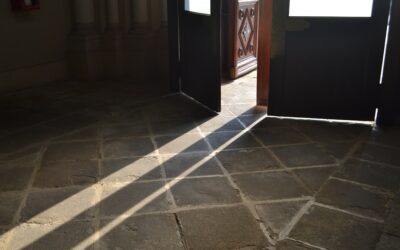
Hardness is a real strength here. Slate scores around 4 to 5.5 on the Mohs scale, making it tough enough to shrug off scratches from pet claws, furniture, and grit tracked in from outside. It resists heat, which is why it shows up around fireplaces and beneath wood stoves. Properly sealed, it also handles moisture well, so it earns its keep in bathrooms, entryways, kitchens, and even covered patios.
That said, slate is not indestructible. Cheaper multicolor stone can flake or “spall” at the surface over time, shedding thin layers if the quality is poor. Buying dense, gauged tile from a reputable supplier minimizes this. Because slate is naturally cool and hard underfoot, many homeowners pair it with radiant floor heating, which transforms a chilly stone surface into one of the coziest floors in the house.
Installation Essentials
Setting slate is more demanding than laying ceramic. A dead-flat, rigid subfloor is critical, since flexing can crack the stone or its grout lines. Installers typically use a cement backer board over plywood or a mortar bed, then set tiles in a polymer-modified thinset with full coverage under each piece. Back-buttering, or spreading thinset directly onto the tile back, helps prevent hollow spots that lead to cracks.
Layout matters because of slate’s irregular faces. A good installer dry-lays the tiles first, blending colors from multiple boxes so no cluster of dark or light pieces stands out. Grout joints of one-eighth to three-eighths inch are common, and a non-sanded or sanded grout is chosen based on joint width. Cleft slate should always be sealed before grouting so grout haze wipes off the textured surface cleanly.
Sealing and Ongoing Maintenance
Sealing is the single most important thing you will do for a slate floor. Because the stone is porous, it needs an impregnating penetrating sealer applied at installation and refreshed every one to three years depending on traffic. Many homeowners also apply a topical enhancing sealer, which deepens the colors and adds a soft sheen, making those rusts and golds pop. A quick water-drop test tells you when it is time to reseal: if water soaks in rather than beading, the floor is thirsty.
Daily care is refreshingly simple. Sweep or vacuum regularly to remove abrasive grit, then mop with a pH-neutral stone cleaner. Avoid vinegar, bleach, and generic tile cleaners, since acids etch the stone and strip sealer. For textured cleft slate, a soft-bristle brush helps lift dirt from the low points. With minimal effort, a sealed slate floor stays handsome for generations, which is a big part of its long-term value.
Pros, Cons, and Design Considerations
The case for slate is strong: it is uniquely beautiful, extremely durable, naturally slip-resistant when cleft, and it adds tangible resale appeal. It also works with nearly any decor, from farmhouse to industrial loft. Few materials feel as grounded and permanent underfoot.
Still, weigh the trade-offs before you commit. Slate is heavy, so upper floors may need structural review. It is cold and hard, which can be tough on dropped dishes and bare feet without radiant heat. And the required sealing schedule, while easy, is a recurring chore that laminate or luxury vinyl skips. Consider these points against your lifestyle, and you will know whether this timeless stone belongs in your home.
Is Slate Right for Your Project?
If you want a floor with genuine character that can withstand kids, pets, and decades of foot traffic, natural slate floor tiles deserve a place on your shortlist. They shine in high-use, moisture-prone zones where cheaper materials struggle, and they only look better as they wear in. Order a few loose samples, view them in your own light at different times of day, and run the water-drop and scratch tests so you know exactly what you are buying.
Plan your budget with the full installed cost in mind, choose gauged stone from a trusted source, and commit to that first quality seal. Do those three things, and your natural slate floor tiles will repay the investment with a surface that feels both rugged and refined, one that your home will wear proudly for many years to come.
Prefer to explore on your own?
See how new flooring looks in your actual room in seconds — free, no signup.
Try the free Floor Studio →