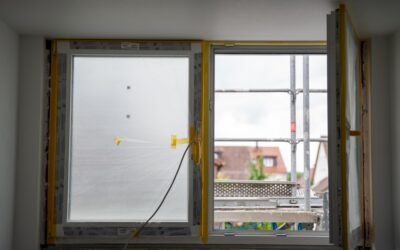
The wrong window type for your project can add $4,000 in trim repair, water damage, or worse. The decision between new construction vs replacement windows turns on one question: are you keeping the existing window frame, or removing it down to the studs? Get that wrong and you either waste money on overkill or leave gaps where water enters the wall. After two decades of remodel and new build work, here is the clear breakdown.
Part of our Windows & Doors guide — explore the full guide →
- The Core Difference
- When New Construction Windows Are Right
- When Replacement Windows Are Right
- How to Inspect Your Existing Frames
- Energy Performance Comparison
- Cost Per Window Breakdown
- Performance Trade-Offs
- Brand Considerations
- Common Installation Mistakes
- What About Hybrid Situations
- Permits and Inspections
- Final Decision Framework
The Core Difference
New construction windows have an integrated nailing fin — a flange of vinyl or aluminum extending around the frame perimeter. The fin nails to the rough framing under the siding, creating a weather-tight seal at the structural opening.
Replacement windows (also called insert windows or pocket windows) have no nailing fin. They slide into the existing window frame and screw to the side jambs. The original exterior trim and siding stay untouched.
When New Construction Windows Are Right
- Building a new home or addition
- The existing frame is rotted or damaged beyond repair
- You are doing whole-wall renovation with siding replacement
- You want to change the window size or shape
- The existing frame is so out of square that a replacement insert will not seal
Installation requires removing exterior siding and trim, often interior trim too. Expect to repair stucco, brick mold, or fiber cement around the opening. Total cost runs $750-$1,800 per window installed including siding and trim work.
When Replacement Windows Are Right
- The existing frame is structurally sound and square
- You want minimal exterior disruption
- You are replacing single-pane with double or triple-pane glass
- Trim and siding are in good condition or recently updated
- HOA restrictions limit exterior changes
Installation stays inside the house. Pop out interior stops, slide in the new unit, screw to the jambs, caulk, replace stops. Two installers handle 6-8 windows in a day. Cost: $400-$1,200 per window installed depending on size and brand.
How to Inspect Your Existing Frames
Before deciding, inspect what you have. Open the window and look at the side jambs — the vertical surfaces where the sash slides. Probe with a screwdriver. Soft, punky wood means rot, and a replacement insert will not save you. The frame must be solid for an insert to seal properly.
Measure the existing rough opening at three points (top, middle, bottom). If the variance exceeds 1/4 inch, the frame has racked and an insert may not fit square. Either correct the frame or go new construction.
Energy Performance Comparison
New construction windows generally have better U-factors because the entire assembly is engineered for thermal performance. The nailing fin and rough opening seal eliminate air infiltration around the frame.
Replacement windows lose 10-15 percent of their potential efficiency to gaps in the original frame. Even with foam insulation in the cavity, the existing wood frame becomes a thermal bridge. For deep-energy retrofits, new construction wins on performance.
Cost Per Window Breakdown
| Element | New Construction | Replacement |
|---|---|---|
| Window unit (mid-grade) | $350-$700 | $300-$650 |
| Installation labor | $200-$500 | $100-$300 |
| Exterior trim/siding repair | $150-$400 | $0 |
| Interior trim repair | $50-$150 | $0-$50 |
| Total per window | $750-$1,800 | $400-$1,200 |
Across a 12-window home, the difference can range from $4,200 to $7,200 — meaningful enough to warrant careful inspection of every frame before deciding.
Performance Trade-Offs
Replacement windows lose roughly 1-2 inches of glass area on each side. The new frame fits inside the existing one, narrowing the visible glass. For small windows or windows where natural light matters, this can be noticeable.
New construction windows preserve full glass area but require matching exterior trim — which on older homes with custom moldings, original brick, or stone surrounds can run thousands more.
Brand Considerations
Top brands offer both types. Andersen 400 Series and Pella Lifestyle work well in either format. Marvin Essential and Infinity (Marvin’s fiberglass line) are excellent for replacement applications. Pella Reserve and Andersen E-Series carry the high-end premium for new construction.
Avoid box-store private label windows for either application. The hardware fails in 5-7 years and warranty service is essentially nonexistent.
Common Installation Mistakes
- Skipping the flashing tape under nailing fins on new construction
- Not removing exterior caulk around old frame on replacement installs
- Using expanding foam meant for doors instead of low-pressure window foam
- Caulking the exterior weep holes shut
- Mixing up new construction and replacement units
- Failing to shim the unit level and plumb before fastening
What About Hybrid Situations
Sometimes you find one rotted frame in a row of healthy ones. You can mix — install replacement windows where frames are sound and new construction where you must remove and replace. The exterior finish work needs careful planning to keep the look consistent.
Another hybrid is “full-frame replacement” — removing the old window down to the studs but keeping the existing siding. This requires careful work around the opening to integrate flashing under existing siding. Cost falls between the two main options.
Permits and Inspections
Most jurisdictions require permits for any window replacement, regardless of type. Egress windows in bedrooms have minimum size requirements (typically 5.7 sq ft of openable area, 24 inches minimum height). Replacement windows that reduce egress below code create insurance and legal issues during a home sale.
Pull the permit, schedule the inspection, and keep copies. Documented installations help during resale and protect you if the manufacturer ever needs to honor a warranty claim.
Final Decision Framework
The new construction vs replacement windows decision is not a quality contest — both can perform well when matched to the right project. Ask three questions: Is the existing frame solid and square? Is the existing trim and siding worth preserving? Are you trying to maximize energy savings on a deep retrofit? If yes-yes-no, go replacement. If no-no-yes, go new construction. Anywhere in between, get two contractor opinions before committing.