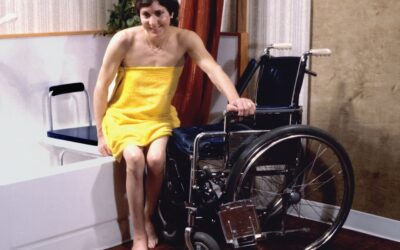
About 80 percent of bathroom falls among seniors happen within three feet of the tub or shower, and the rug is almost always involved — either by sliding out from underfoot or by bunching into a tripping hazard. Choosing the right non slip bathroom rugs for elderly users isn’t a decor decision, it’s a safety decision that ranks alongside grab bars and shower seats. The wrong rug undoes thousands of dollars of bathroom remodeling in a single step.
Part of our Bathroom Remodeling & Flooring guide — explore the full guide →
What Actually Makes a Bathroom Rug Slip-Resistant
The marketing label “non-slip” is meaningless on its own. What you want is a continuous TPR (thermoplastic rubber) or natural latex backing that covers at least 95 percent of the underside, not a few dotted rubber nubs. Dotted backings degrade after 15 to 20 washes and start sliding on tile within six months.
Pile height matters almost as much. Keep it under 1/2 inch so walkers, canes, and rollators don’t catch. Memory foam rugs feel luxurious but compress unevenly, creating an unstable surface for anyone with balance issues — skip them for any household member over 70 or anyone using a mobility aid.
The Best Materials for Senior Bathrooms
Microfiber chenille tops with rubber backing absorb water fast and dry in two to four hours, which prevents the slick film that builds up under wetter rugs. Cotton blends are softer but stay damp longer and can mildew, especially in bathrooms without an exhaust fan rated for the room size (50 CFM minimum for a small bath, 100+ for a larger one).
For walk-in showers, look specifically at:
- Teak slat mats with rubber feet — drain instantly and provide a stable platform
- PVA (polyvinyl alcohol) chamois-style mats that grip wet floors aggressively
- Diatomaceous earth bath stones — rigid, fast-drying, and bacteria-resistant
For the area in front of the vanity or toilet, a low-profile chenille or cut-pile rug with full rubber backing remains the best choice. Tom and Daisy Bath Mats and Genteele’s rubber-backed line both perform well in independent slip testing.
Size and Placement That Prevents Falls
Three locations need rugs in a senior-friendly bathroom: in front of the toilet, in front of the vanity, and directly outside the tub or shower. Each rug should be at least 24 inches wide so the user doesn’t step half-on and half-off, which is the leading cause of edge-related slips.
Avoid runners along narrow walkways. A 60-inch long rug folds and shifts more than two shorter rugs, and the seams between bunched fabric create the exact tripping hazard you’re trying to prevent. Two 20×32 rugs spaced apart almost always outperform one long runner for senior safety.
Features Worth Paying Extra For
Several upgrades genuinely matter for elderly users:
- Beveled or tapered edges that lay flat and don’t curl after washing
- Machine washable up to 140°F so they can be sanitized weekly
- Antimicrobial treatment (look for Silvadur or Ultra-Fresh on the label)
- High-contrast colors against the floor — a dark rug on light tile helps low-vision users see the rug edge clearly
- OEKO-TEX or GREENGUARD certification for off-gassing, especially relevant for sensitive lungs
Skip the bamboo and jute options for primary bathrooms. They look beautiful in catalog photos but absorb water poorly, develop mold underneath, and become slippery once damp.
Care Routines That Maintain Grip
Wash bathroom rugs weekly in cold or warm water with regular detergent — no fabric softener, ever. Softener coats the rubber backing and destroys the grip in three to five wash cycles. Air dry or use the lowest dryer setting; high heat melts TPR backings and causes them to crack within months.
Inspect the underside every month. The moment you see cracking, peeling, or hard spots in the rubber, replace the rug. A degraded backing slides as badly as no backing at all, sometimes worse because the homeowner assumes they’re still protected.
Pairing Rugs with Other Safety Upgrades
Even the best non slip bathroom rugs for elderly users only solve part of the problem. Pair them with grab bars rated to 250 pounds installed in studs (not just drywall anchors), a shower chair or transfer bench, and lever-style faucet handles that don’t require gripping strength. A nightlight near the toilet — the Vicloon plug-in LED runs $8 and lasts years — eliminates the 3 a.m. blind walk that causes so many falls.
If the bathroom has a step into the shower, add a contrasting strip of Frogg Toggs anti-slip tape on the threshold edge. It costs $12 and gives both visual and tactile warning at the most dangerous transition in the room.
What to Replace Right Now
Any rug with a flat woven back, a curled corner, or that you’ve owned more than two years should go in the trash today. Memory foam rugs marketed as “spa style” should follow them. Replace them with rubber-backed chenille for the dry zones and a teak slat mat or diatomaceous earth stone for the wet zone, and the bathroom suddenly stops being the most dangerous room in the house for the people you love.