Falls are the leading cause of injury among adults over 65, and the floor underfoot plays a bigger role in that risk than most families realize. The best flooring for elderly homeowners balances three things at once: slip resistance to prevent falls, a little cushion to soften the impact if one happens, and a flat, threshold-free surface that won’t catch a walker, cane, or shuffling foot. Choosing with those priorities in mind turns a home into a safer place to age in, and it costs no more than choosing on looks alone.
What Makes Flooring Safe for Seniors
Three factors drive the decision. First is slip resistance, especially when wet, since bathrooms and kitchens are where most falls happen. Second is impact absorption; a slightly softer floor reduces the severity of a fall and eases joint strain from standing. Third is a smooth, level surface, because raised transitions and thresholds are classic trip hazards and obstacles for wheels.
Glare and visual contrast matter too. Highly polished, reflective floors can confuse aging eyes and look slippery even when they aren’t, while busy patterns can disorient. A matte finish in a clear, consistent color helps seniors judge the surface accurately.
Top Flooring Choices for the Elderly
A few materials consistently rise to the top for senior safety:
- Luxury vinyl plank (LVP): warm and slightly forgiving underfoot, available in slip-resistant textured finishes, fully waterproof, and installable with low-profile transitions. A strong all-around pick at $3 to $7 per square foot for material.
- Cork flooring: naturally cushioned and warm, with good slip resistance and joint-friendly give. Runs $3 to $8 per square foot.
- Rubber flooring: the most impact-absorbing option, common in care settings, excellent slip resistance, ideal for high-risk rooms.
- Low-pile carpet: soft and slip-resistant with good cushioning, but the pile must be low and dense so walkers and wheelchairs glide and no one trips.
- Textured matte tile: only with a high slip-resistance (DCOF) rating, since standard polished tile is too slick when wet.
Flooring to Avoid
Some popular floors work against senior safety. Polished hardwood and high-gloss tile become dangerously slick when wet and produce glare. Thick, plush carpet feels cozy but creates an uneven, soft surface that destabilizes balance and snags walker wheels. Loose area rugs are among the worst offenders for trips and should be removed or firmly secured with non-slip backing and tape.
Anything with raised transition strips between rooms is a hazard. If you must join two materials, use a flush, beveled transition no higher than a quarter inch, ideally with a contrasting color so it’s visible.
Slip Resistance and Texture
For hard floors, look for a slip-resistance rating; tile measures this as a dynamic coefficient of friction (DCOF), and 0.42 or higher is the common benchmark for floors that may get wet. For vinyl, choose textured, embossed finishes rather than smooth glossy ones. In bathrooms specifically, consider rubber or textured slip-rated tile, and add grab bars and a non-slip mat regardless of the floor.
A matte finish does double duty: it cuts glare that confuses aging eyes and tends to grip better than a glossy surface. When you shop samples, test them slightly damp with your hand to feel the difference in grip.
Cost Considerations
Senior-safe flooring spans a wide budget. As installed baselines, low-pile carpet runs $4 to $8 per square foot, luxury vinyl plank $5 to $9, cork $6 to $10, and rubber flooring $6 to $12. Removing old thresholds and creating flush transitions adds modest labor but pays off in safety.
If aging in place is the goal, weigh these costs against the alternative. A single fall can mean a hospital stay, surgery, or a move to assisted living, so spending a little more on a slip-resistant, cushioned floor is genuinely preventive.
How to Choose for Your Situation
Match the floor to the room and the resident’s needs. For an active senior, waterproof slip-resistant LVP throughout the main living areas offers the best blend of safety, easy cleaning, and value. For someone with significant fall risk or mobility aids, rubber or cork in bathrooms and kitchens adds crucial cushioning, with low-pile carpet in bedrooms for warmth and grip.
Whatever you choose, eliminate thresholds, secure or remove loose rugs, pick matte finishes, and add bathroom grab bars. The best flooring for elderly homeowners is the one that quietly removes hazards while still feeling like a comfortable home, and the right combination of slip resistance, cushion, and flat transitions does exactly that.
Room-by-Room Safety Priorities
Each room carries a different risk profile, so tailor the floor accordingly. Bathrooms are the highest-risk space in any home, combining water, hard surfaces, and frequent standing-to-sitting movement; here, slip resistance is everything. Choose textured slip-rated tile or rubber, add a non-slip bath mat, and install grab bars near the toilet and in the shower regardless of the floor.
Kitchens see spills and long periods of standing, so a slightly cushioned, slip-resistant floor like LVP or cork eases joints and reduces fall risk. Bedrooms benefit from warmth and quiet footing, where dense low-pile carpet shines. Hallways and stairs demand secure, consistent footing and good visual contrast; mark stair edges clearly and ensure runners are firmly fastened, since stairs are where falls turn most serious.
Designing for Aging in Place and Wheelchairs
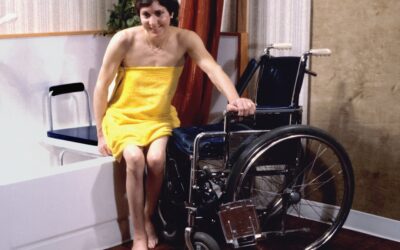
If mobility aids are part of the picture now or may be in the future, design the whole floor plan with them in mind. Walkers and wheelchairs need hard, smooth, flush surfaces to roll freely; thick carpet and raised thresholds fight every push. Hard floors like LVP, sealed cork, and slip-rated tile let wheels glide, and removing thresholds creates the continuous flat path that mobility devices require.
Plan for the long term even if it isn’t needed yet. Choosing a single consistent flooring height throughout the main living level, with flush beveled transitions no higher than a quarter inch, means a home stays accessible if circumstances change, without a costly second renovation. Pair the flooring with adequate, even lighting that eliminates shadows and glare, since vision and footing work together, and good light helps aging eyes read the surface accurately and step with confidence.
Prefer to explore on your own?
See how new flooring looks in your actual room in seconds — free, no signup.
Try the free Floor Studio →