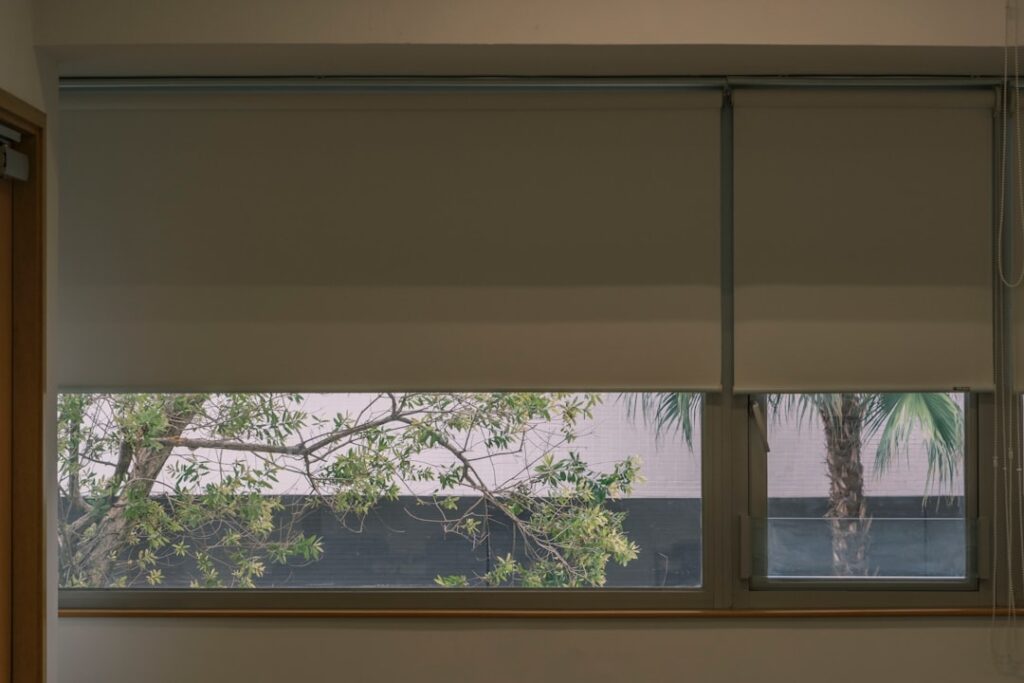
Norman roller shades sit in a sweet spot most homeowners underestimate: they cost less than motorized drapery yet ship with fabrics and mechanisms usually reserved for custom workrooms. Norman is a manufacturer, not a retailer, so you buy their shades through dealers like Blinds.com, Select Blinds, and thousands of local design studios. That distinction matters because pricing, warranty handling, and fabric availability all flow from Norman even when the box says something else.
I have installed and specced these across kitchens, media rooms, and sunrooms, and the recurring surprise is fabric quality at the price point. A basic 3-foot by 4-foot Norman roller shade runs roughly $120 to $220 depending on fabric and lift, which undercuts many boutique brands offering comparable openness factors and hardware.
Who Norman Is and Why the Brand Matters
Founded in 1979, Norman built its reputation on shutters (their Woodlore composite line is everywhere) before expanding into soft window treatments. That manufacturing depth shows up in the roller line as tighter fabric welds, cleaner hem bars, and a limited lifetime warranty that actually covers the clutch and motor mechanisms, not just the fabric.
Because Norman controls its own factories, lead times are usually 2 to 3 weeks rather than the 4 to 6 weeks common with fully outsourced brands. If a room needs eight matched shades, that consistency in dye lots and hardware finish is worth paying attention to.
Fabric Options: Light Control Is Everything
Fabric choice drives 80 percent of how a roller shade performs. Norman groups its offerings into four practical categories, and picking the wrong one is the single most common regret I see.
- Light-filtering: Softens daylight and preserves privacy during the day while glowing at night. Best for living rooms and dining spaces. Expect a semi-opaque look with a warm cast.
- Room-darkening: Blocks most light but allows a faint halo at the edges. A strong choice for bedrooms where total blackout is not essential.
- Blackout: An opaque, coated fabric that stops essentially all light through the material itself. Pair it with side channels or an outside mount to kill light gaps.
- Solar screen: A woven mesh rated by openness percentage. It cuts glare and UV while keeping your view outward.
Solar screen openness is where people get tripped up. The rating describes how much of the weave is open space:
- 1% openness: Tightest weave, maximum glare and heat rejection, but the outward view is dim. Great for west-facing home offices with screen glare.
- 3% openness: The all-rounder. Balanced view, solid UV blocking, and daytime privacy. If you cannot decide, choose this.
- 5% openness: Most open weave, best view through, least privacy. Reduce use in bedrooms because people can see silhouettes at night when interior lights are on.
One field note: a lower openness percentage generally means better daytime privacy but worse nighttime privacy across every solar fabric. No solar screen gives privacy after dark with the lights on, so do not sell them into bedrooms on that promise.
SmartFit Cordless and Motorization
Norman’s headline convenience feature is SmartFit, their spring-assisted cordless lift. There are no dangling cords, which matters if you have kids or pets, and it satisfies current U.S. child-safety cord standards without extra hardware. You simply grab the hem bar and glide it up or down; a smooth clutch holds position anywhere along the run.
For motorization, Norman offers rechargeable battery motors and hardwired options. The battery motor typically holds a charge for 6 to 12 months of normal use before you top it off with a USB cable, and it pairs with a handheld remote, a wall switch, or a smart hub. Integration works with the common ecosystems through a bridge, so you can schedule shades to drop at 3 p.m. on hot afternoons to shed solar heat.
Rough upgrade costs to budget:
- Cordless SmartFit: often standard or a small add-on, figure $0 to $30 per shade.
- Battery motorization: roughly $150 to $250 per shade above the base price.
- Hardwired motorization: $200 to $350 per shade, plus an electrician if you lack in-wall power.
Cassette, Fascia, and Hem Bar Choices
The exposed roll of fabric at the top of a shade is not everyone’s favorite look, so Norman offers ways to hide it. A fabric-wrapped or aluminum cassette (sometimes called a fascia) caps the roll for a finished, architectural edge, and it also closes the light gap that forms above the fabric on room-darkening jobs. Budget roughly $20 to $50 per shade for a cassette, and consider it standard in bedrooms.
Hem bars come in a few flavors too. The most common is a fabric-wrapped bar that blends into the shade, but you can also spec an exposed aluminum bar in a matching finish for a crisper, more modern line. On solar screens I usually leave the bar exposed; on light-filtering living-room fabrics I wrap it. Little details like this are where Norman’s finish consistency pays off, because the cassette, bar, and bracket all arrive in the same dye and powder-coat batch.
Measuring: Inside Mount vs Outside Mount
Getting the measurement right is the difference between a crisp installation and a light-leaking mess. Use a steel tape, never cloth, and record to the nearest 1/8 inch.
- Inside mount: Measure the exact window opening width at the top, middle, and bottom, then use the narrowest. Measure height at left, center, and right. Do not take a deduction; the factory subtracts the correct amount for clearance. You need roughly 1.5 to 2 inches of flat depth for the brackets to sit fully recessed.
- Outside mount: Decide your coverage, then add at least 2 inches on each side and 3 inches at the top to control light gaps. Report the exact size you want the shade to be; the factory builds to that number.
Inside mounts look tailored and show off nice window trim, but they let a sliver of light past the fabric edges. Outside mounts block far more light and visually enlarge a window, which is why bedrooms and media rooms usually go outside mount with a blackout fabric.
Pros and Cons
No product is universally right. Here is the honest ledger after living with these shades.
- Pros: Excellent fabric selection at mid-tier pricing, clean cordless operation, dependable warranty, quick lead times, and a wide finish range for hem bars and cassettes.
- Cons: Inside mounts leak edge light, the entry fabrics feel thinner than premium lines, solar screens offer no nighttime privacy, and motorized options push the price into cellular-shade territory.
Cleaning and Long-Term Care
Roller shades are among the lowest-maintenance treatments you can own, but the fabric type dictates the method. For light-filtering and room-darkening fabrics, a monthly pass with a vacuum brush attachment on low suction keeps dust from settling into the weave. Spot-clean marks with a barely damp microfiber cloth and mild dish soap, then let the shade hang fully extended until dry so no moisture rolls up into the tube.
Solar screens are the easiest of all because the vinyl-coated mesh wipes clean with a damp sponge and shrugs off kitchen grease. Blackout fabrics need the gentlest touch; scrubbing can crack the coating and create pinholes that leak light. If a shade ever refuses to retract smoothly, the clutch usually just needs the fabric re-rolled squarely rather than a warranty claim. Treated this way, a Norman shade easily lasts 10 to 15 years.
How Norman Roller Shades Compare on Value
Against Bali or Levolor at big-box stores, Norman generally wins on fabric hand-feel and warranty responsiveness while costing a little more. Against high-end brands like Hunter Douglas Designer Roller Shades, Norman saves you 30 to 50 percent for a result most homeowners cannot distinguish across a room. For a whole-house project, that gap funds motorization on the two or three windows that actually benefit from it.
My default recommendation for a typical home: 3% solar screen in living and dining spaces, room-darkening or blackout on an outside mount for bedrooms, and SmartFit cordless throughout. Add battery motors only on hard-to-reach windows over a stairwell or above a kitchen sink where reaching a hem bar is a daily annoyance. Spec it that way and Norman roller shades deliver a tailored, low-maintenance result that holds up for years.