A bay window is one of a home’s most beautiful features, but dressing it can be surprisingly tricky. The angled configuration, multiple panels, and often deep sills make choosing the right bay window shades more involved than covering a single flat window. The good news is that with the right shade style and mounting approach, you can control light and privacy while showcasing the architecture rather than fighting it. This guide walks through the best shade types, measuring, mounting, and what to budget.
Part of our Windows & Doors guide — explore the full guide →
- Understanding Your Bay Window
- Best Shade Types for Bay Windows
- Inside Mount Versus Outside Mount
- Measuring Bay Windows Accurately
- What Bay Window Shades Cost
- Cordless and Motorized Options
- Insulation and Energy Efficiency
- Common Mistakes to Avoid
- Light Control and Privacy Choices
- Adding Curtains for a Layered Look
- Making the Right Choice for Your Bay
Understanding Your Bay Window
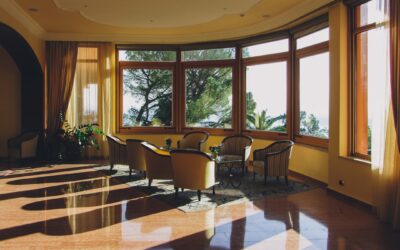
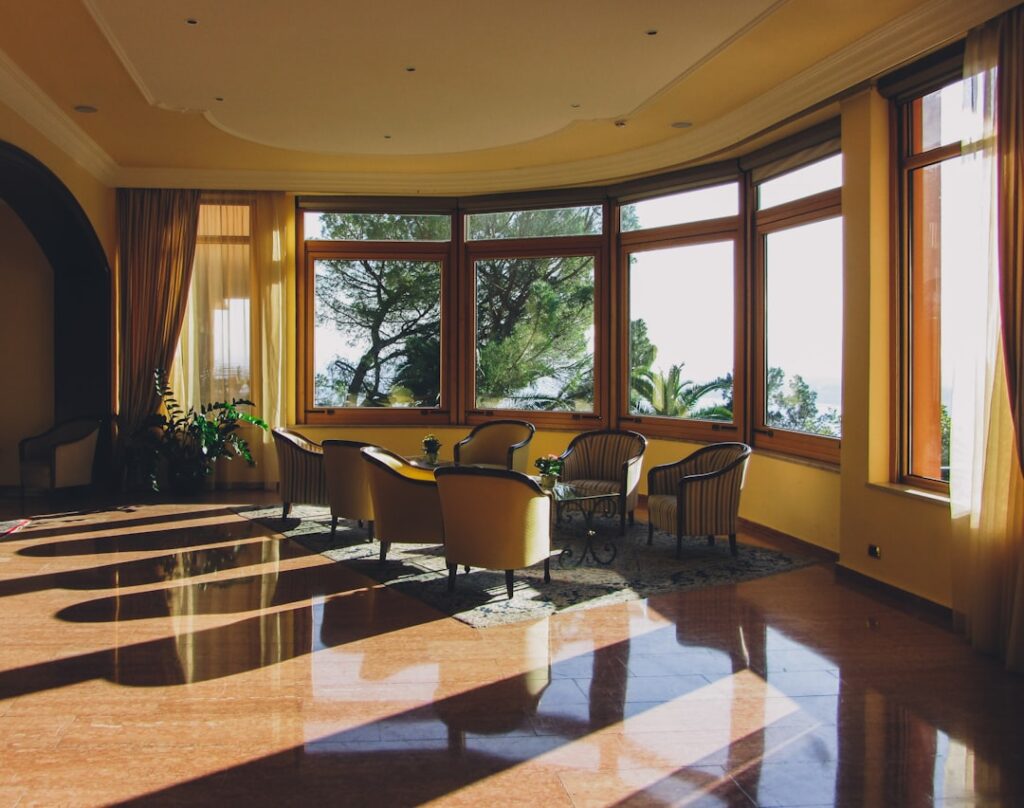
A bay window projects outward from the wall, typically with a large center window flanked by two angled side windows, most often at 30-, 45-, or 90-degree angles. A bow window is similar but curved, using four or more panels for a gentle arc. Because each panel is a separate opening, most bay windows are treated with individual shades on each section rather than one continuous covering. Knowing your angles and panel count is the starting point for every decision that follows.
Best Shade Types for Bay Windows
Several shade styles work well in a bay, each with trade-offs in light control, insulation, and look.
- Cellular (honeycomb) shades: The most popular choice. Their compact stack, clean lines, and excellent insulation suit the multiple panels and reduce heat loss through all that glass.
- Roller shades: Simple, modern, and inexpensive, with a slim profile that fits each panel neatly. Available in light-filtering to blackout fabrics.
- Roman shades: Soft fabric folds add warmth and a tailored, upscale look, ideal for living and dining rooms.
- Faux wood or wood blinds: Offer a classic look and precise light control with tiltable slats, though they stack thicker at the top.
- Solar shades: Reduce glare and UV while preserving the view, great for sunny bays where you do not want to lose the outlook.
Inside Mount Versus Outside Mount
How you mount shades in a bay makes a big difference in appearance and function.
Inside mount places each shade within its window frame. This is the cleaner, more built-in look and is preferred for bay windows because it keeps shades from colliding at the angled corners. It requires enough frame depth, usually at least 1.5 to 2 inches, to recess the shade. Deep sills on bays usually accommodate this easily.
Outside mount attaches shades to the wall or trim above each window. It is used when frame depth is too shallow or when you want to maximize coverage and block more light. In a bay, outside-mounted shades on adjacent panels can interfere at the corners, so inside mount is almost always the smarter route.
Measuring Bay Windows Accurately
Precise measurement is critical because each panel may differ slightly and the angled corners leave little room for error.
- Measure each panel separately. Never assume the panels are identical; measure width at top, middle, and bottom of every opening.
- Record the narrowest width for inside-mount shades so they clear the frame.
- Check the corners. Confirm that adjacent shades will not overlap or hit at the angled joints; you may need to order shades slightly narrower.
- Measure depth. Verify enough recess for an inside mount and for the shade hardware.
- Double-check heights for each panel individually, as bays are rarely perfectly uniform.
What Bay Window Shades Cost
Because a bay needs multiple shades, costs add up quickly compared to a single window. Pricing depends on style, fabric, and whether you choose cordless or motorized options.
- Roller shades: $25 to $80 per panel.
- Cellular shades: $40 to $150 per panel.
- Roman shades: $80 to $250 per panel.
- Wood or faux wood blinds: $50 to $200 per panel.
A three-panel bay therefore commonly runs $150 to $600 for mid-range shades, more for premium fabrics, motorization, or wide panels. Professional measuring and installation adds $100 to $300. Motorized shades, which are wonderful for hard-to-reach bay panels, add $100 or more per shade.
Cordless and Motorized Options
Bay windows often sit above furniture or deep sills that make reaching cords awkward, and multiple cords create a cluttered look. Cordless shades, which lift with a gentle push or pull, clean up the appearance and improve child and pet safety. Motorized shades take it further, letting you raise and lower all panels together with a remote or smartphone, and they can be scheduled to manage heat and privacy automatically. For a large or high bay, motorization is one of the most appreciated upgrades.
Insulation and Energy Efficiency
Bay windows have a lot of glass and often a projecting, less-insulated structure, so they can be a significant source of heat loss and gain. Cellular shades shine here because the honeycomb pockets trap air, adding insulating value that can noticeably reduce drafts in winter and heat in summer. Double-cell shades and those with side tracks perform best. If energy efficiency in your bay is a concern, cellular shades are the standout choice.
Common Mistakes to Avoid
- Measuring only one panel. Panels differ; measure each independently.
- Ignoring corner clearance. Shades that overlap at the angles bind and look messy.
- Choosing bulky shades for narrow panels. Thick blinds crowd small side windows; slim rollers or cellulars fit better.
- Forgetting the view. Bays are often about the outlook; solar or light-filtering shades preserve it.
- Overlooking safety. Skip corded shades near seating and where children play; go cordless.
Light Control and Privacy Choices
How much light and privacy you want in the room narrows the field considerably, and bay windows often serve rooms where this matters, like bedrooms and living rooms. Shade fabrics fall into a few broad categories that determine the result.
- Sheer and light-filtering: Soften and diffuse daylight while preserving brightness; offer daytime privacy but not nighttime.
- Room-darkening: Block most light for better privacy and glare control, ideal for living rooms and media spaces.
- Blackout: Nearly eliminate light for bedrooms, though gaps at the panel edges of a bay can let slivers through.
- Solar/screen: Cut UV and glare while keeping the outward view, perfect for a sunny bay you do not want to close off.
In a bay bedroom, blackout cellular shades with optional side channels give the best darkness. In a living-room bay meant to showcase a view, solar shades or light-filtering fabrics keep the outlook while taming harsh sun. Many homeowners choose a dual or layered approach, pairing a sheer with a blackout on the same window for full flexibility.
Adding Curtains for a Layered Look
Shades handle the function, but many bay windows look their best when shades are layered with drapery panels. Curtains framing the outer edges of the bay add softness, height, and a finished, decorated feel that bare shades alone cannot provide. Because installing a curved or angled curtain rod across a bay is tricky, a common solution is to mount stationary side panels at the two outer corners purely for decoration, letting the shades on each window do the light-blocking work.
Specialty bay window curtain rods, either flexible or with adjustable-angle connectors, follow the shape of the bay for a fully curtained look. If you go this route, mount the rod high and wide so the panels frame rather than crowd the windows. Layering shades for function with drapery for softness is the designer’s approach to making a bay window feel like the intentional focal point it deserves to be.
Making the Right Choice for Your Bay
For most homeowners, individual inside-mount cellular shades hit the sweet spot for a bay window, combining a clean look, strong insulation, and easy corner clearance. If you want softness and warmth in a formal room, Roman shades deliver. For sunny bays with a great view, solar shades protect furnishings without sacrificing the outlook. And in tall or hard-to-reach bays, spend the extra on cordless or motorized operation.
Measure each panel carefully, respect the corner clearances, and match the shade style to how you use the room, and your bay window will become the striking, comfortable focal point it was meant to be, with light and privacy fully under your control.