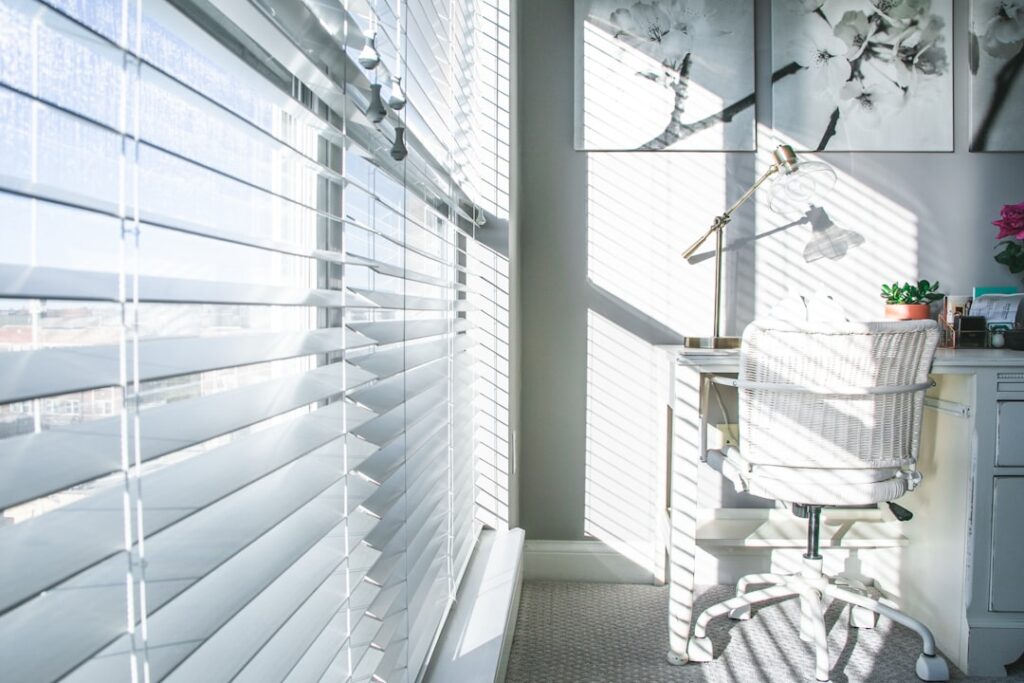
Blackout cellular shades combine two valued features in one window treatment: near-total light blocking and strong insulation from their honeycomb construction. The distinctive cells trap air to slow heat transfer, while an opaque fabric backing keeps rooms dark. This guide explains cell sizes, R-values, mounting, and how to defeat the light leaks that plague many blackout shades.
- How Cellular Shades Insulate
- Understanding Cell Sizes
- R-Value and Energy Savings
- Why Choose Blackout Over Light-Filtering
- The Light Leak Challenge
- Measuring for Maximum Darkness
- Cordless and Top-Down Options
- Fabric Colors and Room Effect
- Installation Overview
- Cost and Value
- Single-Cell vs. Double-Cell Construction
- Reducing Noise With Honeycomb Cells
- Measuring Stack Height and Sill Coverage
- Best Rooms for Blackout Cellular Shades
- Top-Down Bottom-Up Operation Explained
- Fabric Backing Types and Darkness
How Cellular Shades Insulate
Cellular shades, also called honeycomb shades, are built from pleated fabric that forms hollow cells when viewed from the side. Those cells trap a layer of still air between the room and the cold or hot window glass, reducing heat transfer. This makes them one of the most energy-efficient window coverings available, and the blackout versions add an opaque liner that also blocks light.
Understanding Cell Sizes
Cell size affects both insulation and appearance:
- 3/8 inch: Smaller cells for a finer look and shorter windows.
- 1/2 inch to 9/16 inch: A popular midsize offering good insulation.
- 3/4 inch: Larger cells that trap more air for the best insulation on tall windows.
- Double-cell designs: Two rows of cells for maximum energy efficiency.
Larger and double cells insulate best, so choose them for drafty or north-facing windows in cold climates.
R-Value and Energy Savings
Cellular shades are rated by R-value, a measure of insulating resistance. Single-cell blackout shades offer roughly R-3 to R-4, and double-cell designs can reach R-5 or higher, compared with about R-1 for a bare double-pane window. The Department of Energy notes that cellular shades are among the most effective window coverings for cutting heat loss, potentially reducing heating energy loss through windows significantly when closed on cold nights.
Why Choose Blackout Over Light-Filtering
Standard cellular shades diffuse light softly, but blackout versions add an opaque backing or a metallic mylar liner to block nearly all light. This makes them ideal for:
- Bedrooms, especially for shift workers and light sleepers
- Nurseries where daytime naps require darkness
- Home theaters and media rooms
The blackout liner does not reduce the insulating benefit; you get both darkness and energy efficiency in one shade.
The Light Leak Challenge
Even the darkest shade fabric cannot stop light that sneaks around the edges. On a standard inside-mount cellular shade, light leaks along the sides and top where the fabric does not touch the frame. Solutions include:
- Choose an outside mount that overlaps the frame by 2 to 3 inches per side.
- Add side channels or light-blocking tracks that guide and seal the fabric edges.
- Select shades with a wider frame overlap and a top valance to block the headrail gap.
For a true blackout bedroom, side channels are the most effective upgrade.
Measuring for Maximum Darkness
Because edge gaps are the enemy of blackout performance, measurement matters:
- For an inside mount, accept that some edge light will leak unless you add channels.
- For an outside mount, measure the opening and add 2 to 3 inches on each side and 3 inches above.
- Mount the shade so the lowered hem overlaps the sill for a complete seal.
Outside mounts sacrifice a little of the clean recessed look but deliver far better darkness.
Cordless and Top-Down Options
Modern cellular shades commonly come cordless, which is safer for children and gives a clean face with no dangling cords. A popular feature is top-down/bottom-up operation, letting you lower the shade from the top for daylight and privacy at once. Motorized versions add remote and smart-home control, convenient for high windows or programmed schedules that close the shades at bedtime.
Fabric Colors and Room Effect
Blackout cellular shades come in whites, neutrals, and richer tones. The exterior-facing side is often white or neutral for a uniform look from the street, while the interior can carry a color. Lighter colors reflect heat in summer, and the honeycomb structure works regardless of color. Choose a shade that blends with your trim for a subtle look or contrasts for a design accent.
Installation Overview
- Mark bracket positions level; use an outside mount for the best blackout coverage.
- Anchor brackets into studs or use wall anchors in drywall.
- Snap the headrail into the brackets and confirm smooth operation.
- Install any side channels along the fabric edges to seal light gaps.
- Add the valance to cover the headrail and test full up-and-down travel.
Cost and Value
Blackout cellular shades typically run $40 to $150 per standard window, with double-cell, motorized, or top-down features raising the price. Side channels add $20 to $50 per window. While pricier than basic roller shades, their dual benefit of darkness plus meaningful energy savings often pays back through lower heating and cooling bills, especially in extreme climates.
Single-Cell vs. Double-Cell Construction
The number of cell rows changes both insulation and thickness. Single-cell shades have one row of honeycombs and stack more compactly, showing more glass when raised. Double-cell shades have two rows, trapping additional air for a higher R-value and better sound dampening, at the cost of a slightly thicker stack. In extreme climates or on large north-facing windows, the double-cell upgrade pays for itself in comfort and energy savings; in milder settings, single-cell is often plenty.
Reducing Noise With Honeycomb Cells
An underrated benefit of cellular shades is sound absorption. The trapped air in the honeycomb cells dampens outside noise, making them a good choice for bedrooms facing busy streets or for home offices where quiet matters. Double-cell blackout versions provide the most noise reduction of any cellular shade. While they will not soundproof a room, the noticeable softening of traffic and outdoor sound is a welcome bonus alongside the darkness and insulation.
Measuring Stack Height and Sill Coverage
When raised, a cellular shade collapses into a compact stack at the top of the window, typically just 2 to 4 inches, which is one of the smallest stacks of any shade type. This lets in nearly the full view when open. When lowered for a blackout bedroom, make sure the shade extends slightly past the sill on an outside mount so light cannot spill under the bottom rail. Accounting for both stack height and sill overlap ensures the shade performs at both extremes.
Best Rooms for Blackout Cellular Shades
These shades shine anywhere darkness and efficiency both matter. Primary and children’s bedrooms benefit from the deep darkness for better sleep, home theaters gain from glare-free viewing, and nurseries need reliable daytime darkness for naps. In climates with harsh winters or scorching summers, the insulation value makes them worthwhile in any room with a lot of glass. Their quiet, energy-saving, light-blocking combination fits more rooms than almost any other single treatment.
Top-Down Bottom-Up Operation Explained
A popular feature on cellular shades is top-down/bottom-up movement, which uses two rails so you can lower the shade from the top or raise it from the bottom. This lets you drop the top a few inches for daylight while keeping the lower portion closed for privacy, ideal for street-facing bedrooms and bathrooms. On a blackout shade, this flexibility means you can enjoy soft high light during the day and still pull the shade fully closed for total darkness at night.
Fabric Backing Types and Darkness
Blackout cellular shades achieve darkness through the liner. Some use an opaque fabric backing, while premium versions add a thin metallic mylar layer inside the cells that reflects heat and blocks essentially all light. The mylar-lined shades also boost the insulating R-value by reflecting radiant heat. If maximum darkness and efficiency are the goal, look specifically for shades advertising a mylar or foil-lined blackout cell rather than just a darker fabric.
To conclude, blackout cellular shades are the standout choice when you want both a genuinely dark room and strong window insulation. Pick double-cell designs for the best R-value, choose an outside mount with side channels to defeat light leaks, and consider cordless top-down operation for safety and flexibility. The honeycomb structure quietly trims your energy bills while giving you the deep darkness that makes for better sleep.