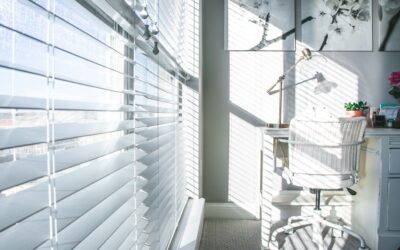
Windows are the weakest thermal link in most homes, bleeding heated and cooled air right through the glass. Honeycomb roller shades tackle that problem head-on by trapping insulating air in their signature cellular pockets while rolling up cleanly out of the way. If you want the energy performance of a cellular shade with the tidy operation of a roller, honeycomb roller shades bridge the gap. This guide explains how they work, the cell sizes and opacity options, real energy savings, and what to expect on cost and installation.
What Makes Honeycomb Shades Different
The name describes the structure. Viewed from the side, the fabric forms rows of hexagonal cells that look like a honeycomb. Those cells trap a layer of still air between the room and the window glass, and that trapped air is what does the insulating. It is the same principle as a double-pane window or a puffy winter jacket: dead air is an excellent insulator.
Traditional cellular shades stack into pleats as they rise. The roller-style variation combines that cellular fabric with a smooth roll-up mechanism, so the shade wraps neatly rather than folding. You get the thermal benefit of the honeycomb cells with the clean, compact stack of a roller shade, which many homeowners prefer for a modern, uncluttered window.
Single vs Double Cell
Cell configuration affects both insulation and appearance. The two main options:
- Single-cell: one row of larger cells. Lighter, with slightly larger pleats, and a good balance of insulation and cost. Well suited to most rooms and larger windows.
- Double-cell: two smaller cells stacked front to back, creating two air pockets. Higher insulation value thanks to the extra trapped-air layer, with smaller, tighter pleats. The better pick for extreme climates or very large windows that lose a lot of heat.
Cell size ranges from about 3/8 inch up to 3/4 inch. Larger cells suit big windows and give a bolder look; smaller cells fit compact windows and offer a finer texture. For a cold-winter or hot-summer climate, double-cell earns its modest price premium through better year-round performance.
Opacity: From Light-Filtering to Blackout
Honeycomb shades come in three light control levels, and you can mix them across a home to suit each room. Light-filtering fabric softens and diffuses daylight, giving privacy while keeping a room bright, ideal for living rooms and kitchens. Room-darkening blocks most light for bedrooms and media rooms. Blackout versions use an opaque backing to block essentially all light through the fabric, the top choice for nurseries and shift workers.
Keep in mind that even blackout fabric leaks a little light around the edges on an inside mount. For true darkness, pair a blackout honeycomb shade with side channels or choose an outside mount that overlaps the frame. Match opacity to each room’s job rather than buying one type for the whole house.
Real Energy Savings
This is where honeycomb shades justify themselves. Because the cells trap air, they slow heat transfer through the window in both directions. The Department of Energy identifies cellular shades as among the most effective window coverings for insulation, capable of significantly reducing heat loss through windows in winter and cutting solar heat gain in summer.
In practical terms, drawing honeycomb shades on a cold night keeps radiant heat from escaping through the glass, easing the load on your furnace. On a hot afternoon, closing them on sun-facing windows blocks heat before it enters, so your air conditioner runs less. Homeowners with large windows or single-pane glass see the biggest comfort and cost improvements. Double-cell shades in a well-sealed mount deliver the strongest results.
Cordless, Motorized, and Top-Down Options
Operating systems have come a long way. Cordless lift is now standard and strongly recommended in homes with children or pets, since dangling cords are a safety hazard; you simply push the bottom rail up or pull it down. Continuous-loop cord systems remain available for very large or heavy shades.
Motorized shades add rechargeable-battery or hardwired motors you control with a remote, wall switch, app, or voice assistant, and they can be programmed to open and close on a schedule to maximize energy savings automatically. A popular feature unique to cellular styles is top-down/bottom-up operation, which lets you lower the shade from the top for daylight and privacy at once, perfect for street-facing windows.
What They Cost
Pricing depends on size, cell type, opacity, and lift system. Typical ranges per window in 2026:
- Basic single-cell, cordless, light-filtering: $40 to $100
- Double-cell or room-darkening, cordless: $80 to $180
- Blackout with premium features: $120 to $250
- Motorized: add $100 to $300 per shade
Custom-sized shades cost more than stock sizes but fit far better, which matters for both looks and insulation. Because they lower energy bills, honeycomb shades often pay back part of their cost over time, especially in homes with poor windows and high heating or cooling loads.
Fabric, Color, and Cleaning
The fabric does more than set the look; it determines how the shade wears and how easy it is to keep clean. Honeycomb shades come in spunlace (a nonwoven, paper-like fabric) and woven varieties. Spunlace holds its shape well and resists fading, while woven fabrics offer richer texture and pattern. Both hold their cellular structure over years of use because the pleats are heat-set during manufacturing. Lighter colors reflect heat and brighten a room, while darker fabrics absorb more solar heat and provide a cozier, more enclosed feel; in a hot climate, lean lighter on sun-facing windows.
Color choice affects the exterior of your home too. From the street, all your shades show their backing, so if curb appeal matters, choose shades with a consistent white or neutral back regardless of the room-side color. Many product lines offer exactly that, letting you coordinate the interior palette room by room while the house presents a uniform face outside.
Cleaning is refreshingly low-effort. For routine care, run a vacuum with a brush attachment on low suction across the cells every few weeks to lift dust. A hair dryer on the cool setting or a can of compressed air blows debris out of the honeycomb pockets, which is the one spot that traps dust a vacuum misses. Spot-clean marks with a lightly dampened cloth and mild soap, then let the fabric air-dry fully before raising the shade, since a wet cell can crease. Avoid soaking the fabric, as excessive moisture can distort the pleats. Handled this way, a quality honeycomb shade stays crisp and functional for a decade or more, and the cordless lift mechanisms are rated for tens of thousands of cycles.
It is worth understanding how honeycomb shades stack up against the alternatives so you know what you are paying for. Compared with standard roller shades, which are a single flat sheet of fabric, honeycomb shades insulate far better because that flat sheet traps no air. Compared with Roman shades, honeycomb offers more insulation and a lighter, cleaner stack, though Roman shades win on tailored, decorative appeal. Faux-wood and aluminum blinds let in light and heat through the gaps between slats and provide almost no insulation, so while they cost less, they do nothing for your energy bills. The closest competitor is the pleated shade, which looks similar but lacks the enclosed air cells, meaning a pleated shade darkens a window without delivering the thermal performance. In short, if insulation and a tidy, modern look are your priorities, honeycomb shades occupy a sweet spot that few other treatments match. The tradeoff is that the cellular fabric can be harder to clean deep inside the cells and is not the right pick if you want a fully opaque, decorative fabric statement, where lined drapes or Roman shades pull ahead.
Measuring and Installing
Accurate measurement is essential. For an inside mount, which gives the cleanest look, measure the window opening width at top, middle, and bottom and use the narrowest, then measure the height in three places. You need adequate depth inside the frame for the headrail, typically 1.5 to 2 inches for a flush mount. For an outside mount, which improves light blocking and insulation, add 2 to 3 inches beyond the frame on each side and above.
Installation is a straightforward DIY task. Most shades mount with brackets and a few screws in 15 to 30 minutes per window using a drill and level. Hit solid framing or use appropriate anchors, and check that the shade operates smoothly before moving to the next window. Get the size right and the mount solid, and honeycomb roller shades reward you with quieter, more comfortable, and cheaper-to-condition rooms for years.