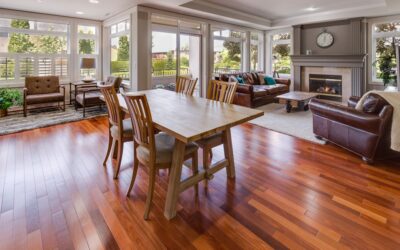
Oak is the most popular hardwood flooring species in the United States, installed in roughly 70% of all hardwood floor projects. Its dominance comes down to availability, durability, and versatility—oak works equally well in a farmhouse kitchen and a modern loft. But not all oak is the same. Here’s everything you need to know about oak wood floors, including the critical differences between red and white oak.
Red Oak vs. White Oak Floors
These are two distinct species with different properties. The choice between them affects appearance, performance, and cost.
Red Oak
- Janka hardness: 1,290 (moderate)
- Grain pattern: Prominent, open grain with sweeping cathedral patterns
- Color: Pinkish-red to light brown. Warm undertone.
- Pore structure: Open pores (not waterproof)
- Cost: $3–$8 per square foot (unfinished solid)
- Best for: Traditional homes, warm color schemes, budget-friendly projects
White Oak
- Janka hardness: 1,360 (slightly harder than red oak)
- Grain pattern: Tighter, more linear grain with ray fleck patterns (especially in rift/quarter-sawn cuts)
- Color: Golden brown to grayish-brown. Neutral undertone.
- Pore structure: Closed pores (naturally water-resistant)
- Cost: $5–$12 per square foot (unfinished solid)
- Best for: Modern/contemporary homes, high-traffic areas, kitchens, gray or cool-toned stains
The Key Differences
Water resistance: White oak has tyloses—cellular growths that block the wood pores. This makes it naturally resistant to water penetration. Red oak’s open pores absorb water readily, making it a poor choice for kitchens, bathrooms, or anywhere moisture is a concern. This single property is why white oak has overtaken red oak in popularity over the last decade.
Stain absorption: Red oak’s open grain absorbs stain unevenly, which can create a blotchy appearance with certain colors—especially grays and cool-toned stains. White oak takes stain more evenly and predictably, which is why it’s the preferred species for the trendy gray and whitewashed floor looks.
Appearance trends: Red oak’s pinkish tone and bold grain read as “1990s” to many designers. White oak’s neutral tone and subtle grain align with current design preferences. This matters for resale value—homes with white oak floors generally appraise higher than those with red oak.
Oak Floor Costs in 2026
Solid Oak Flooring
- Red oak (unfinished): $3–$8/sq ft
- Red oak (prefinished): $5–$10/sq ft
- White oak (unfinished): $5–$12/sq ft
- White oak (prefinished): $7–$14/sq ft
- Rift/quarter-sawn white oak: $9–$18/sq ft
Engineered Oak Flooring
- Red oak engineered: $4–$9/sq ft
- White oak engineered: $5–$12/sq ft
- Wide plank white oak engineered (7″+ width): $8–$16/sq ft
Installation Costs
- Nail-down installation: $3–$6/sq ft
- Glue-down installation: $4–$7/sq ft
- Floating installation (engineered only): $2–$4/sq ft
- Sand and finish on site: $2–$4/sq ft (adds to unfinished material cost)
For a 1,000-square-foot project with prefinished white oak and professional nail-down installation, budget $10,000–$20,000 total.
Oak Floor Finishes
Oil-Based Polyurethane
The traditional choice. Adds a warm amber tone that deepens over time. Extremely durable—3–4 coats provide a hard, glossy or satin surface. Requires 24–48 hours of dry time between coats and off-gases strong VOCs during application. Lasts 7–10 years before refinishing.
Water-Based Polyurethane
Dries clear without adding amber warmth. Lower VOCs and faster dry times (2–4 hours between coats). Slightly less durable than oil-based but newer formulations have closed the gap significantly. Best choice for maintaining the natural color of white oak or achieving cool-toned stain colors. Lasts 5–8 years before refinishing.
Hardwax Oil
A European finish that penetrates the wood rather than sitting on top. Creates a matte, natural look with a soft sheen. Easier to spot-repair than polyurethane—you can touch up scratched areas without refinishing the entire floor. Needs recoating every 2–5 years depending on traffic. Popular for wide-plank white oak floors in modern homes.
Rubio Monocoat
A single-coat hardwax oil that bonds molecularly with the wood. Zero VOC. Available in 50+ colors including popular gray tones. The easiest finish to maintain—spot repairs are invisible. Costs more upfront ($150–$200 per liter, covers about 500 sq ft) but saves on long-term maintenance. The current designer favorite for white oak floors.
Oak Floor Durability
Oak is a hardwood, but it’s not the hardest. At 1,290–1,360 on the Janka scale, oak dents more easily than hickory (1,820), maple (1,450), or Brazilian cherry (2,350). In practical terms:
- High heels will dent oak floors.
- Dropped heavy objects (cast iron pans, tools) leave marks.
- Large dogs with untrimmed nails scratch the finish over time.
- Chair legs without felt pads cause visible wear patterns.
That said, oak’s grain pattern actually hides minor scratches and dents better than smoother-grained woods like maple. And because oak refinishes beautifully, it can be sanded and recoated multiple times over its lifespan.
Solid oak floors (3/4-inch thick) can be sanded and refinished 4–6 times. Engineered oak with a 4mm+ wear layer can be refinished 2–3 times. A well-maintained solid oak floor lasts 80–100+ years.
Best Stain Colors for Oak Floors
On White Oak
- Natural (clear finish): Shows the golden-brown color and grain. Clean, timeless look.
- Special Walnut: Medium-brown tone that’s warm but not too dark.
- Classic Gray: The modern go-to. Achievable with water-based finish or Rubio Monocoat.
- Weathered Oak: Light grayish-brown that looks like driftwood. Very popular in coastal and Scandinavian interiors.
- Jacobean: Deep, rich brown. Formal and traditional.
- Fumed/smoked: Ammonia fuming chemically darkens white oak through a reaction with its tannins. Creates unique depth that stain can’t replicate.
On Red Oak
- Natural (oil-based poly): Embraces the warm, pinkish tone. Best if you like the traditional oak look.
- Provincial: Light-medium brown that tones down red oak’s pink cast.
- Dark Walnut: Deep enough to mask the pink and make red oak look more neutral.
- Ebony: Very dark, almost black. Hides the grain pattern and pink undertone entirely.
Avoid gray stains on red oak. The pink undertone fights against cool gray pigments, often producing a muddy purple or mauve result. If you want gray floors, choose white oak.
Style Pairings
- Modern farmhouse: Wide-plank white oak (5″–7″ width) with a natural or light stain. Pair with white cabinetry, subway tile, and black hardware.
- Mid-century modern: Red oak with a warm walnut stain in standard 3-1/4″ strips. Pair with teak furniture and statement lighting.
- Contemporary minimalist: Rift-sawn white oak with a matte hardwax oil finish. Pair with flat-panel cabinets, concrete accents, and minimal trim.
- Traditional: Red or white oak with a medium-brown stain and satin polyurethane. Pair with raised-panel cabinets, crown molding, and classic furniture.
- Scandinavian: White oak with a white or light gray wash. Pair with light walls, simple furniture, and natural textiles.
Maintenance Tips for Oak Floors
- Sweep or vacuum (hard floor setting) 2–3 times per week to remove grit that scratches the finish.
- Damp mop with a hardwood floor cleaner (Bona, Method Wood, or manufacturer-recommended product). Never use wet mops, steam mops, or vinegar-water solutions.
- Put felt pads under all furniture legs and replace them every 6–12 months.
- Use area rugs in high-traffic zones (entries, hallways, kitchen sink areas).
- Keep indoor humidity between 35–55% to prevent gapping in winter and cupping in summer.
- Refinish when the finish looks worn or scratched through to bare wood—typically every 7–10 years for polyurethane finishes.
- Trim pet nails regularly. Dog nails are the number one cause of premature hardwood floor wear.
Solid vs. Engineered Oak: Which to Choose
Choose solid oak if you have a wood subfloor (plywood or OSB), want maximum refinishing potential, and live in a climate with stable humidity. Solid oak is the traditional choice and the gold standard for longevity.
Choose engineered oak if you’re installing over concrete, below grade (basements), or over radiant heat. Engineered oak’s cross-ply construction resists expansion and contraction better than solid wood. It also works for floating installations where nail-down isn’t possible.
Both options deliver the same visual result once installed. The difference is structural, not aesthetic.
Prefer to explore on your own?
See how new flooring looks in your actual room in seconds — free, no signup.
Try the free Floor Studio →