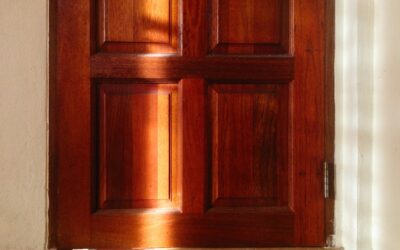
Swing open a well-made oak door and you feel the difference before you see it. There’s a solid heft in the handle and a quiet, damped thud when it closes that a hollow-core builder door never delivers. An oak interior door brings that heft along with a bold, open grain that takes stain beautifully and holds up to decades of daily use. It costs more than the primed MDF slabs stacked at the home center, but for the doors you touch every day, many homeowners decide the upgrade is worth it. Here’s how to choose, finish, and pay for one wisely.
Part of our Windows & Doors guide — explore the full guide →
Red Oak vs White Oak
The first fork in the road is species, and it changes both the look and the price. These two woods behave differently under stain and in wet rooms.
- Red oak: Warmer, with a pinkish cast and a prominent, wavy grain. It’s the more affordable and widely stocked option, and it takes stain readily. Ideal for bedrooms, offices, and hallways.
- White oak: Cooler and more golden-brown, with a tighter, straighter grain and a slightly harder surface. It resists moisture better thanks to its closed cell structure, which is why it shows up in higher-end and quarter-sawn doors. Expect to pay a premium.
Solid Wood vs Veneer Core
Not every oak door is solid oak all the way through, and the label matters for both cost and performance. A solid-wood door is milled from oak lumber and offers the best sound blocking and the option to refinish repeatedly over its life. A veneer door wraps a thin layer of real oak over an engineered core, usually MDF or a stile-and-rail frame, which cuts cost and resists warping in humid climates.
For a heavy-traffic door you’ll refinish someday, solid oak earns its keep. For a closet or a door in a bathroom where humidity swings, a quality veneer over an engineered core often stays flatter over the years and costs noticeably less.
Common Door Styles
Oak works across nearly every design language, from farmhouse to mid-century. The panel configuration sets the tone of the room.
- Shaker: Clean, flat recessed panels with square edges. The most versatile look and the easiest to keep dust-free.
- Raised panel: Traditional profile with beveled panels that catch light and read more formal.
- Glass-lite: One or more glass inserts for pantries, offices, or rooms that need borrowed light.
- Flush: A smooth, unbroken oak-veneer face for a modern, minimal room.
What an Oak Interior Door Costs
Price swings widely with construction and whether the door comes pre-hung. A hollow-core oak-veneer slab can start around $90 to $150. A solid-core veneer door typically runs $150 to $350. Genuine solid red or white oak, especially in a raised-panel or glass-lite style, lands anywhere from $300 to $800 or more per door. Pre-hung units, which arrive already mounted in a frame with hinges, add $75 to $150 over a bare slab but save real installation headache.
Factor in hardware too. A decent lever or knob set runs $25 to $80, and hinges add another $10 to $20 if they aren’t included.
Finishing and Staining Oak
Oak’s open grain is its signature, and how you finish it decides whether that grain looks rich or blotchy. Start by sanding to 150 grit, then 180, always with the grain. Because oak’s pores are large and thirsty, a pre-stain conditioner isn’t strictly required the way it is on pine, but a gel stain gives more even color control on vertical door surfaces that would otherwise run.
Apply stain, let it penetrate a few minutes, then wipe off the excess with a clean rag. For durability on a door you’ll grab thousands of times, top it with two or three coats of polyurethane, sanding lightly with 320 grit between coats. A satin sheen hides fingerprints better than gloss. If you love the natural tone, a clear water-based poly keeps oak looking pale and contemporary rather than orange.
Hanging and Fitting
A solid oak slab is heavy, so hardware and fit matter more than with a light door. Use three hinges rather than two to carry the weight and keep the door from sagging over time. Leave a consistent reveal of about 1/8 inch around the top and sides, and roughly 1/2 inch of clearance at the bottom for carpet or a threshold.
If you’re fitting a bare slab into an existing jamb, mortise the hinges carefully and pre-drill every screw hole; oak is dense enough to split or strip a screw driven in dry. A pre-hung unit sidesteps most of this by arriving squared and mortised at the factory.
Caring for the Door
Oak asks little once it’s finished. Dust it with a dry microfiber cloth and wipe occasional grime with a barely damp rag, then dry it right away, since standing water is oak’s one enemy. Every few years, a fresh coat of poly on high-wear edges keeps the finish sealed. Refresh a solid door completely by sanding and re-staining when it finally looks tired, an option a hollow-core door never gives you.
Prehung vs Slab: Which to Buy
One decision shapes the whole project: buy a bare slab or a complete prehung unit. A slab is just the door panel, cheaper and the right call when you’re replacing a door into an existing, square jamb with working hinges. You reuse the frame and simply transfer the hinge and knob positions. A prehung door arrives already mounted in a new jamb with hinges mortised and a bored knob hole, which you set into the rough opening as a single unit.
For a new opening, an out-of-square old frame, or a first-time installer, prehung is worth every dollar of the extra $75 to $150. It removes the trickiest parts of the job, mortising hinges and boring the latch, and guarantees the door hangs square. Choose a slab only when the existing frame is sound and you’re comfortable transferring hardware precisely, since an oak slab is unforgiving of a hinge mortise cut in the wrong spot.
The Bottom Line
An oak interior door pairs lasting durability with a grain that few other woods match, and it rewards a careful finish for decades. Choose red oak to save money, white oak for damp rooms and a subtler grain, and solid construction where you’ll want to refinish someday. Budget $150 to $800 per door depending on build, hang it on three hinges, and seal it well. It’s the kind of upgrade you notice every single time the door swings.