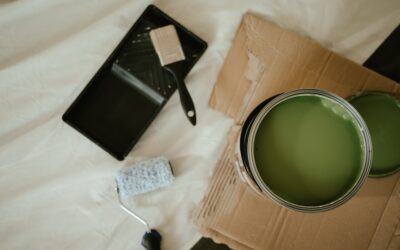
Oil-based paint fools a lot of people. The surface can feel dry by lunchtime, yet a fingernail pressed into it the next morning still leaves a mark. If you are wondering how long does oil-based paint take to dry, the short answer is about 6 to 8 hours to the touch, 16 to 24 hours before a second coat, and roughly 7 days (often up to 30) before it reaches full hardness.
Part of our Paint & Walls guide — explore the full guide →
Those numbers stretch or shrink depending on temperature, humidity, film thickness and airflow. A thin coat of alkyd enamel on trim in a warm, breezy room behaves very differently from a heavy coat on a basement door in October. Oil-based primer usually dries faster than oil-based finish paint, and both are much slower than water-based latex.
- How Long Does Oil-Based Paint Take to Dry at Each Stage?
- Oil-Based vs Latex Paint Dry Times
- What Speeds Up or Slows Down Drying
- Step-by-Step: Painting With Oil for the Fastest Safe Dry
- Ventilation, Fumes and Fire Safety
- Troubleshooting Slow-Drying or Tacky Oil Paint
- Cost Ranges and When to Hire a Painter
- Frequently Asked Questions
Times throughout are typical examples. The product label governs, so check the can for its specific recoat window, temperature range and thinning guidance before you start.
How Long Does Oil-Based Paint Take to Dry at Each Stage?
Paint does not go from wet to finished in one step. Solvent-borne coatings dry in two overlapping phases. First, the mineral spirits or other solvents evaporate, which makes the film tack-free. Then the oils in the resin react with oxygen in the air and crosslink into a hard film. That second reaction, called oxidative curing, is what takes days and weeks.
Here is how the stages usually break down at about 70°F and 50 percent relative humidity:
| Stage | Oil-based paint | Oil-based primer |
|---|---|---|
| Dust-free | 2 to 4 hours | 1 to 2 hours |
| Touch dry | 6 to 8 hours | 2 to 4 hours |
| Recoat | 16 to 24 hours | 6 to 24 hours |
| Light use | 24 to 48 hours | Topcoat first |
| Full cure | 7 to 30 days | Under topcoat |
Fast-dry alkyd formulas exist and can be recoated in as little as 4 to 6 hours. Traditional linseed-oil paints sit at the other end of the scale and may need several days between coats. Always read the specific label rather than assuming every oil paint behaves the same.
How long for oil-based primer to dry
Oil-based primer is formulated to dry thinner and faster than finish coats because its job is to seal and bond, not to build a thick, glossy film. Many products are sandable and ready for a topcoat in 6 to 8 hours, and some quick-dry stain-blocking primers allow a topcoat in 1 to 2 hours. On raw wood with tannin bleed or knots, waiting the full recommended time matters more than speed, because a premature topcoat can let stains wick through.
Oil-Based vs Latex Paint Dry Times
The comparison helps explain why people choose one over the other. Latex paint dries by water evaporation and coalescence, so it feels dry in about 1 hour and can usually be recoated in 2 to 4 hours. Most latex coatings reach a usable hardness in a few days and full cure in about 2 to 4 weeks.
- Latex: touch dry in about 1 hour, recoat in 2 to 4 hours, cure in roughly 14 to 30 days.
- Oil-based: touch dry in 6 to 8 hours, recoat in 16 to 24 hours, cure in roughly 7 to 30 days.
- Waterborne alkyd hybrids: touch dry in 2 to 4 hours, recoat in 16 hours or so, cure in about 30 days.
Oil paint trades speed for leveling. Because it stays wet longer, brush marks flow out and the finish lays down smooth and hard, which is why many painters still prefer it for doors, cabinets, railings and high-wear trim. If you are switching between products on the same job, remember that latex can go over fully cured oil paint only after scuff-sanding and a bonding primer, while oil generally can go over latex that has cured.
What Speeds Up or Slows Down Drying
Four variables control most of the difference between a label’s estimate and what actually happens on your wall.
Temperature
Most oil-based paints want the air and the surface between about 50°F and 90°F during application and for the first day after. Below 50°F, the oxidation reaction slows dramatically, and a coat that would dry overnight in summer may still be tacky after two days. Very high temperatures cause the opposite problem: the surface skins over while the film underneath stays soft, which can lead to wrinkling.
Humidity
High humidity slows solvent evaporation and can leave a dull or blushed surface, especially outdoors near dusk when dew forms. Aim for relative humidity under about 70 percent. In a damp basement, a dehumidifier running during and after painting can shave many hours off the recoat time.
Film thickness
Two thin coats always dry faster and harder than one thick coat. A heavy coat traps solvent beneath a skin, stays soft for days and is prone to sags, runs and wrinkles. Follow the spread rate on the label, which is often around 350 to 450 sq ft per gallon.
Airflow and light
Moving air carries solvent away from the surface and brings oxygen to it, both of which help. A box fan pointed out of an open window, not directly at the wet surface, works well. Daylight also nudges the curing reaction along, while dark, closed rooms are slow.
Step-by-Step: Painting With Oil for the Fastest Safe Dry
Good process does more for drying time than any additive. Gather a quality natural-bristle brush, a short-nap roller, mineral spirits for cleanup, 120 to 220 grit sandpaper, a tack cloth, drop cloths, a metal can with a lid for rags and a respirator rated for organic vapors.
- Check conditions. Confirm the room is within the label’s temperature range and the surface is clean and dry.
- Prep the surface. Degrease, sand glossy areas, vacuum and wipe with a tack cloth so dust does not get trapped in a slow-drying film.
- Prime if needed. Use an oil-based or bonding primer on bare wood, stains or previously glossy surfaces and let it dry per the label.
- Apply thin, even coats. Load the brush moderately, lay the paint on, then tip off with light strokes in one direction.
- Ventilate. Open windows and run an exhaust fan for the whole drying period.
- Test before recoating. Press a fingernail into an inconspicuous spot. If it leaves a dent or the paint feels gummy, wait longer.
- Scuff between coats. A light pass with 220 grit after the first coat improves adhesion and smoothness.
- Protect the cure. Keep doors propped open, avoid stacking objects on shelves and skip heavy cleaning for at least a week.
For large jobs such as a run of cabinet doors, shutters or a fence, a paint sprayer lays down a thin, uniform film that dries more evenly than brushed coats. Thin the paint only as far as the label allows, practice on scrap and mask everything you do not want coated.
Ventilation, Fumes and Fire Safety
Solvent-based coatings release volatile organic compounds and flammable vapors, so safety is part of the drying plan. Work with cross-ventilation, and wear a respirator with organic vapor cartridges if the label calls for one or if you are working in a small or enclosed space. Gloves and eye protection help with splashes and cleanup.
Keep vapors away from ignition sources. Turn off pilot lights on gas water heaters, furnaces and stoves in the same space, and do not run spark-producing tools nearby until the room has aired out. Never mix mineral spirits, paint thinner or other chemicals with different products, and store open cans tightly closed.
Rags are the hidden hazard. Cloths soaked with oil-based paint, linseed oil or stain can heat up as they oxidize and catch fire on their own. Lay used rags flat outdoors to dry, or put them in a water-filled metal can with a tight lid, then dispose of them according to local rules. Never leave a wadded pile of oily rags in a garage, trash bag or workshop corner.
Troubleshooting Slow-Drying or Tacky Oil Paint
Sometimes paint is still sticky long after it should be dry. Common causes and fixes:
- Too cold: raise the room temperature to the mid 60s or higher and add gentle airflow. Avoid open-flame heaters.
- Too thick: wait it out, then sand off sags and runs once hard. Next time, apply thinner coats.
- Old or contaminated paint: paint that sat for years or was thinned with the wrong solvent may never cure properly. Strip and recoat if it stays gummy after a week.
- Oily or waxy surface: residues from furniture polish or cooking can block curing. Degrease and prime before repainting.
- Recoated too soon: fresh solvent can soften the coat below and cause wrinkling. Let it harden fully, sand smooth and apply a fresh coat.
If you keep asking yourself how long does oil-based paint take to dry because a project never seems to firm up, run through this list in order before stripping anything. Most stubborn films harden once warmth and airflow improve.
Yellowing is a separate issue. Many oil paints amber over time, especially in dark rooms or behind closed doors. White and pale colors show it most. Waterborne alkyd hybrids yellow less if that matters for your project.
Cost Ranges and When to Hire a Painter
Quality oil-based enamel and primer typically cost more per gallon than comparable latex products, and you will also need mineral spirits and solvent-resistant brushes. A small trim or door project might run tens of dollars in materials. Professional painters often charge more for oil-based work on cabinets and trim because of longer drying times between coats and the extra ventilation and cleanup involved.
Consider a pro if you are coating an entire kitchen of cabinets, working in a home with pre-1978 paint that may contain lead, painting high exterior trim or dealing with failing previous coats. A professional can also advise whether a waterborne alkyd gives you the same durable look with faster turnaround and less odor.
Frequently Asked Questions
How long does it take oil based paint to dry before a second coat?
Most oil-based paints need about 16 to 24 hours before recoating at around 70°F. Fast-dry formulas may allow 4 to 6 hours, so check the label.
How long does oil based primer take to dry?
Oil-based primer is often ready for a topcoat in 6 to 8 hours, and quick-dry versions may be ready in 1 to 2 hours under good conditions.
How long does it take for latex paint to dry compared with oil?
Latex feels dry in about an hour and can be recoated in 2 to 4 hours, while oil usually needs a full day between coats.
Can I use a fan to help oil paint dry faster?
Yes. Exhaust air out a window rather than blowing directly on the wet film, which can push dust into the surface.
When can I put items back on oil-painted shelves?
Wait at least 3 to 7 days and place light items first. Heavy objects on soft paint can stick or leave impressions until the film fully cures.