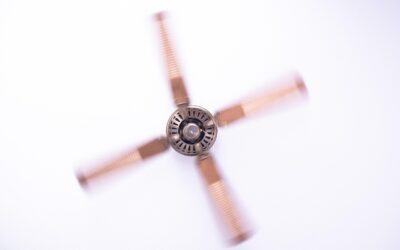
That old ceiling fan humming away in your bedroom might be pushing 30 years of service, and its motor could still outlast most of what’s on the shelf today. Vintage fans from the 1980s and earlier were often built with heavier cast-iron motors and real hardwood blades that modern budget units simply can’t match. The catch is that decades of dust, dried grease, and brittle wiring bring their own risks. Before you rip it down, it pays to know whether you’re sitting on a restorable workhorse or a fire hazard.
Why Old Fans Often Outperform New Ones
Motor quality is the big divide. Older fans frequently used sealed, oil-bath or heavy sleeve-bearing motors rated for continuous duty, so they move more air with less noise than the lightweight induction motors in many $60 fans today. Blade pitch also tended to run steeper, around 14 degrees versus the 11 or 12 degrees common now.
If your fan carries a name like Hunter Original, Casablanca, or Emerson, hang onto it. These brands built genuinely repairable machines with parts still floating around online. A quick cleanup and re-oil can bring one back to whisper-quiet performance.
Common Problems With Aging Fans
Wobble tops the list of complaints, and it’s rarely the motor’s fault. Loose blade screws, a bent blade iron, or dust caked unevenly on the blades throws the whole assembly off balance. A clicking or grinding noise usually points to dry bearings or a failing flywheel.
- Wobble: tighten blade and bracket screws, then balance with a clip-on kit
- Humming: often a failing capacitor or an incompatible dimmer-style switch
- Slow start: a weak start capacitor, a common $8 fix
- Won’t run: pull-chain switch failure, another cheap, replaceable part
Inspecting the Wiring Safely
Before touching anything, kill the power at the breaker, not just the wall switch. Verify it’s dead with a non-contact voltage tester at the fan’s wire connections. On fans older than about 40 years, look closely at the cloth-insulated or early plastic wiring where it enters the motor housing.
Cracked, crumbling, or discolored insulation is a stop sign. Overheated wire near the motor windings means the fan has been running hot, and that’s when replacement beats repair. If the internal leads look supple and the connections are clean, the fan is generally safe to keep in service.
Restoring an Old Ceiling Fan
A worthwhile restoration starts with a full teardown. Remove the blades and label their positions so they return to the same arm. Wipe decades of grime off with a mild degreaser, then polish metal housings with a non-abrasive cleaner suited to the finish.
Re-Oiling an Oil-Bath Motor
Many older Hunter fans have an oil reservoir marked by a small fill hole near the top of the motor. Add 1 to 2 ounces of non-detergent 10-weight electric motor oil, never automotive oil, which contains detergents that gum up windings. A dry reservoir is the number one cause of a good old fan seizing up.
Replacing Worn Parts
Pull chains, capacitors, and switch housings are the usual casualties. A universal 3-speed pull-chain switch runs about $10, and a replacement capacitor for a specific model can be sourced from fan parts specialists for $12 to $20. Swapping either takes 20 minutes with a screwdriver and wire nuts.
When Replacement Makes More Sense
Restoration has limits. If the motor windings are scorched, the mounting bracket is a non-code ceiling box, or you simply want a remote and integrated LED light, a new fan is the practical call. Budget $120 to $350 for a quality replacement fan that will actually rival the airflow of your old unit.
Also weigh energy use. A modern DC-motor fan draws roughly 70 percent less electricity than an old AC motor at comparable airflow, which can matter if the fan runs most of the year. For a rarely used guest room, though, the savings never justify tossing a working fan.
Balancing a Wobbly Fan
Once your old fan is clean and running, a lingering wobble is worth chasing down because it stresses the mounting over time. Start by tightening every blade screw and confirming the blades are all the same distance from the ceiling — measure from a blade tip to the ceiling, rotate, and check the next. A blade sitting a quarter inch lower than its neighbors is usually a bent blade iron.
If the fan still wobbles, use a clip-on balancing kit. Attach the plastic clip to the center of one blade and run the fan; move it blade to blade until the wobble is worst, then stick the small weight on that blade and slide it until the wobble vanishes. The whole process takes about 15 minutes and turns a shaky old fan into a smooth one.
Safe Removal and Disposal
When it’s time to take one down, support the fan body while you disconnect the wiring so it doesn’t drop on the wire connections. Old fans with cast-metal housings are heavy — 15 to 25 pounds is common — so have a helper or a sturdy ladder tray. Many scrap yards accept the metal, and the copper-wound motor has real recycling value.
The Bottom Line on Old Fans
A well-built old ceiling fan is worth respecting. Clean it, oil it, tighten it, and check that wiring, and a quality vintage unit will keep cooling your rooms long after this year’s disposable models have failed. Reserve replacement for cases of damaged windings, unsafe wiring, or a genuine desire for new features. Keep a small kit of consumables on hand — a spare pull-chain switch, a matched capacitor, and a bottle of non-detergent motor oil cover the three most common failures. Either way, you’ll make a smarter, safer choice by diagnosing the fan before you decide, and often save the cost of a new fixture in the process.